 Living Beings
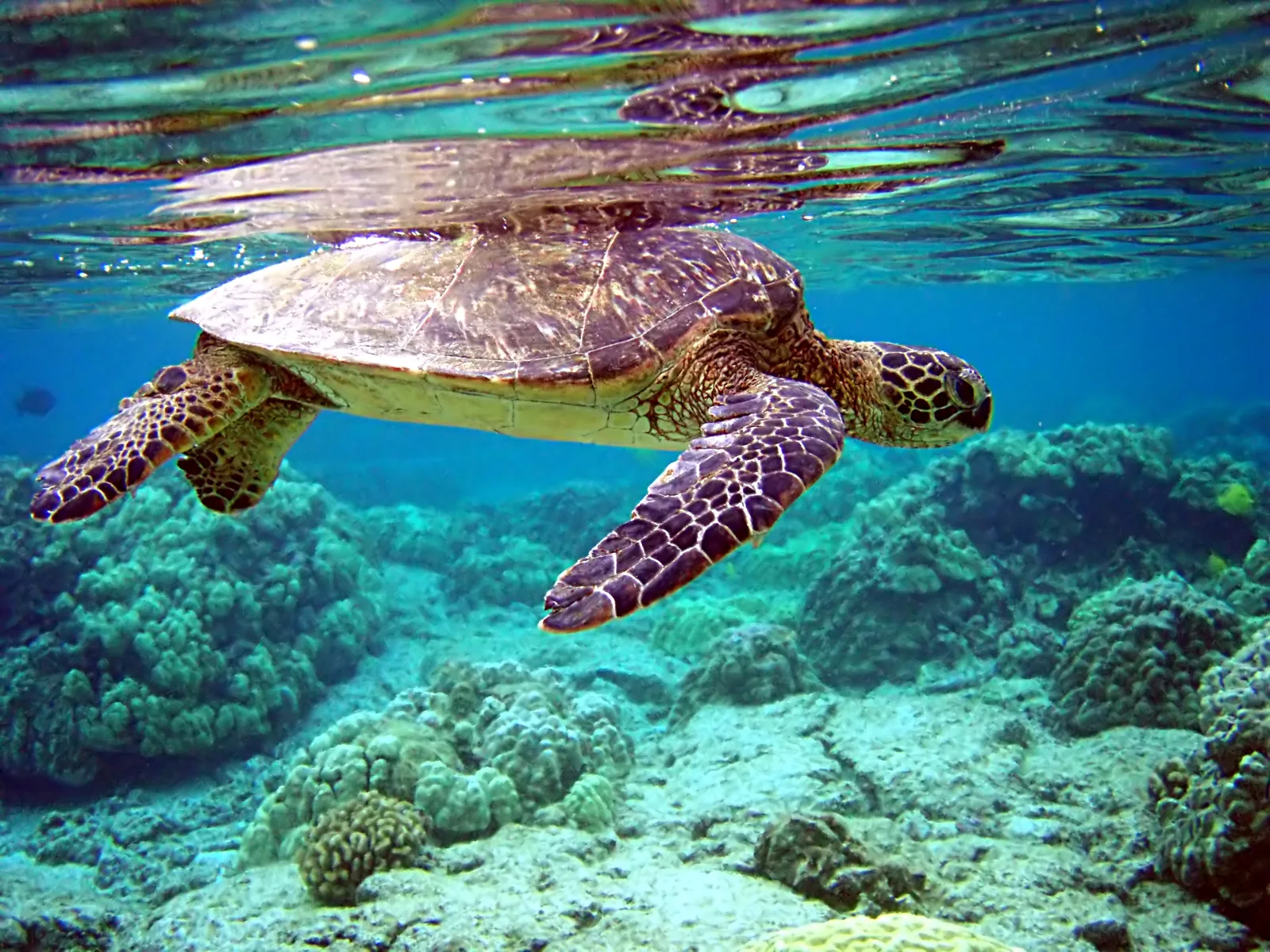
Total internal reflection of Chelonia mydas.jpg · Resized and converted to WebP for display. Documentary organism photograph. AI-generated illustration. Brocken Inaglory · CC BY-SA 4.0

Field guide · species
Green Sea Turtle
Chelonia mydas (Linnaeus, 1758)
Green sea turtles connect coastal feeding grounds with nesting beaches. Adults often graze seagrass and algae, while younger turtles can use different habitats and consume a wider range of food.
Public research profile · final editorial review pending.
Tree of lifeScientific lineage
- LifeLife
- DomainEukaryota
- KingdomAnimalia
- PhylumChordata
- OrderTestudines
- FamilyCheloniidae
- GenusChelonia
- SpeciesChelonia mydas
Advanced classification
Complete source lineage, including intermediate ranks. The standard view uses Life and the eight principal ranks.
- cellular organisms cellular root
- Eukaryota domain
- Opisthokonta clade
- Metazoa kingdom
- Eumetazoa clade
- Bilateria clade
- Deuterostomia clade
- Chordata phylum
- Craniata subphylum
- Vertebrata clade
- Gnathostomata clade
- Teleostomi clade
- Euteleostomi clade
- Sarcopterygii superclass
- Dipnotetrapodomorpha clade
- Tetrapoda clade
- Amniota clade
- Sauropsida clade
- Sauria clade
- Archelosauria clade
- Testudinata subclass
- Testudines order
- Cryptodira suborder
- Durocryptodira clade
- Americhelydia clade
- Chelonioidea superfamily
- Cheloniidae family
- Chelonia genus
- Chelonia mydas species
Physical traits
A streamlined shell, paddle-like forelimbs and a relatively small head suit marine life. The common name refers to body fat rather than a uniformly green shell.
Scientific source 1 ↗ · Scientific source 2 ↗ · Scientific source 3 ↗ · Scientific source 4 ↗
Habitat and range
Seagrass beds, algal areas and other coastal habitats support feeding. Females require suitable sandy beaches to nest.
Scientific source 1 ↗ · Scientific source 2 ↗ · Scientific source 3 ↗ · Scientific source 4 ↗
Diet and nutrition
Many adults are primarily herbivorous. Juveniles may also eat animal material, so diet changes with life stage and locality.
Scientific source 1 ↗ · Scientific source 2 ↗ · Scientific source 3 ↗ · Scientific source 4 ↗
Behavior and activity
Turtles migrate between feeding and breeding areas and return to the surface to breathe.
Scientific source 1 ↗ · Scientific source 2 ↗ · Scientific source 3 ↗ · Scientific source 4 ↗
Reproduction and life cycle
Females bury eggs in beach nests. Hatchlings enter the sea and pass through juvenile habitats before adulthood.
Scientific source 1 ↗ · Scientific source 2 ↗ · Scientific source 3 ↗ · Scientific source 4 ↗
Geographic distribution
The species occurs in tropical and subtropical oceans. Nesting and feeding populations should be interpreted regionally.
Scientific source 1 ↗ · Scientific source 2 ↗ · Scientific source 3 ↗ · Scientific source 4 ↗
Ecological role
Grazing influences seagrass and algal communities, and movements redistribute nutrients.
Scientific source 1 ↗ · Scientific source 2 ↗ · Scientific source 3 ↗ · Scientific source 4 ↗
Distinctive adaptations
Efficient swimming and orientation support travel between distant habitats.
Scientific source 1 ↗ · Scientific source 2 ↗ · Scientific source 3 ↗ · Scientific source 4 ↗
Conservation
The global IUCN assessment published in 2025 lists the green turtle as Least Concern. This global improvement does not remove regional threats from bycatch, coastal development or habitat loss, and it is distinct from national protection categories.
Scientific source 1 ↗ · Scientific source 2 ↗ · Scientific source 3 ↗ · Scientific source 4 ↗
Evidence
Sources
- Chelonia mydas · NCBI Taxonomy ↗NCBI
- Chelonia mydas · Scientific account ↗
- Chelonia mydas — Animal Diversity Web, University of Michigan ↗Animal Diversity Web, University of Michigan
- Chelonia mydas — NOAA Fisheries ↗NOAA Fisheries
- Chelonia mydas — IUCN Marine Turtle Specialist Group ↗IUCN Marine Turtle Specialist Group
Connected life
Relationships
No reviewed ecological connections in the collection yet.
Explore network ↗