 Living Beings
 Framed for display
Try a comparison
How to compare two organisms
Choose two species and trace their closest shared group. Then compare a trait with the same definition on each side. Check the units, life stage and context before interpreting a measurement or range.
Missing data means that the collection lacks a sourced value. Where a characteristic does not apply to a lineage, the comparison labels it separately. Open the two profiles for context and follow their sources before drawing a conclusion.
Biological comparison
Means, ranges and reported maxima describe different things. Check the source and population before comparing values.
Classification
Shared ancestry
Closest shared taxon · Panthera.
- LifeLife
- DomainEukaryota
- KingdomAnimalia
- PhylumChordata
- ClassMammalia
- OrderCarnivora
- FamilyFelidae
- GenusPanthera
Separate lineages
| Characteristic | Lion | Tiger |
|---|---|---|
Scientific measurements | Scientific measurements | |
| Body mass |
155.5 kg
Mean · Adult Source and measurement contextLiterature value used in a comparative paper. The authors separate these mass references from their zoo sample. · ≈ 342.8 lb Mass of an individual animal.
|
170.0 kg
Mean · Adult Source and measurement contextLiterature value used in a comparative paper. The authors separate these mass references from their zoo sample. · ≈ 374.8 lb Mass of an individual animal.
|
| Tail length |
Recorded scopes or statistics differ.
0.6–1.0 m
Reported range Source and measurement contextSpecies account gives this as a tail measurement. Sex and population are not specified for the range. · ≈ 2–3.3 ft Length of the tail alone. Animal Diversity Web · Lion ↗ Physical description and lifespan |
Recorded scopes or statistics differ.
0.90–1.10 m
Reported range Source and measurement contextSpecies account range. · ≈ 3.0–3.61 ft Length of the tail alone.
|
| Lifespan |
Recorded scopes or statistics differ.
14 years
Mean · Wild Source and measurement contextSpecies account reports a wild mean; survival varies by sex and population. Age attained in the recorded setting.
|
Recorded scopes or statistics differ.
8–10 years
Typical range · Wild Source and measurement contextTypical wild lifespan in this species account. Age attained in the recorded setting.
|
| Head and body length |
Recorded scopes or statistics differ.
1.700–2.500 m
Reported range · Male Source and measurement contextMale range from the species account. · ≈ 5.577–8.202 ft Head and body, excluding the tail.
1.400–1.750 m
Reported range · Female Source and measurement contextFemale range from the species account. · ≈ 4.593–5.741 ft Head and body, excluding the tail.
|
Recorded scopes or statistics differ.
1.50–2.30 m
Reported range Source and measurement contextSpecies account range. Tiger size varies across populations. · ≈ 4.92–7.55 ft Head and body, excluding the tail.
|
Natural history | Natural history | |
| Nutrition and energy acquisition |
Nutrition
Carnivorous Source ↗
Lions hunt large prey such as zebras and wildebeest, and also scavenge when opportunities arise. In a cooperative hunt, some …Lions hunt large prey such as zebras and wildebeest, and also scavenge when opportunities arise. In a cooperative hunt, some lions may approach prey from different sides. Lions can also take food from carcasses they did not kill, so seeing a pride at a carcass cannot establish which animal made the kill. |
Nutrition
Carnivorous Source ↗
Tigers mainly hunt large mammals, including deer and wild pigs. Deer and wild pigs are examples of important prey. Which …Tigers mainly hunt large mammals, including deer and wild pigs. Deer and wild pigs are examples of important prey. Which animals a tiger encounters depends on its region, so prey named in one local study should be read in that local context. |
| Habitat |
Lions occupy a range of habitats, including grasslands, savannas and open woodland. Habitat descriptions span open plains and woodland. Use …Lions occupy a range of habitats, including grasslands, savannas and open woodland. Habitat descriptions span open plains and woodland. Use the geographic range alongside this description, since many landscapes with suitable vegetation no longer hold wild lions. |
Tigers live in varied habitats, including tropical forests, mangrove swamps and temperate forest. A tiger can live in a mangrove …Tigers live in varied habitats, including tropical forests, mangrove swamps and temperate forest. A tiger can live in a mangrove forest or in a cold temperate forest. Those settings differ greatly in climate, while both can supply the cover and prey that a stalking predator uses. |
| Geographic distribution |
Wild lions persist in separated areas of Africa. The Gir region of western India supports the remaining wild Asiatic population. …Wild lions persist in separated areas of Africa. The Gir region of western India supports the remaining wild Asiatic population. Present occurrence is a small part of the lion’s historical range, so a habitat description is not a map of where lions still live. |
Native to Asia. Source 1 ↗ |
| Morphology |
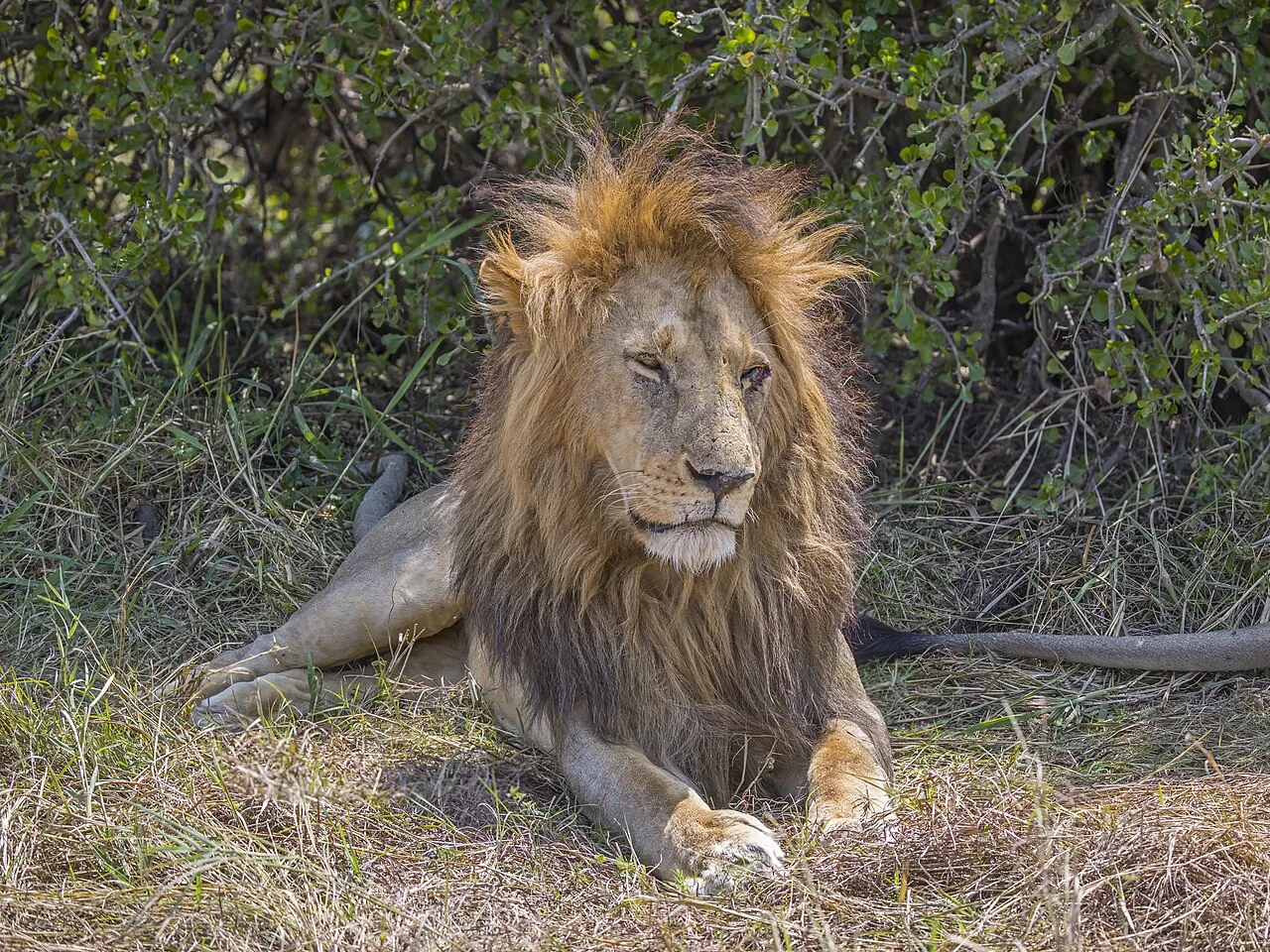
Adult male lions often grow a mane around the head and neck. Both sexes have a dark tuft at the …Adult male lions often grow a mane around the head and neck. Both sexes have a dark tuft at the tip of the tail. Mane size and color can vary among adult males. Age, genetics and hormones all influence its development, so the mane alone gives an uncertain estimate of age. |
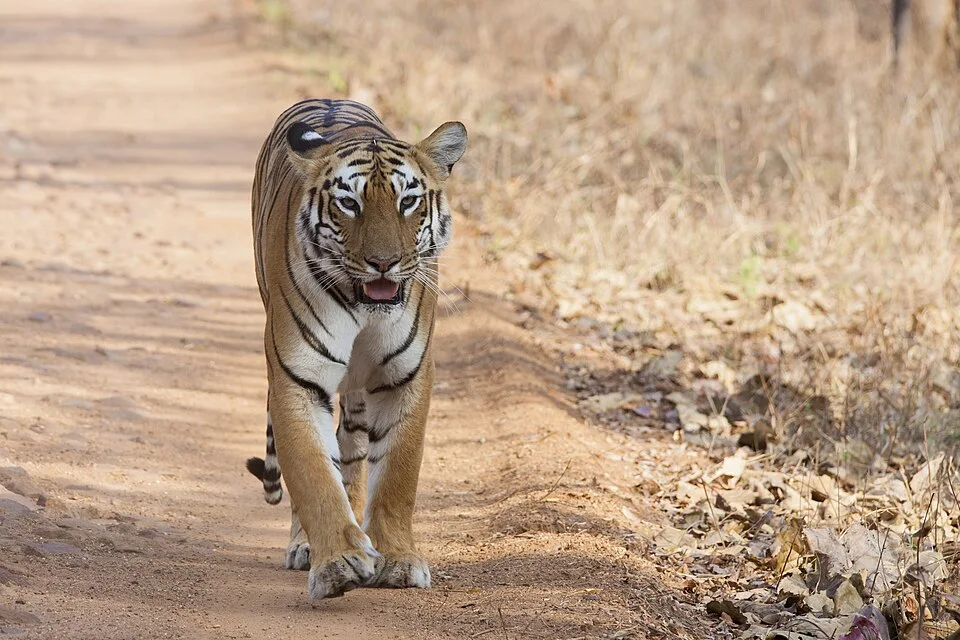
Dark stripes break up the tiger’s outline. Stripe patterns vary from one individual to another. Striping helps camouflage a stalking …Dark stripes break up the tiger’s outline. Stripe patterns vary from one individual to another. Striping helps camouflage a stalking tiger in vegetation. The pattern varies individually, and field researchers can use photographs of the markings to distinguish animals. |
| Reproduction and life cycle |
Cubs initially depend on their mother for milk and protection. Lionesses in a pride can rear young communally, and cubs …Cubs initially depend on their mother for milk and protection. Lionesses in a pride can rear young communally, and cubs may nurse from more than one female. Compare that early shared care with the separate ecological question of how adults find and capture food. |
Young tigers stay with their mother while developing the skills needed to take prey. This prolonged period of dependence is …Young tigers stay with their mother while developing the skills needed to take prey. This prolonged period of dependence is consistent with an adult life that is generally solitary. A photograph of a female with cubs therefore describes an important life stage rather than a permanent social group. |
| Ecological role |
|
|
| Behavior and activity |
Social organization
Social; lives in prides Source ↗
Members of a pride cooperate in defending territory and sometimes in hunting. A pride is a social unit whose members …Members of a pride cooperate in defending territory and sometimes in hunting. A pride is a social unit whose members can split into smaller parties and reunite. Shared membership does not mean every lion is present at every hunt. Scent marks and roars help advertise occupancy and maintain contact across a territory. |
Social organization
Generally solitary Source ↗
A tiger usually hunts by stalking its prey and attacking at close range. A tiger can communicate without meeting another …A tiger usually hunts by stalking its prey and attacking at close range. A tiger can communicate without meeting another tiger directly. Scratches and scent marks leave information at places another animal may visit later. In addition to stalking on land, tigers can swim well and have been observed hunting in water. |
| Environmental adaptations |
No separate account recorded |
Individual stripe patterns have practical value to field researchers. Paired cameras can photograph the sides of a passing tiger, and …Individual stripe patterns have practical value to field researchers. Paired cameras can photograph the sides of a passing tiger, and repeated images of the same pattern can identify the same animal. A sequence of detections across sampling locations can support a population estimate. |
Documented biological traits
Sexual dimorphism
LionVariable expression · Adult male mane development
A mane is characteristic of adult male lions. Its development varies among males, and mane features vary with condition and ambient temperature. Scientific source ↗
TigerDocumented · Adult body size
Adult males are generally larger than adult females. The cited account also records size variation among tiger populations. Scientific source ↗
Sources from both profiles
More comparisons
Framed for display

 Framed for display

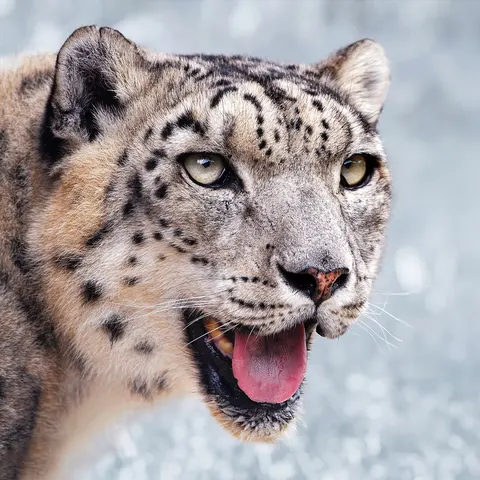 Framed for display
