 Living Beings
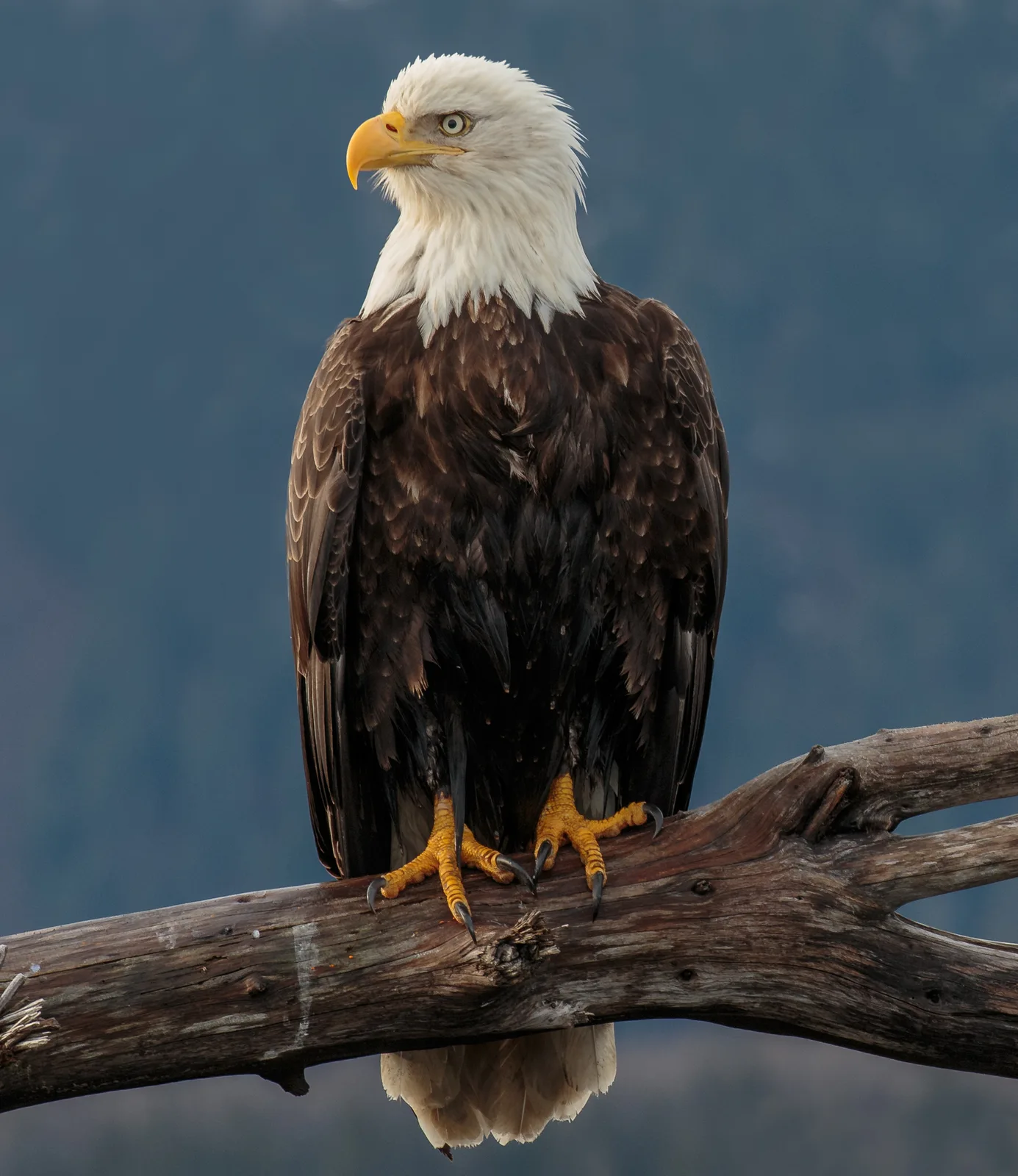
Bald Eagle (Haliaeetus leucocephalus) Kachemak Bay, Alaska.jpg · Resized and converted to WebP for display. Documentary organism photograph; source identification retained. AI-generated illustration. Andy Morffew from Itchen Abbas, Hampshire, UK · CC BY 2.0

Field guide · species
Bald Eagle
Haliaeetus leucocephalus
The bald eagle is a large North American raptor closely associated with water. Fishing, scavenging and opportunistic feeding all contribute to its way of life.
Public research profile · final editorial review pending.
Tree of lifeScientific lineage
- LifeLife
- DomainEukaryota
- KingdomAnimalia
- PhylumChordata
- ClassAves
- OrderAccipitriformes
- FamilyAccipitridae
- GenusHaliaeetus
- SpeciesHaliaeetus leucocephalus
Advanced classification
Complete source lineage, including intermediate ranks. The standard view uses Life and the eight principal ranks.
- cellular organisms cellular root
- Eukaryota domain
- Opisthokonta clade
- Metazoa kingdom
- Eumetazoa clade
- Bilateria clade
- Deuterostomia clade
- Chordata phylum
- Craniata subphylum
- Vertebrata clade
- Gnathostomata clade
- Teleostomi clade
- Euteleostomi clade
- Sarcopterygii superclass
- Dipnotetrapodomorpha clade
- Tetrapoda clade
- Amniota clade
- Sauropsida clade
- Sauria clade
- Archelosauria clade
- Archosauria clade
- Dinosauria clade
- Saurischia clade
- Theropoda clade
- Coelurosauria clade
- Aves class
- Neognathae infraclass
- Neoaves clade
- Telluraves clade
- Accipitrimorphae clade
- Accipitriformes order
- Accipitridae family
- Accipitrinae subfamily
- Haliaeetus genus
- Haliaeetus leucocephalus species
Physical traits
Adults have a white head and tail contrasting with a brown body and a large yellow bill. Young birds are mottled and acquire the familiar adult pattern gradually.
Habitat and range
Lakes, rivers, reservoirs and coasts provide food, while suitable large trees offer nesting and resting sites.
Diet and nutrition
Fish are important, but the bird also takes other animals and carrion. Food may be caught directly, found dead or taken from another bird.
Behavior and activity
Powerful flight and keen vision help eagles locate food over broad areas. The same bird can alternate between hunting and scavenging.
Reproduction and life cycle
Large stick nests are built and reused. Both adults participate in caring for the young.
Geographic distribution
Native to North America. Seasonal movements vary with access to open water and dependable food.
Ecological role
As a predator and scavenger, the bald eagle draws on several parts of aquatic and shoreline food webs.
Evidence
Sources
- Haliaeetus leucocephalus · NCBI Taxonomy ↗www.ncbi.nlm.nih.gov
- Haliaeetus leucocephalus · Biological reference ↗animaldiversity.org
Connected life
Relationships
No reviewed ecological connections in the collection yet.
Explore network ↗