Living Beings
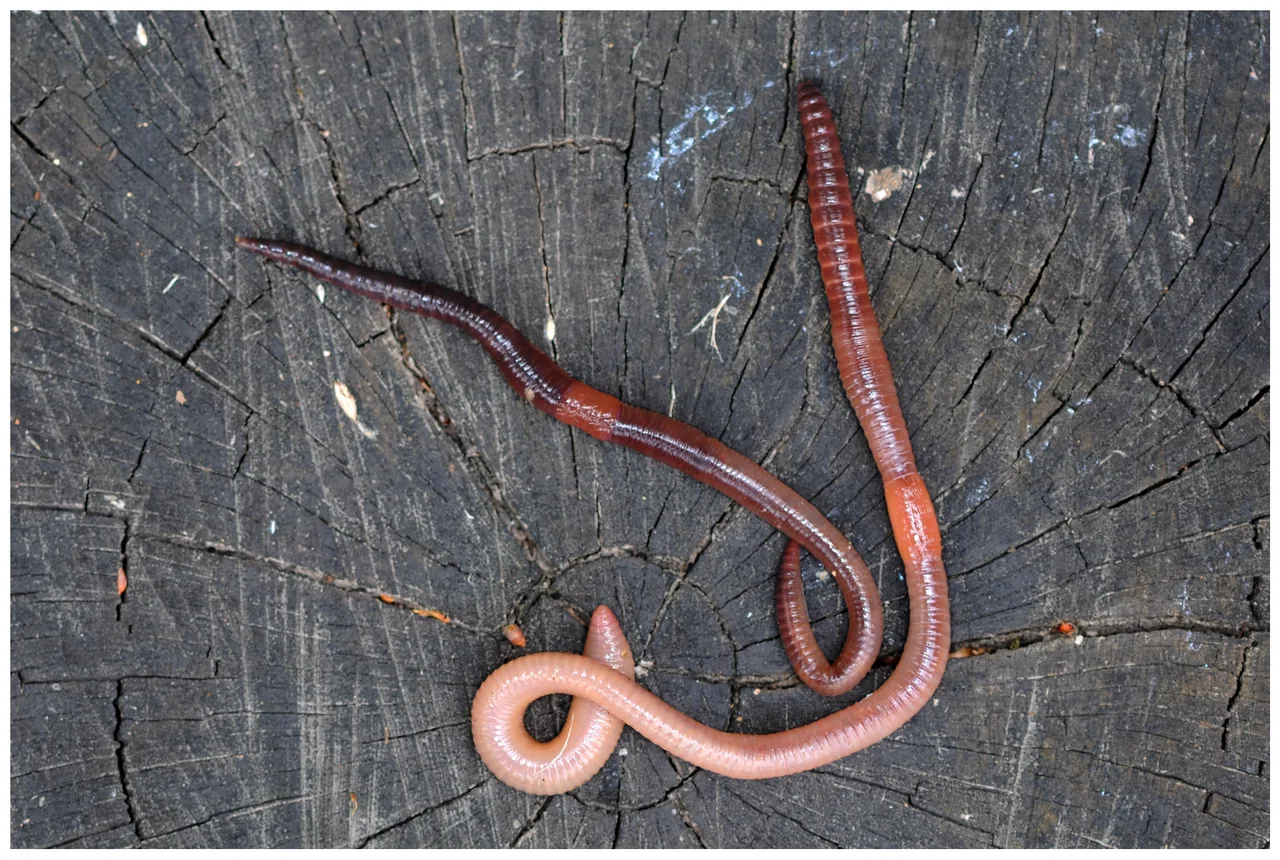
Lumbricus herculeus (left) and Lumbricus terrestris (right).png · Resized and converted to WebP for display. Documentary organism photograph. AI-generated illustration. James S.W., Porco D., Decaëns T., Richard B., Rougerie R., Erséus C. · CC BY 4.0

Field guide · species
Common Earthworm
Lumbricus terrestris Linnaeus, 1758
This large earthworm maintains deep burrows and pulls surface litter into the soil. Its activity mixes organic material with mineral soil and creates channels used by air and water.
Public research profile · final editorial review pending.
Tree of lifeScientific lineage
- LifeLife
- DomainEukaryota
- KingdomAnimalia
- PhylumAnnelida
- ClassClitellata
- OrderCrassiclitellata
- FamilyLumbricidae
- GenusLumbricus
- SpeciesLumbricus terrestris
Advanced classification
Complete source lineage, including intermediate ranks. The standard view uses Life and the eight principal ranks.
- cellular organisms cellular root
- Eukaryota domain
- Opisthokonta clade
- Metazoa kingdom
- Eumetazoa clade
- Bilateria clade
- Protostomia clade
- Spiralia clade
- Lophotrochozoa clade
- Annelida phylum
- Clitellata class
- Oligochaeta subclass
- Crassiclitellata order
- Lumbricina suborder
- Lumbricidae family
- Lumbricinae subfamily
- Lumbricus genus
- Lumbricus terrestris complex no rank
- Lumbricus terrestris species
Physical traits
A segmented, elongated body carries small bristles used in movement. Mature worms have a distinct clitellum associated with reproduction.
Scientific source 1 ↗ · Scientific source 2 ↗ · Scientific source 3 ↗
Habitat and range
Moist soils with access to surface organic material support its burrowing and feeding habits.
Scientific source 1 ↗ · Scientific source 2 ↗ · Scientific source 3 ↗
Diet and nutrition
Surface leaf litter is an important resource. Laboratory observations of seedling damage do not make living plants its normal replacement for litter.
Scientific source 1 ↗ · Scientific source 2 ↗ · Scientific source 3 ↗
Behavior and activity
Worms commonly forage near their burrow entrance and withdraw into the soil when disturbed.
Scientific source 1 ↗ · Scientific source 2 ↗ · Scientific source 3 ↗
Reproduction and life cycle
Individuals are hermaphrodites that exchange sperm. Fertilized eggs develop in cocoons produced through the clitellum.
Scientific source 1 ↗ · Scientific source 2 ↗ · Scientific source 3 ↗
Geographic distribution
Native to parts of Europe, the species has been transported elsewhere. Introduced earthworms can alter ecosystems that developed without them.
Scientific source 1 ↗ · Scientific source 2 ↗ · Scientific source 3 ↗
Ecological role
Burrowing and litter incorporation modify soil structure and nutrient cycling; these effects depend on the receiving ecosystem.
Scientific source 1 ↗ · Scientific source 2 ↗ · Scientific source 3 ↗
Distinctive adaptations
Muscular segments and bristles provide traction, while moist skin enables gas exchange.
Scientific source 1 ↗ · Scientific source 2 ↗ · Scientific source 3 ↗
Conservation
The ecological effects of an introduced population differ from conservation concerns in its native range. This account assigns no formal threat category.
Scientific source 1 ↗ · Scientific source 2 ↗ · Scientific source 3 ↗
Evidence
Sources
- Lumbricus terrestris · NCBI Taxonomy ↗NCBI
- Experimental evaluation of herbivory on live plant seedlings by the earthworm Lumbricus terrestris L. in the presence and absence of soil surface litter ↗PloS one · 2015
- Lumbricus terrestris — University of California, Davis, SAREP ↗University of California, Davis, SAREP
- Lumbricus terrestris — IUCN Global Invasive Species Database ↗IUCN Global Invasive Species Database
Connected life
Relationships
No reviewed ecological connections in the collection yet.
Explore network ↗