 Living Beings
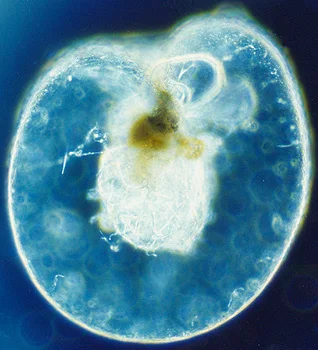
Noctiluca scintillans unica.jpg · Resized and converted to WebP for display. Light micrograph of one cell, not a bioluminescent bloom. AI-generated illustration. Maria Antónia Sampayo, Instituto de Oceanografia, Faculdade Ciências da Universidade de Lisboa · CC BY 3.0

Field guide · species
Sea Sparkle
Noctiluca scintillans (Macartney) Kofoid et Swezy
Sea sparkle is a marine dinoflagellate whose populations can produce striking light displays. Despite being encountered in plankton surveys, it is a single-celled eukaryote rather than a tiny animal.
Public research profile · final editorial review pending.
Tree of lifeScientific lineage
- LifeLife
- DomainEukaryota
- ClassDinophyceae
- OrderNoctilucales
- FamilyNoctilucaceae
- GenusNoctiluca
- SpeciesNoctiluca scintillans
Advanced classification
Complete source lineage, including intermediate ranks. The standard view uses Life and the eight principal ranks.
- cellular organisms cellular root
- Eukaryota domain
- Sar clade
- Alveolata clade
- Dinophyceae class
- Noctilucales order
- Noctilucaceae family
- Noctiluca genus
- Noctiluca scintillans species
Structure and identification
A buoyant, balloon-like cell contains an oral pouch and a conspicuous tentacle. The micrograph shows the cell itself, not a glowing coastal bloom.
Habitat and range
It occurs especially in coastal waters, including areas influenced by river discharge.
Nutrition and metabolism
The organism is heterotrophic: it takes in food rather than being characterized simply as a photosynthetic green alga.
Biological activity
Mechanical disturbance can trigger blue bioluminescence in luminous populations. Research has also documented populations that have lost visible bioluminescence.
Geographic distribution
Documented across temperate, subtropical and tropical seas. Particular populations differ in their capacity to emit light.
Ecological role
Dense accumulations can change the appearance of surface waters. A red or pink water discoloration and a nighttime blue flash are different phenomena.
Distinctive adaptations
Bioluminescence involves specialized cellular chemistry. It should not be described as fluorescence or assumed to occur equally in every population.
Evidence
Sources
- Noctiluca scintillans · NCBI Taxonomy ↗www.ncbi.nlm.nih.gov
- Noctiluca scintillans · Biological reference ↗www.imas.utas.edu.au
- Noctiluca scintillans · Biological reference ↗pmc.ncbi.nlm.nih.gov
Connected life
Relationships
No reviewed ecological connections in the collection yet.
Explore network ↗