 Living Beings
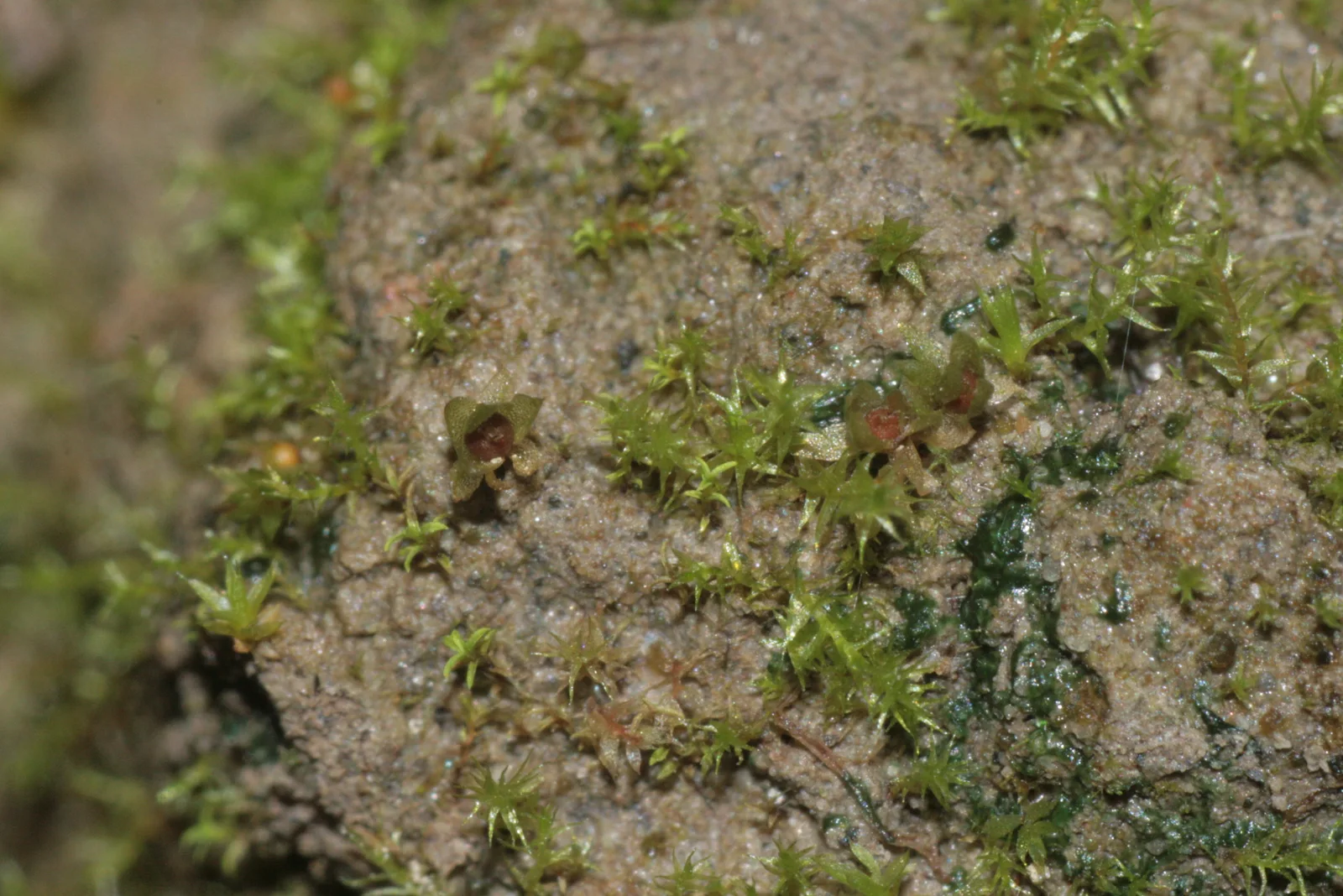
Physcomitrella patens (a, 144649-481016) 6952.JPG · Resized and converted to WebP for display. Field photograph showing leafy gametophytes and close-held sporophyte capsules. AI-generated illustration. HermannSchachner · CC0

Field guide · species
Physcomitrium patens
(Hedw.) Mitt., 1851
Physcomitrium patens, also known as Spreading Earthmoss, is a small moss of temporarily exposed wet ground. The leafy plant is the haploid gametophyte; its much smaller, attached spore capsule belongs to the diploid sporophyte generation. Research often uses its older name, Physcomitrella patens. Its value as a model plant comes partly from a life cycle that makes the consequences of genetic changes unusually accessible to study.
Public research profile · final editorial review pending.
Tree of lifeScientific lineage
- LifeLife
- DomainEukaryota
- KingdomViridiplantae
- PhylumStreptophyta
- ClassBryopsida
- OrderFunariales
- FamilyFunariaceae
- GenusPhyscomitrium
- SpeciesPhyscomitrium patens
Advanced classification
Complete source lineage, including intermediate ranks. The standard view uses Life and the eight principal ranks.
- cellular organisms cellular root
- Eukaryota domain
- Viridiplantae kingdom
- Streptophyta phylum
- Streptophytina subphylum
- Embryophyta clade
- Bryophyta clade
- Bryophytina clade
- Bryopsida class
- Funariidae subclass
- Funariales order
- Funariaceae family
- Physcomitrium genus
- Physcomitrium patens species
Structure and identification
Spores first produce branching, thread-like protonemal growth. Buds on these filaments develop into short leafy shoots. Rounded capsules are held close to the leaves rather than raised on the long stalk familiar in many other mosses. Small size and a reduced capsule can make superficially similar ephemeral mosses difficult to separate; the photograph is an illustration, not a substitute for microscopic identification.
Habitat and range
Wild populations occupy moist open soil, including mud exposed as water levels fall around ponds, reservoirs and lake floodplains. The British Bryological Society describes a short window in which plants establish on sediment exposed in summer and produce spores before rising water covers the site again. This is a habitat shaped by changing water levels, rather than a permanently submerged aquatic lifestyle.
Nutrition and metabolism
Green cells photosynthesize and absorb resources across their surfaces. The sporophyte remains nutritionally connected to the gametophyte.
Biological activity
Protonemal filaments branch and produce buds that become leafy shoots, linking growth form with development.
Reproduction and life cycle
A haploid spore germinates into protonema, which produces the leafy, gamete-bearing shoots. Fertilization creates the diploid sporophyte that remains attached to the gametophyte. Meiosis inside its capsule restores the haploid spore stage. The capsule does not have the elaborate spore-release apparatus of many larger mosses; maturation and breakdown of the enclosing tissue allow spores to escape.
Geographic distribution
The modern species account documents Physcomitrium patens in Europe, North America and East Asia. Related names formerly grouped with it have different ranges: records of P. readeri or P. magdalenae should not automatically be mapped as P. patens. Wild specimens and regional bryological records establish occurrence; the international movement of research cultures does not establish a native range.
Ecological role
This is a pioneer of short-lived patches of bare, damp sediment. Establishment and reproduction must fit the interval between exposure and renewed flooding. That ecological setting helps explain why studying the familiar laboratory moss in the field reveals a different aspect of its biology: its opportunity to reproduce can disappear when the water returns.
Distinctive adaptations
Its small leafy shoots and reduced sporophytes fit an ephemeral habitat. Separate research on capsule stomata links their development and drying to spore release. Genomic work also identifies signaling and stress-response systems shared with other land plants. These are experimentally investigated traits; laboratory tractability alone should not be mistaken for evidence that the moss occupies every moist habitat.
Scientific source 1 ↗ · Scientific source 2 ↗ · Scientific source 3 ↗
Conservation
No current species-wide threat category is established in this profile. Native records require separate documentation.
Evidence
Sources
- Physcomitrium patens · NCBI Taxonomy ↗NCBI
- Stomata and Sporophytes of the Model Moss Physcomitrium patens ↗Frontiers in plant science · 2020
- The Physcomitrella genome reveals evolutionary insights into the conquest of land by plants ↗Science (New York, N.Y.) · 2008
- The Moss Physcomitrium (Physcomitrella) patens: A Model Organism for Non-Seed Plants ↗The Plant Cell · 2020
- Physcomitrium patens — Spreading Earthmoss ↗British Bryological Society
- Molecular evidence for convergent evolution and allopolyploid speciation within the Physcomitrium-Physcomitrella species complex ↗BMC Evolutionary Biology · 2014
Connected life
Relationships
No reviewed ecological connections in the collection yet.
Explore network ↗