 Living Beings
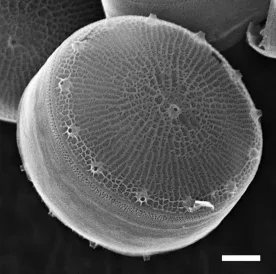
Thalassiosira pseudonana.png · Resized and converted to WebP for display. Source-identified documentary image; see the original file for method and context. AI-generated illustration. hor Philip Gröger, Nicole Poulsen, Jennifer Klemm, Nils Kröger & Michael Schlierf · CC BY-SA 4.0

Field guide · species
Thalassiosira pseudonana
Hasle & Heimdal, 1970
Thalassiosira pseudonana is a centric diatom with a silica-based cell wall. Its genome helped reveal how a photosynthetic marine microbe acquires nutrients and constructs a precisely patterned external structure.
Public research profile · final editorial review pending.
Tree of lifeScientific lineage
- LifeLife
- DomainEukaryota
- PhylumBacillariophyta
- ClassThalassiosirophyceae
- OrderThalassiosirales
- FamilyThalassiosiraceae
- GenusThalassiosira
- SpeciesThalassiosira pseudonana
Advanced classification
Complete source lineage, including intermediate ranks. The standard view uses Life and the eight principal ranks.
- cellular organisms cellular root
- Eukaryota domain
- Sar clade
- Stramenopiles clade
- Ochrophyta clade
- Bacillariophyta phylum
- Thalassiosirophyceae class
- Thalassiosirophycidae subclass
- Thalassiosirales order
- Thalassiosiraceae family
- Thalassiosira genus
- Thalassiosira pseudonana species
Structure and identification
Cells have the rounded symmetry typical of a centric diatom. Fine wall patterning is best examined with microscopy.
Habitat and range
Marine aquatic conditions and appropriately supplied cultures support its photosynthetic growth.
Nutrition and metabolism
Light drives carbon fixation. Silicon, nitrogen, iron and other resources are also needed; carbon supply alone does not ensure growth.
Biological activity
Nutrient transport and metabolic regulation connect cells with fluctuating dissolved resources.
Reproduction and life cycle
Vegetative division produces daughter cells and newly constructed wall material. Silicic-acid transport and wall-formation genes support this process.
Geographic distribution
The reference genome comes from an authenticated strain. Related environmental observations need species-specific confirmation.
Ecological role
Primary production and silica use connect its growth with aquatic carbon and mineral cycles.
Distinctive adaptations
The genome study identified genes for silicic-acid uptake and construction of a silica-based cell wall. It also found capacities for iron uptake, varied nitrogen use and a complete urea cycle. These findings link the distinctive wall with less visible nutrient-processing machinery important in an aquatic cell.
Evidence
Sources
Connected life
Relationships
No reviewed ecological connections in the collection yet.
Explore network ↗