 Living Beings
 Framed for display
Try a comparison
How to compare two organisms
Choose two species and trace their closest shared group. Then compare a trait with the same definition on each side. Check the units, life stage and context before interpreting a measurement or range.
Missing data means that the collection lacks a sourced value. Where a characteristic does not apply to a lineage, the comparison labels it separately. Open the two profiles for context and follow their sources before drawing a conclusion.
Biological comparison
Means, ranges and reported maxima describe different things. Check the source and population before comparing values.
Classification
Shared ancestry
Closest shared evolutionary group · Felinae.
Separate lineages
| Characteristic | Cheetah | Bay Cat |
|---|---|---|
Scientific measurements | Scientific measurements | |
| Body mass |
38.0 kg
Mean · Adult Source and measurement contextLiterature value used in a comparative paper. The authors separate these mass references from their zoo sample. · ≈ 83.8 lb Mass of an individual animal.
| No measurement recorded |
Natural history | Natural history | |
| Nutrition and energy acquisition |
Gazelles and other small to medium-sized mammals are important prey. Actual prey varies with location and opportunity. Source 1 ↗Source 2 ↗ |
Published accounts report small mammals and birds among possible foods, but its wild diet is not comprehensively documented. Source 1 ↗Source 2 ↗ |
| Habitat |
Grassland, dry open country and other habitats with space for pursuit are used. Source 1 ↗Source 2 ↗ |
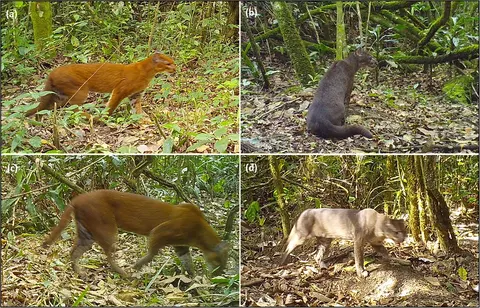
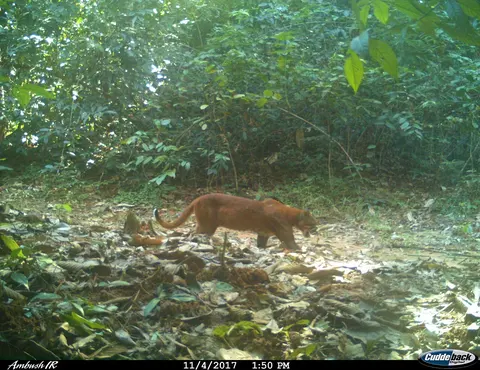
Forest habitats, including dense primary forest, are associated with its occurrence. Camera traps documented the bay cat in a heavily …Forest habitats, including dense primary forest, are associated with its occurrence. Camera traps documented the bay cat in a heavily logged commercial forest in Borneo. That evidence establishes use of the surveyed site. It leaves open how density and long-term survival compare with less disturbed forest. |
| Geographic distribution |
The Mammal Diversity Database v2.5 records this species in Algeria, Angola, Benin, Botswana, Burkina Faso, Central African Republic, Chad, Eswatini, …The Mammal Diversity Database v2.5 records this species in Algeria, Angola, Benin, Botswana, Burkina Faso, Central African Republic, Chad, Eswatini, Ethiopia, Iran, Kenya, Mali, Mozambique, Namibia, Niger, South Africa, South Sudan, Tanzania, Uganda, Zambia, Zimbabwe, Djibouti?, Egypt?, Eritrea?, Libya?, Somalia?, Sudan?, Togo?. |
The Mammal Diversity Database v2.5 records this species in Brunei, Indonesia, Malaysia. Source 1 ↗Source 2 ↗ |
| Morphology |
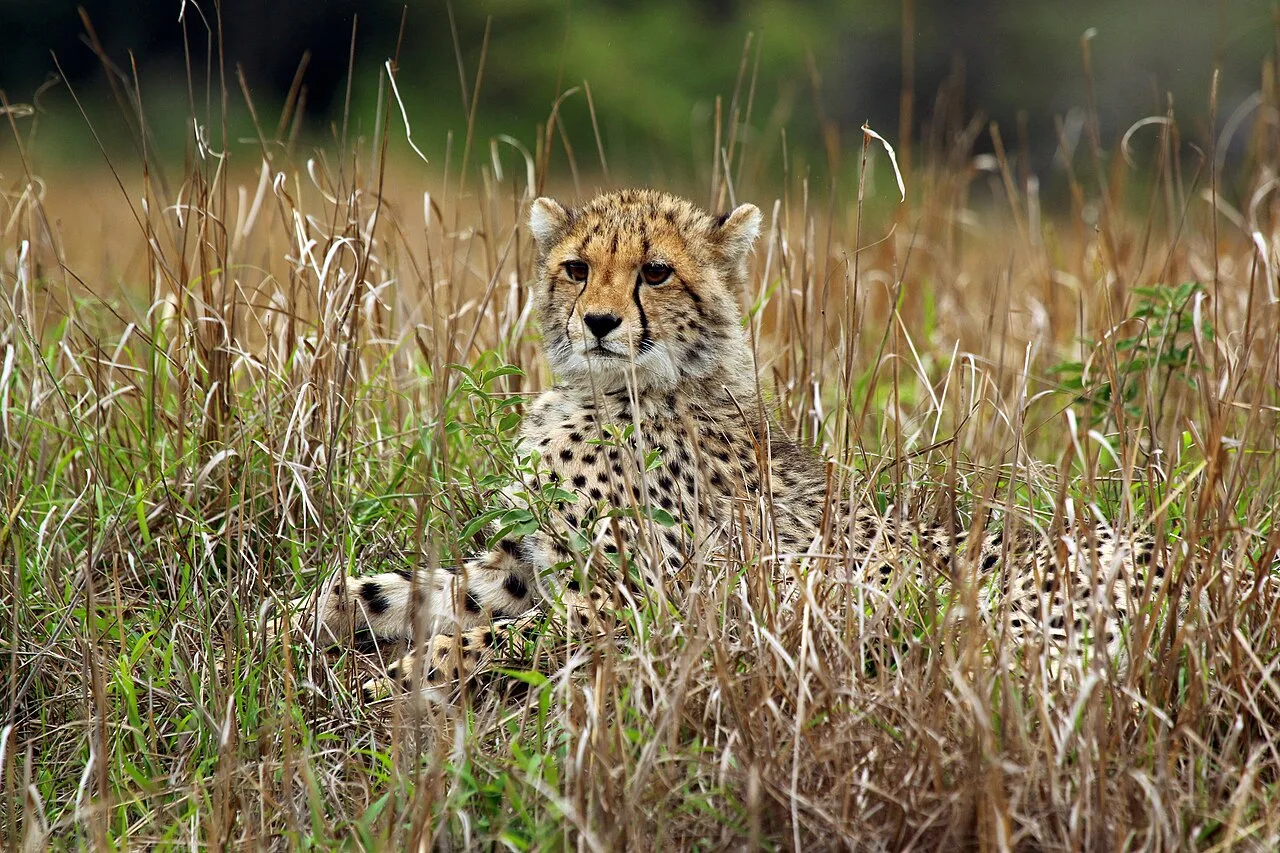
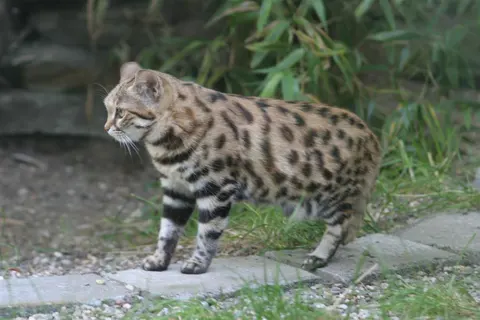
A small rounded head, spotted coat and long legs produce a slender outline. Dark facial lines extend below the eyes. Source 1 ↗Source 2 ↗ |
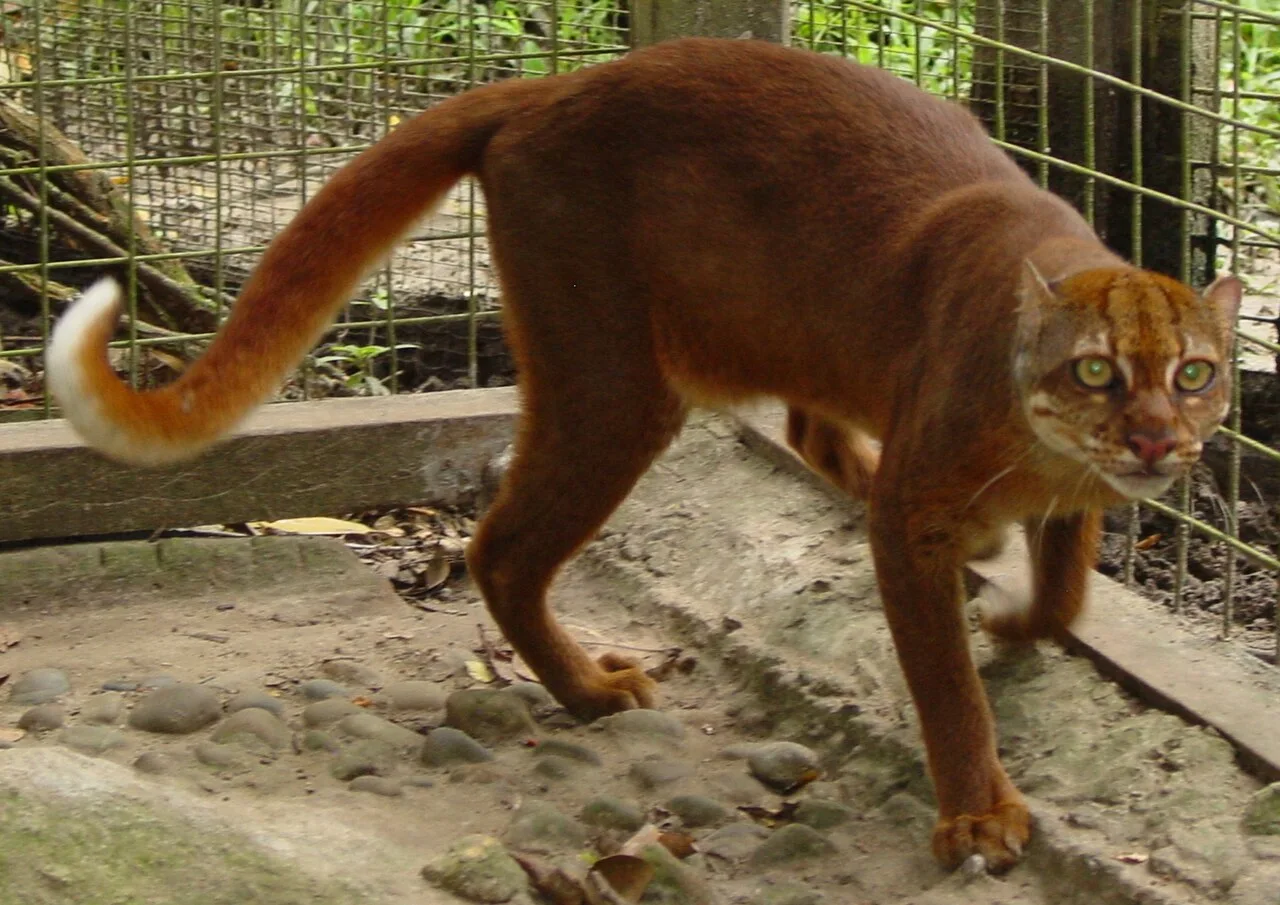
Reddish and grayish coats occur, with rounded ears and a relatively elongated tail. Source 1 ↗Source 2 ↗ |
| Ecological role |
No separate account recorded |
Survey placement affects what a camera records. A path used by researchers or other carnivores may miss an animal that …Survey placement affects what a camera records. A path used by researchers or other carnivores may miss an animal that usually travels elsewhere. The Bornean field study evaluated survey design as well as species detections, a distinction worth keeping when interpreting a rare cat’s apparent absence. |
| Behavior and activity |
Social organization differs between individuals: some males associate in coalitions, while females raising young face different demands. Source 1 ↗Source 2 ↗ |
Its secretive life makes observations scarce. Reports of nighttime activity do not establish an unvarying schedule for every individual. Source 1 ↗Source 2 ↗ |
| Environmental adaptations |
Researchers fitted free-ranging cheetahs in Botswana with movement recorders and measured whole hunting runs. Many chases stayed below the highest …Researchers fitted free-ranging cheetahs in Botswana with movement recorders and measured whole hunting runs. Many chases stayed below the highest speed the animals reached. The recorders showed rapid acceleration, braking and sideways changes in direction, all of which matter when prey turns. A cheetah’s ability to match an evasive animal is therefore better understood from the entire chase than from its top speed alone. |
No separate account recorded |
Sources from both profiles
Cheetah
More comparisons
Framed for display

 Framed for display

 Framed for display
