 Living Beings
 Framed for display
Compare species
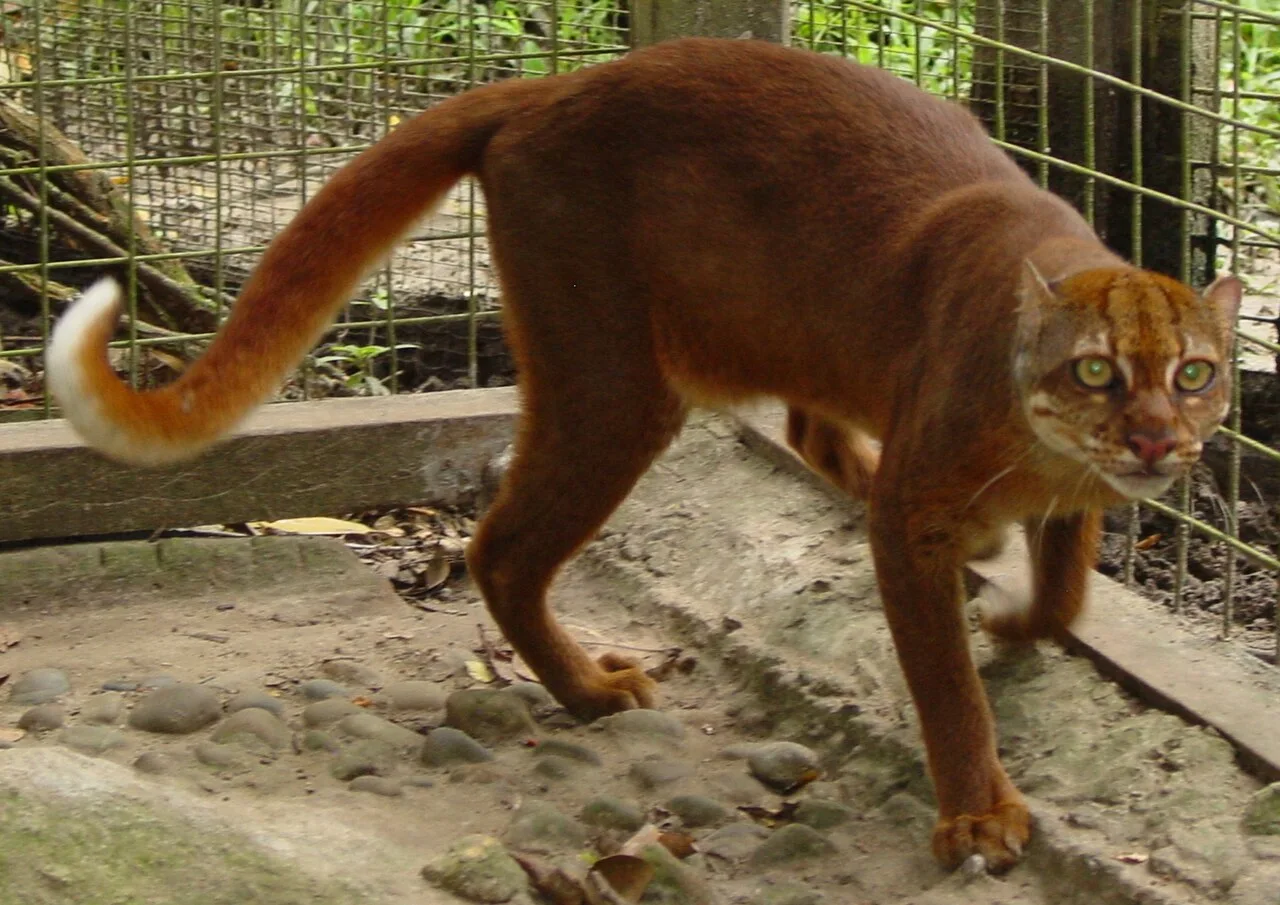
Bay Cat
Catopuma badia
Asian Golden Cat
Catopuma temminckii
Try a comparison
How to compare two organisms
Choose two species and trace their closest shared group. Then compare a trait with the same definition on each side. Check the units, life stage and context before interpreting a measurement or range.
Missing data means that the collection lacks a sourced value. Where a characteristic does not apply to a lineage, the comparison labels it separately. Open the two profiles for context and follow their sources before drawing a conclusion.
Biological comparison
Means, ranges and reported maxima describe different things. Check the source and population before comparing values.
Classification
Shared ancestry
Closest shared taxon · Catopuma.
- LifeLife
- DomainEukaryota
- KingdomAnimalia
- PhylumChordata
- ClassMammalia
- OrderCarnivora
- FamilyFelidae
- GenusCatopuma
Separate lineages
Bay CatspeciesCatopuma badia
Asian Golden CatspeciesCatopuma temminckii
| Characteristic | Bay Cat | Asian Golden Cat |
|---|---|---|
Scientific measurements | Scientific measurements | |
| Head and body length | No measurement recorded |
0.71–1.05 m
Reported range Source and measurement contextThe group distinguishes body length from its separate tail length range. · ≈ 2.3–3.44 ft Head and body, excluding the tail.
|
Natural history | Natural history | |
| Nutrition and energy acquisition |
Published accounts report small mammals and birds among possible foods, but its wild diet is not comprehensively documented. Source 1 ↗Source 2 ↗ |
Small mammals and other vertebrates form its carnivorous diet. It can take a range of prey sizes. Source 1 ↗Source 2 ↗ |
| Habitat |
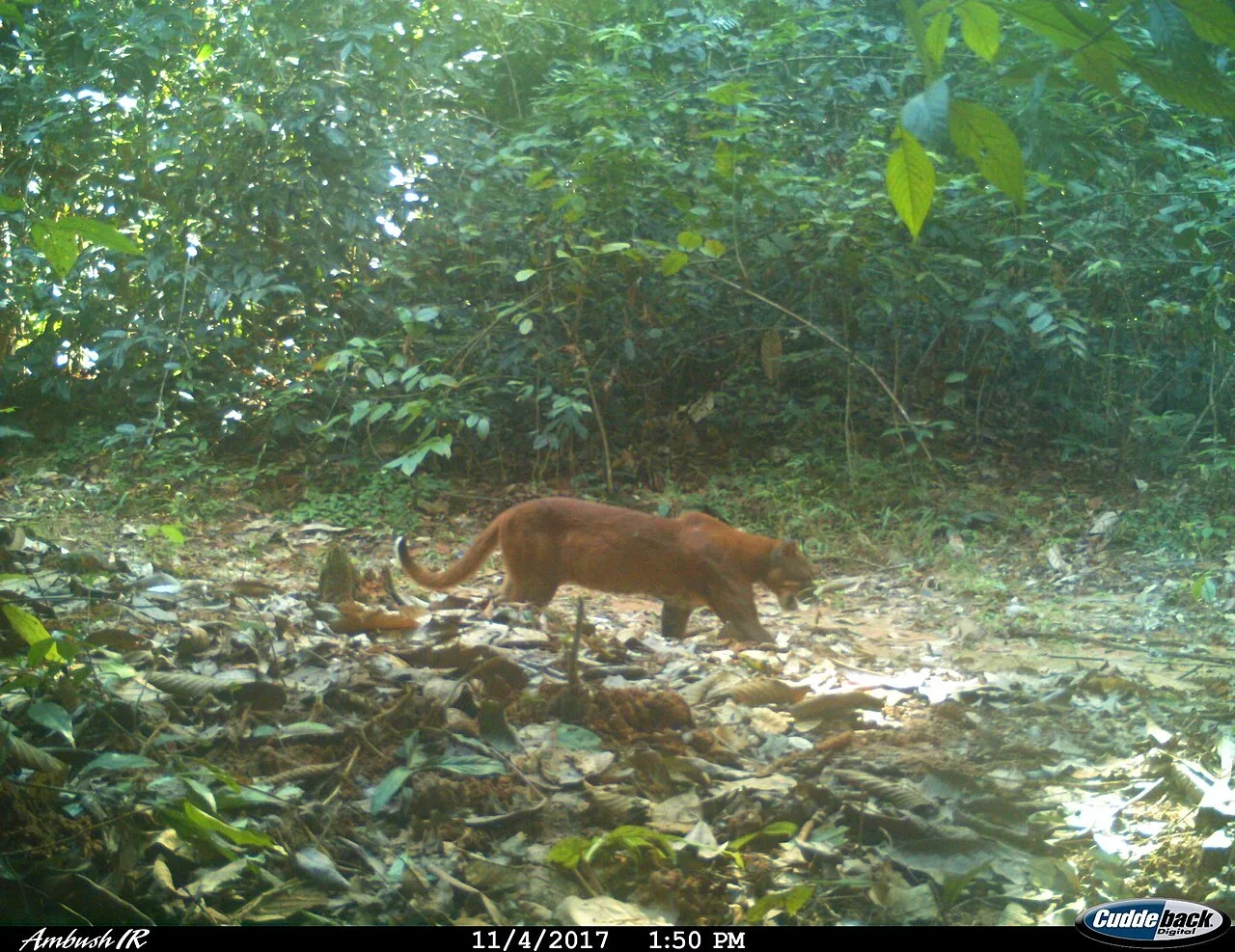
Forest habitats, including dense primary forest, are associated with its occurrence. Camera traps documented the bay cat in a heavily …Forest habitats, including dense primary forest, are associated with its occurrence. Camera traps documented the bay cat in a heavily logged commercial forest in Borneo. That evidence establishes use of the surveyed site. It leaves open how density and long-term survival compare with less disturbed forest. |
Different forest types are used, including evergreen and deciduous woodland. Source 1 ↗Source 2 ↗ |
| Geographic distribution |
The Mammal Diversity Database v2.5 records this species in Brunei, Indonesia, Malaysia. Source 1 ↗Source 2 ↗ |
The Mammal Diversity Database v2.5 records this species in Bangladesh, Bhutan, Cambodia, China, India, Indonesia, Laos, Malaysia, Myanmar, Nepal, Thailand, Vietnam. Source 1 ↗Source 2 ↗ |
| Morphology |
Reddish and grayish coats occur, with rounded ears and a relatively elongated tail. Source 1 ↗Source 2 ↗ |
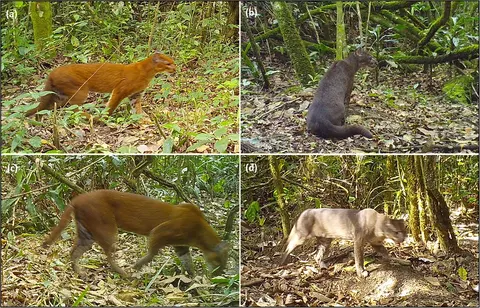
Coat colors vary, and facial markings can be useful distinguishing features. A golden coat is only one form of this …Coat colors vary, and facial markings can be useful distinguishing features. A golden coat is only one form of this cat. Some individuals are gray or dark, and a spotted form with rosettes has been recorded in Bhutan and parts of China. Look at the light facial lines bordered by dark fur as well as coat color when interpreting a camera-trap photograph. |
| Ecological role |
Survey placement affects what a camera records. A path used by researchers or other carnivores may miss an animal that …Survey placement affects what a camera records. A path used by researchers or other carnivores may miss an animal that usually travels elsewhere. The Bornean field study evaluated survey design as well as species detections, a distinction worth keeping when interpreting a rare cat’s apparent absence. |
Camera traps have recorded Asian golden cats during daylight and at other times of day. Radio tracking of two individuals …Camera traps have recorded Asian golden cats during daylight and at other times of day. Radio tracking of two individuals in Thailand's Phu Khiao Wildlife Sanctuary found a similar pattern. Local observations help describe when the cats move through a forest, though activity across the whole range remains less well known. |
| Behavior and activity |
Its secretive life makes observations scarce. Reports of nighttime activity do not establish an unvarying schedule for every individual. Source 1 ↗Source 2 ↗ |
Tracking studies demonstrate that assumptions based only on occasional night sightings can be misleading. Activity varies rather than fitting a simple universal nocturnal label. Source 1 ↗Source 2 ↗ |
Sources from both profiles
Bay Cat
More comparisons
Framed for display

 Framed for display

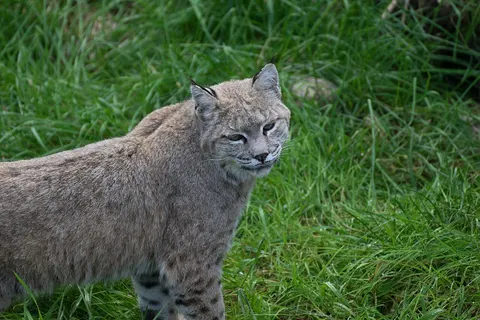 Framed for display
