 Living Beings
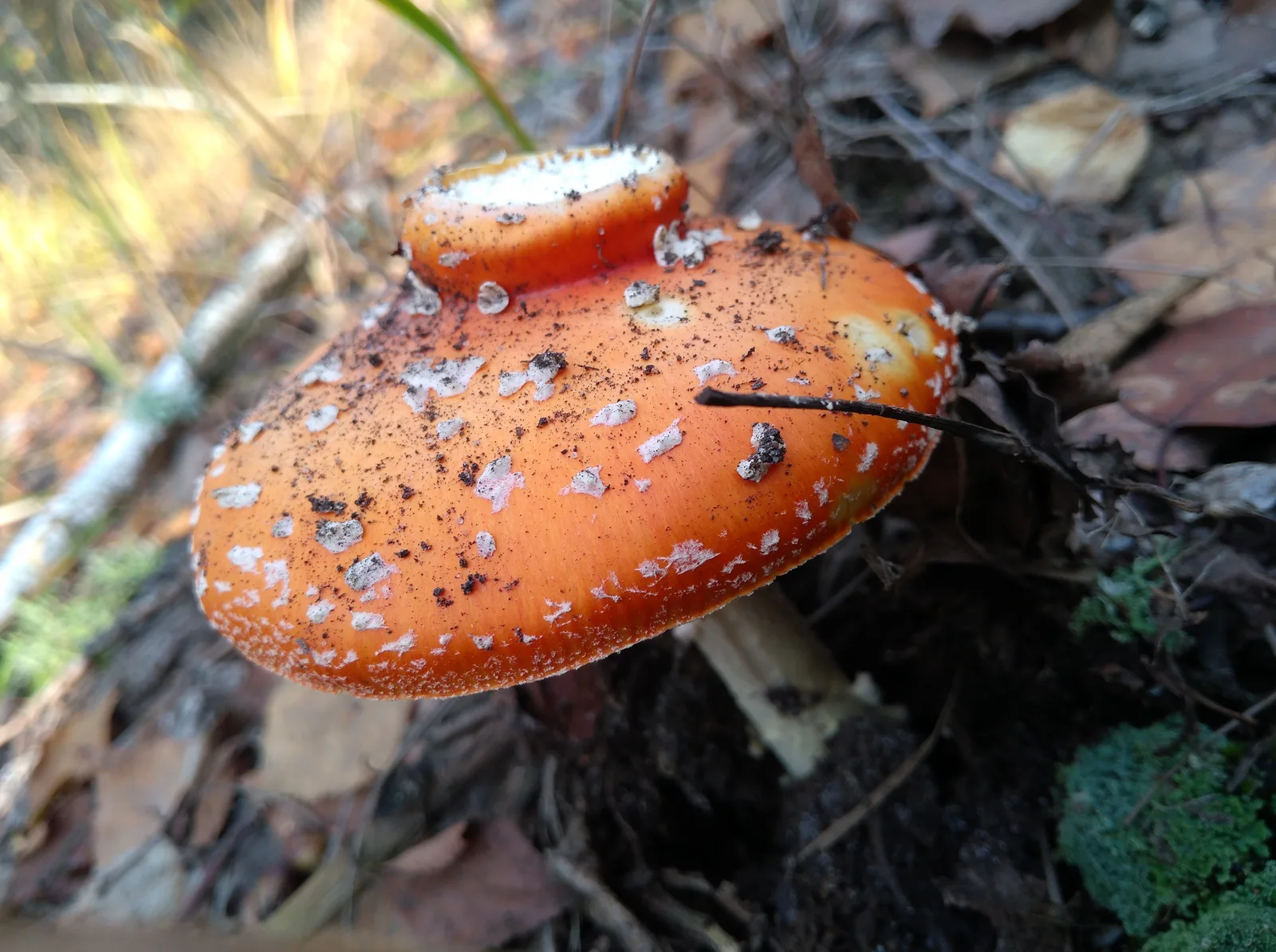
Amanita muscaria, Kyiv Region, Pushcha-Vodytsia Forestry.jpg · Resized and converted to WebP for display. Documentary organism photograph; source identification retained. AI-generated illustration. K. Chaikovska (Kate Chkv) · CC BY 4.0

Field guide · species
Fly Agaric
Amanita muscaria (L.) Lam., 1783
The fly agaric is a conspicuous mushroom-forming fungus, often recognized by a red cap carrying pale veil remnants. The visible mushroom is a temporary reproductive structure of a much less visible fungal network.
Public research profile · final editorial review pending.
Tree of lifeScientific lineage
- LifeLife
- DomainEukaryota
- KingdomFungi
- PhylumBasidiomycota
- ClassAgaricomycetes
- OrderAgaricales
- FamilyAmanitaceae
- GenusAmanita
- SpeciesAmanita muscaria
Advanced classification
Complete source lineage, including intermediate ranks. The standard view uses Life and the eight principal ranks.
- cellular organisms cellular root
- Eukaryota domain
- Opisthokonta clade
- Fungi kingdom
- Dikarya subkingdom
- Basidiomycota phylum
- Agaricomycotina subphylum
- Agaricomycetes class
- Agaricomycetidae subclass
- Agaricales order
- Pluteineae suborder
- Amanitaceae family
- Amanita genus
- Amanita muscaria species
Structure and identification
A pale stem supports free, crowded white gills and a cap that changes shape as it expands. A ring and a swollen stem base are important features beyond the cap color alone.
Habitat and range
It grows in association with trees, forming ectomycorrhizal partnerships rather than simply decomposing a fallen log.
Nutrition and metabolism
The fungus receives carbon from a plant partner through its mycorrhizal association. Its soil mycelium participates in the exchange of resources.
Reproduction and life cycle
Spores develop on the gills and disperse from the mature mushroom. Established mycelium can later produce additional fruiting bodies.
Geographic distribution
The illustrated specimen was photographed in Ukraine. Introduced populations are also documented in New Zealand; related fly-agaric lineages and regional forms need careful taxonomic interpretation.
Ecological role
Introductions associated with trees can bring this fungus into ecosystems outside its original range.
Distinctive adaptations
Veil remnants change as the mushroom expands or weathers. A red cap with white spots alone is not a sufficient basis for identifying an unfamiliar mushroom.
Evidence
Sources
- Amanita muscaria · NCBI Taxonomy ↗www.ncbi.nlm.nih.gov
- Amanita muscaria · Biological reference ↗virtualmycota.landcareresearch.co.nz
- Amanita muscaria · Biological reference ↗scmycoflora.org
Connected life
Relationships
No reviewed ecological connections in the collection yet.
Explore network ↗