 Living Beings

 Framed for display
Species · Aspergillus
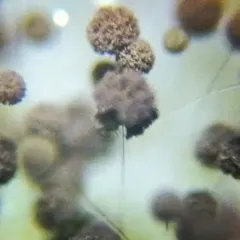
Aspergillus niger
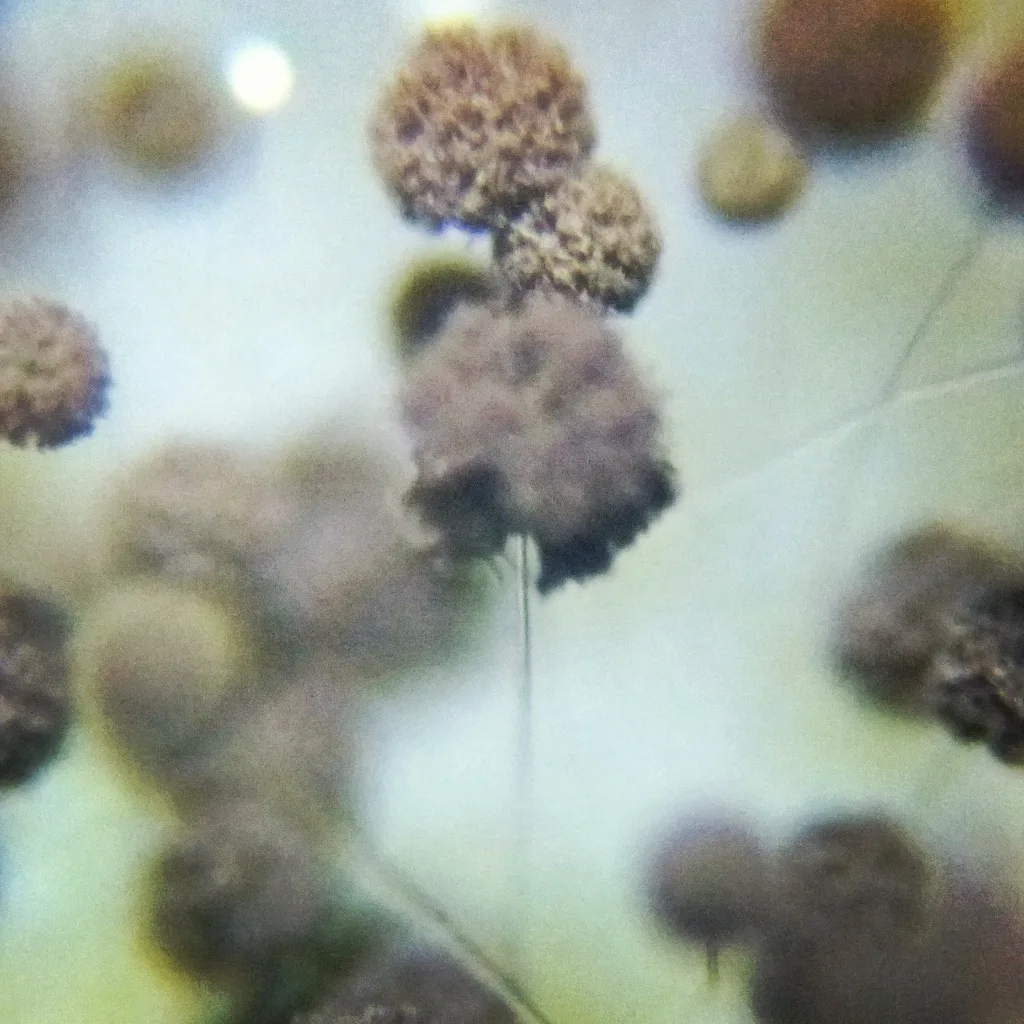
Aspergillus niger
Aspergillus niger is a filamentous fungus whose dark spore-bearing heads are familiar in microbiology. Selected strains are used in fermentation to produce …
Kingdom · Scientific classification
Fungi obtain nutrients by absorption and include yeasts, molds and mushroom-forming lineages.
 Framed for display
Explore broader group · Eukaryota ↗
NCBI Taxonomy (2026-11-05 reconciled backbone) · Taxon source ↗
Group guide
Fungi obtain organic nutrients by absorption. Many grow as branching filaments called hyphae. The network of hyphae is the mycelium. A mushroom is a reproductive structure made by some fungi, while much of the organism can be spread through soil, wood or another substrate.
Source for feeding by absorption ↗Fungal groups include decomposers, parasites and partners of other organisms. In mycorrhizae, fungal hyphae associate with plant roots. Yeast describes a growth form, and evolutionary classification uses characters and molecular evidence to place species into lineages.
Source for more than decomposers ↗A morel makes its sexual spores inside saclike cells, while a typical gilled mushroom makes them on the outside of specialized cells. Some early-diverging fungi produce motile spores with flagella. These differences are reminders that a spore is a reproductive or dispersal stage with structures that vary across lineages.
Source for spores show how diverse fungi are ↗Fungi · kingdom · Original classification source
The original identifier and source were retained when adopting the dated NCBI backbone. Different sources may use different names, ranks or group circumscriptions.
Within this taxon
Framed for display
Aspergillus niger
Aspergillus niger is a filamentous fungus whose dark spore-bearing heads are familiar in microbiology. Selected strains are used in fermentation to produce …
 Framed for display
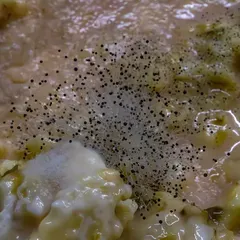
Rhizopus stolonifer
Black bread mold spreads rapidly over suitable organic material. Its pale hyphae produce dark, rounded sporangia, giving a mature colony its familiar …
 Framed for display
Saccharomyces cerevisiae
Saccharomyces cerevisiae is a budding yeast associated with both natural substrates and human fermentation. Its single-celled growth form makes it a fungus …
 Framed for display
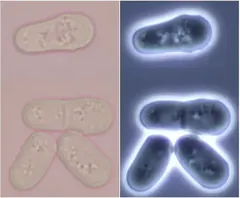
Schizosaccharomyces pombe
Fission yeast is a single-celled fungus that divides across the middle rather than producing the unequal buds familiar in brewer's yeast. It …
 Framed for display
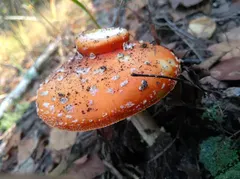
Amanita muscaria
The fly agaric is a conspicuous mushroom-forming fungus, often recognized by a red cap carrying pale veil remnants. The visible mushroom is …
 Framed for display
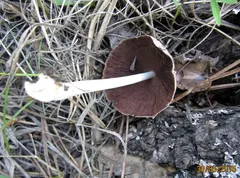
Coprinopsis cinerea
The gray inkcap is a mushroom-forming fungus widely used to study development. The same organism can follow several growth pathways, from an …
 Framed for display
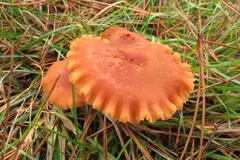
Laccaria bicolor
Laccaria bicolor is a forest fungus that forms ectomycorrhizas with living tree roots. Its mushrooms are only the visible reproductive structures of …
 Framed for display
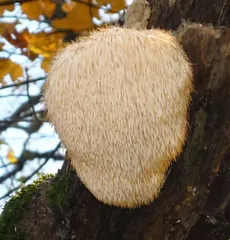
Hericium erinaceus
Lion’s mane forms a pale mass of dangling teeth on hardwood. These teeth carry the spore-producing surface, replacing the familiar gills of …
 Framed for display
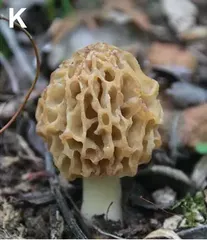
Morchella esculenta
Morchella esculenta is a yellow morel with a conspicuously pitted fruiting body. This profile uses the modern, narrower species concept linked to …
 Framed for display
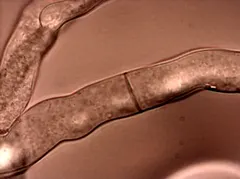
Neurospora crassa
Neurospora crassa is a filamentous fungus known for orange spore masses and its role in the history of genetics. A branching mycelium, …
 Framed for display
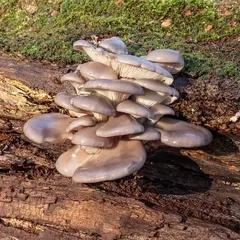
Pleurotus ostreatus
The oyster mushroom forms overlapping shelves on wood. It is both a wild decomposer and an extensively cultivated fungus, with fruiting-body development …
Penicillium rubens
Penicillium rubens is a filamentous mold whose name is important in the history of penicillin. Taxonomic reassessment separated it from a broader …
 Framed for display
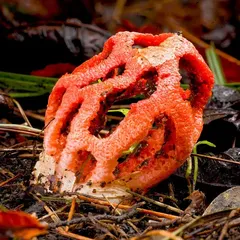
Clathrus ruber
The red cage fungus is a stinkhorn that produces a hollow, lattice-like fruiting body. Its unusual architecture helps present a spore-bearing, odorous …
 Framed for display
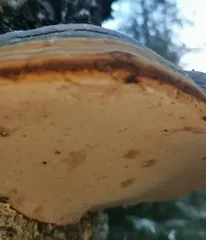
Fomes fomentarius
The tinder fungus is a tough perennial bracket that often becomes hoof-shaped. Its woody fruiting bodies remain attached to hardwood and can …
 Framed for display
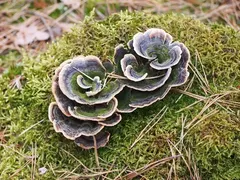
Trametes versicolor
Turkey tail forms thin, often overlapping brackets on dead wood. Its contrasting bands make it conspicuous, while its white-rot physiology enables breakdown …