Living Beings
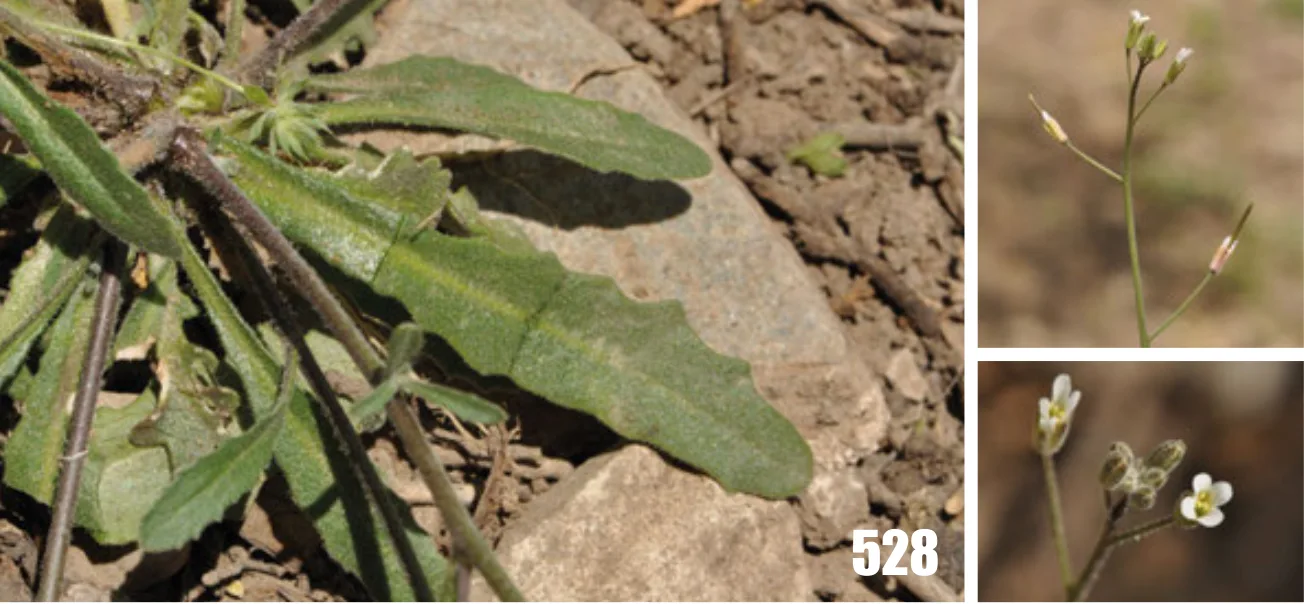
Arabidopsis thaliana (Flora of Tajikistan).png · Resized and converted to WebP for display. Source-identified documentary image; see the original file for method and context. AI-generated illustration. Arkadiusz Nowak, Marcin Nobis, Sylwia Nowak, Agnieszka Nobis, Anna Wróbel, Sebastian Świerszcz, Ewelina Klichowska, Iwona Dembicz & Grzegorz Kusza · CC BY 4.0

Field guide · species
Thale Cress
Arabidopsis thaliana (L.) Heynh., 1842
Thale cress is a small flowering plant in the mustard family and a major research organism. A rosette of leaves gives rise to a flowering stem, allowing the transition from vegetative growth to reproduction to be followed in a compact plant.
Public research profile · final editorial review pending.
Tree of lifeScientific lineage
- LifeLife
- DomainEukaryota
- KingdomViridiplantae
- PhylumStreptophyta
- ClassMagnoliopsida
- OrderBrassicales
- FamilyBrassicaceae
- GenusArabidopsis
- SpeciesArabidopsis thaliana
Advanced classification
Complete source lineage, including intermediate ranks. The standard view uses Life and the eight principal ranks.
- cellular organisms cellular root
- Eukaryota domain
- Viridiplantae kingdom
- Streptophyta phylum
- Streptophytina subphylum
- Embryophyta clade
- Tracheophyta clade
- Euphyllophyta clade
- Spermatophyta clade
- Magnoliopsida class
- Mesangiospermae clade
- eudicotyledons clade
- Gunneridae clade
- Pentapetalae clade
- rosids clade
- malvids clade
- Brassicales order
- Brassicaceae family
- Camelineae tribe
- Arabidopsis genus
- Arabidopsis thaliana species
Structure and identification
Small rosette leaves, slender flowering stems and white, four-petalled flowers characterize the plant. Long, narrow fruits contain many small seeds.
Habitat and range
Open, disturbed ground and other relatively sparse vegetation provide growing sites. Laboratory accessions represent only part of natural diversity.
Nutrition and metabolism
Leaves manufacture sugars by photosynthesis. Stored seed reserves support the seedling before its leaves become established.
Biological activity
Flowering responds to inherited differences and environmental conditions, including temperature history and day length.
Reproduction and life cycle
Plants usually self-pollinate. Depending on genotype and conditions, a laboratory generation can be completed within weeks; wild seasonal cycles differ.
Geographic distribution
Native populations occur in Africa, Asia and Europe; the species is naturalized in other regions.
Ecological role
This small annual exploits gaps where competition is limited. Seed dormancy helps bridge unsuitable periods.
Distinctive adaptations
A short generation time, small size and abundant seed production facilitate both colonization and genetic research.
Conservation
Research stocks are not substitutes for conserving natural genetic diversity. No formal threat category is inferred from laboratory abundance.
Evidence
Sources
- Arabidopsis thaliana · NCBI Taxonomy ↗NCBI
- Arabidopsis thaliana · Scientific account ↗
- Arabidopsis thaliana — Plants of the World Online, Royal Botanic Gardens, Kew ↗Plants of the World Online, Royal Botanic Gardens, Kew
- Arabidopsis thaliana — Arabidopsis Biological Resource Center, Ohio State University ↗Arabidopsis Biological Resource Center, Ohio State University
Connected life
Relationships
No reviewed ecological connections in the collection yet.
Explore network ↗