 Living Beings

 Framed for display
Species · Adansonia
African Baobab
Adansonia digitata
The African baobab is a tropical tree recognized by its enormous trunk and spreading crown. Its scientific epithet refers to the hand-like …
Class · Scientific classification
Magnoliopsida is the class used for flowering plants in the adopted NCBI classification, from rice and orchids to oaks.
 Framed for display
Explore broader group · Streptophyta ↗
NCBI Taxonomy (2026-11-05 reconciled backbone) · Taxon source ↗
Group guide
The NCBI record groups angiosperms under Magnoliopsida. On this tree, rice and oaks both descend from the class. When comparing this tree with the Angiosperm Phylogeny Group treatment, use the order and family names to orient yourself. That treatment organizes the flowering plants around evolutionary groups and formally classifies their orders and families.
Source for read the class name with its source ↗In the flowering plant Arabidopsis, researchers imaged the events of double fertilization. One sperm cell fuses with the egg, starting the embryo. Another fuses with the central cell, starting the endosperm that helps support embryo development. This connects the reproductive structures in a flower with the tissues that develop in a seed.
Source for two fusions inside an ovule ↗Magnoliopsida · class · Original classification source
The original identifier and source were retained when adopting the dated NCBI backbone. Different sources may use different names, ranks or group circumscriptions.
Within this taxon
Framed for display
Adansonia digitata
The African baobab is a tropical tree recognized by its enormous trunk and spreading crown. Its scientific epithet refers to the hand-like …
 Framed for display
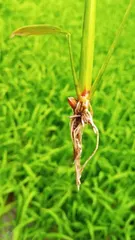
Oryza sativa
Asian rice is an annual grass cultivated for its grains. It grows as a clump of shoots and produces a branching flowering …
 Framed for display
Helianthus annuus
The common sunflower is a fast-growing annual in the daisy family. Its conspicuous head is a collection of many small flowers, rather …
 Framed for display
Rosa canina
The dog rose is a scrambling wild rose whose arching stems carry simple-looking flowers followed by orange-red hips. It is a familiar …
 Framed for display
Victoria amazonica
Victoria amazonica is an aquatic flowering plant with large floating leaves and remarkable night-opening flowers. It belongs to a genus of giant …
 Framed for display
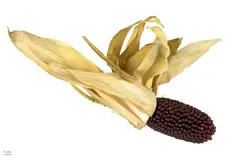
Zea mays
Maize is a domesticated grass whose large ears contain rows of kernels. Pollen-producing tassels and seed-bearing ears are separate structures on the …
 Framed for display
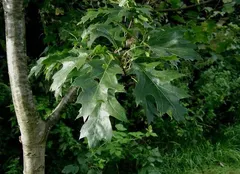
Quercus rubra
Northern red oak is a deciduous tree native to eastern and central North America. Its bristle-tipped leaves and acorns help distinguish it …
 Framed for display
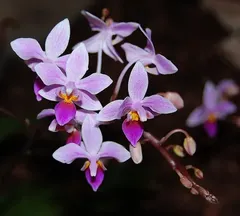
Phalaenopsis equestris
This tropical moth orchid is a natural species and an important parent of cultivated hybrids. It grows as an epiphyte and uses …
 Framed for display
Nelumbo nucifera
The sacred lotus is a perennial aquatic flowering plant rooted in muddy freshwater. Broad round leaves, solitary flowers and spreading rhizomes make …
 Framed for display
Carnegiea gigantea
The saguaro is a giant, columnar cactus of the Sonoran Desert. Its water-storing stem, shallow spreading roots and seasonal flowers link a …
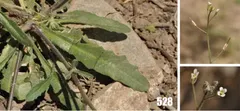 Framed for display
Arabidopsis thaliana
Thale cress is a small flowering plant in the mustard family and a major research organism. A rosette of leaves gives rise …
 Framed for display
Dionaea muscipula
The Venus flytrap is a photosynthetic plant whose hinged leaves also capture small animals. Carnivory supplies nutrients in a habitat where soil …