 Living Beings
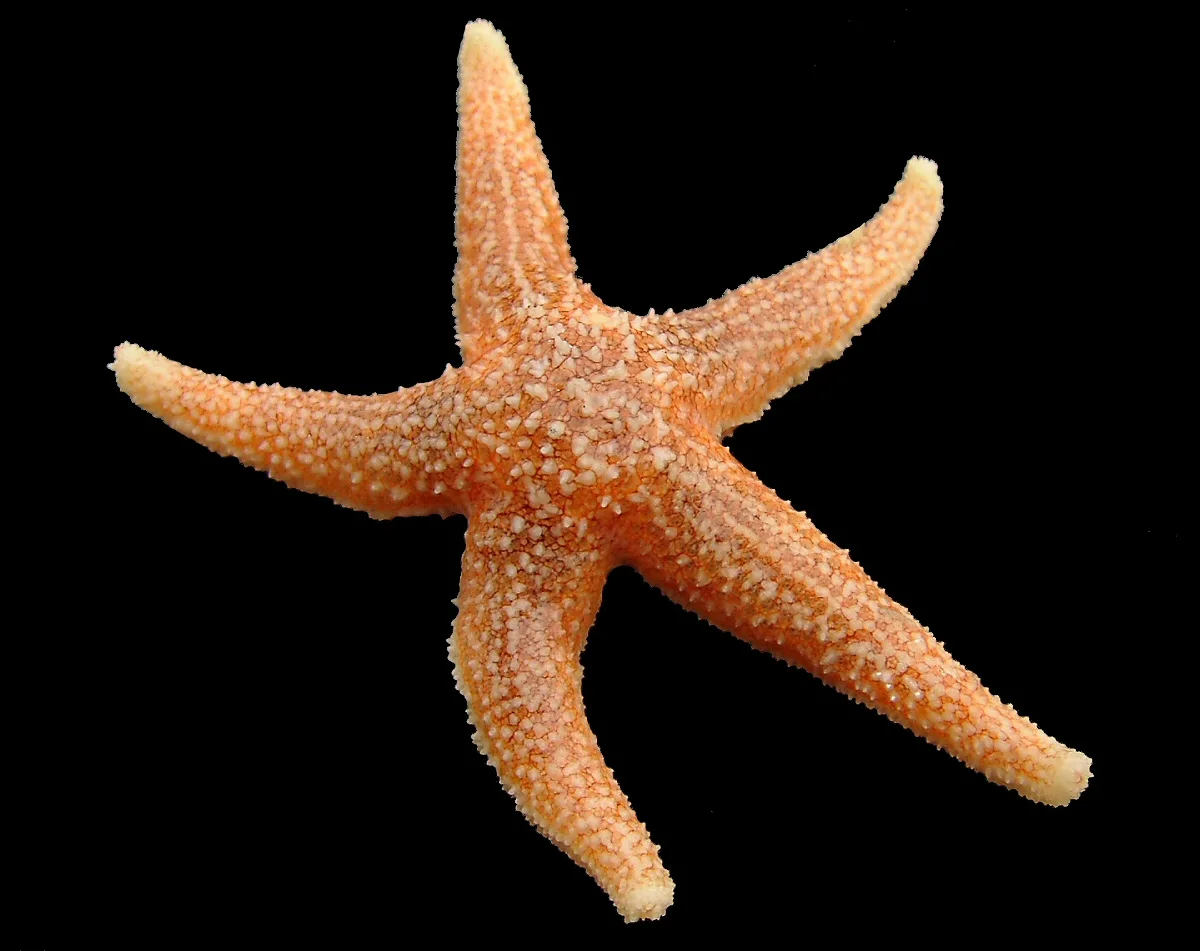
Asterias rubens.jpg · Resized and converted to WebP for display. Documentary organism photograph. AI-generated illustration. Hans Hillewaert · CC BY-SA 4.0

Field guide · species
European Starfish
Asterias rubens Linnaeus, 1758
The European starfish is a five-armed marine predator often associated with shellfish beds. Tube feet provide both movement and a way to manipulate prey, while feeding and reproduction respond to environmental conditions.
Public research profile · final editorial review pending.
Tree of lifeScientific lineage
- LifeLife
- DomainEukaryota
- KingdomAnimalia
- PhylumEchinodermata
- ClassAsteroidea
- OrderForcipulatida
- FamilyAsteriidae
- GenusAsterias
- SpeciesAsterias rubens
Advanced classification
Complete source lineage, including intermediate ranks. The standard view uses Life and the eight principal ranks.
- cellular organisms cellular root
- Eukaryota domain
- Opisthokonta clade
- Metazoa kingdom
- Eumetazoa clade
- Bilateria clade
- Deuterostomia clade
- Echinodermata phylum
- Eleutherozoa clade
- Asterozoa superclass
- Asteroidea class
- Forcipulatacea superorder
- Forcipulatida order
- Asteriidae family
- Asterias genus
- Asterias rubens species
Physical traits
Adults usually have five broad arms around a central disc. The upper surface is rough, and color varies.
Habitat and range
Rocky, sandy and mixed seabeds support this starfish, including areas with abundant bivalves.
Diet and nutrition
Bivalves are important prey. A starfish can use tube feet to gain access and digest food with its everted stomach.
Behavior and activity
Slow movement across the seabed brings individuals into contact with food and other starfish.
Reproduction and life cycle
Eggs and sperm are released into seawater. Larvae develop in the plankton before settling and changing into juveniles.
Geographic distribution
The species is associated with the northeastern Atlantic and adjacent European seas. Local records are more informative than a generalized global range.
Ecological role
Predation can influence shellfish communities. Its reproductive investment can change with temperature and food supply.
Distinctive adaptations
A water-vascular system powers tube feet, and damaged arms can regenerate under suitable conditions.
Conservation
Laboratory warming experiments reveal possible sensitivities, not a universal prediction for every wild population. No formal status is assigned here.
Evidence
Sources
- Asterias rubens · NCBI Taxonomy ↗NCBI
- Impact of ocean warming and food restriction on the fecundity of the sea star Asterias rubens ↗Marine environmental research · 2025
- Asterias rubens — Animal Diversity Web, University of Michigan ↗Animal Diversity Web, University of Michigan
Connected life
Relationships
No reviewed ecological connections in the collection yet.
Explore network ↗