 Living Beings
Compare species
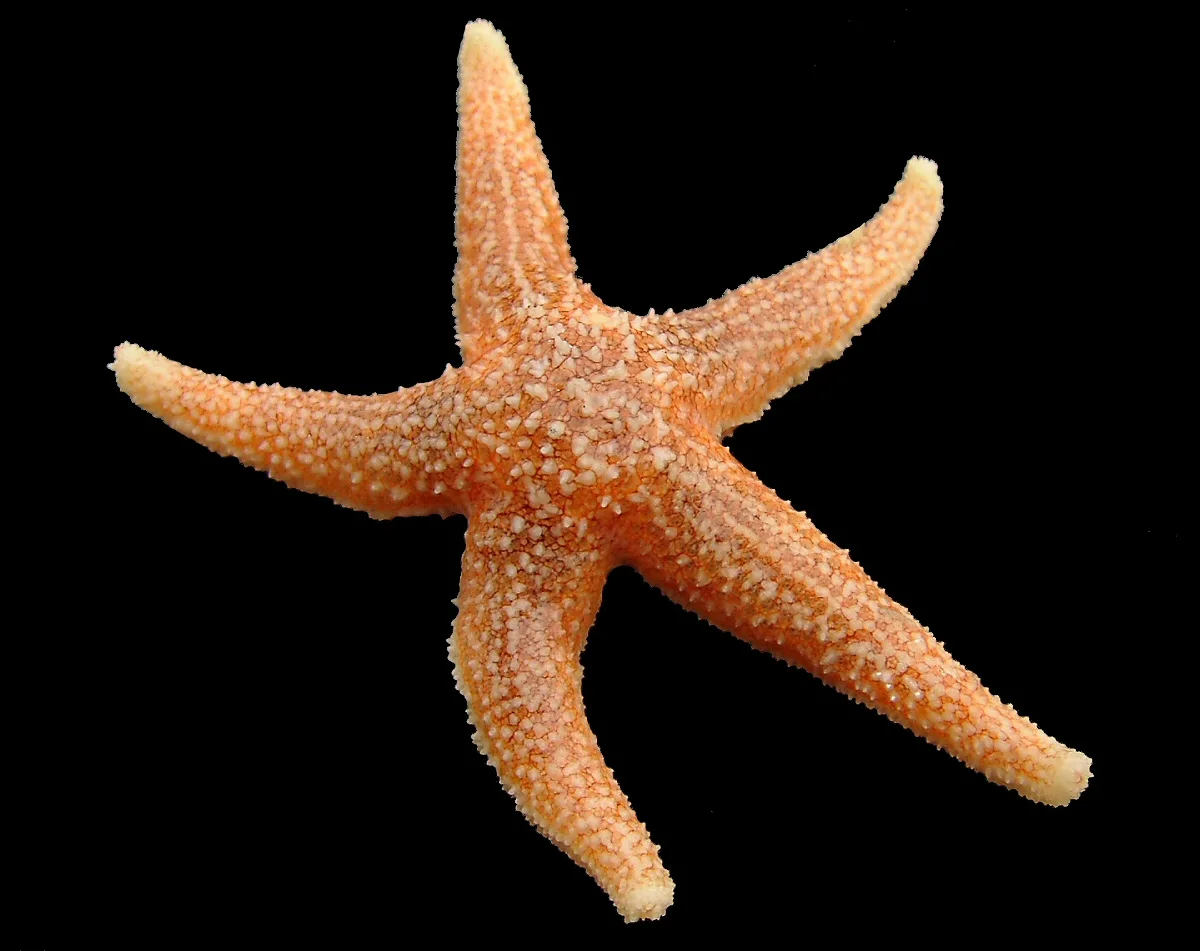
European Starfish
Asterias rubens

Tiger
Panthera tigris
Evidence from the profiles
Compare their characteristics
| Trait | European Starfish | Tiger |
|---|---|---|
| Nutrition | Data unavailable | Carnivorous Source ↗ |
| Social organization | Data unavailable | Generally solitary Source ↗ |
| Physical traits | Adults usually have five broad arms around a central disc. The upper surface is rough, and color varies. | Dark stripes break up the tiger’s outline. Stripe patterns vary from one individual to another. |
| Habitat and range | Rocky, sandy and mixed seabeds support this starfish, including areas with abundant bivalves. | Tigers live in varied habitats, including tropical forests, mangrove swamps and temperate forest. |
| Diet and nutrition | Bivalves are important prey. A starfish can use tube feet to gain access and digest food with its everted stomach. | Tigers mainly hunt large mammals, including deer and wild pigs. |
| Behavior and activity | Slow movement across the seabed brings individuals into contact with food and other starfish. | A tiger usually hunts by stalking its prey and attacking at close range. |
| Reproduction and life cycle | Eggs and sperm are released into seawater. Larvae develop in the plankton before settling and changing into juveniles. | Data unavailable |
| Geographic distribution | The species is associated with the northeastern Atlantic and adjacent European seas. Local records are more informative than a generalized global range. | Data unavailable |
| Ecological role | Predation can influence shellfish communities. Its reproductive investment can change with temperature and food supply. | Data unavailable |
| Distinctive adaptations | A water-vascular system powers tube feet, and damaged arms can regenerate under suitable conditions. | Data unavailable |
| Conservation | Laboratory warming experiments reveal possible sensitivities, not a universal prediction for every wild population. No formal status is assigned here. | Data unavailable |
Classification
Shared ancestry
Closest shared taxon: Deuterostomia.