 Living Beings
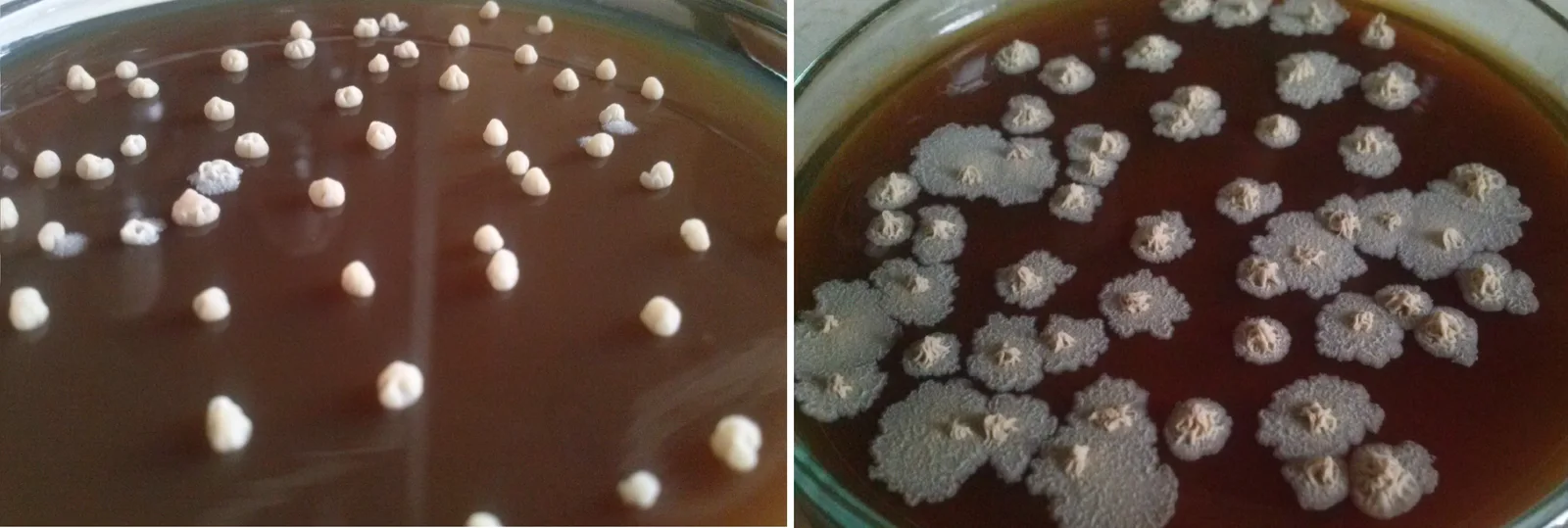

Field guide · species
Bacillus subtilis
(Ehrenberg 1835) Cohn 1872 (Approved Lists 1980)
Bacillus subtilis is a rod-shaped bacterium that can switch from active growth to a resistant endospore state. The transition is a survival strategy, not a way of producing many offspring from one cell.
Public research profile · final editorial review pending.
Tree of lifeScientific lineage
- LifeLife
- DomainBacteria
- KingdomBacillati
- PhylumBacillota
- ClassBacilli
- OrderCaryophanales
- FamilyBacillaceae
- GenusBacillus
- SpeciesBacillus subtilis
Advanced classification
Complete source lineage, including intermediate ranks. The standard view uses Life and the eight principal ranks.
- cellular organisms cellular root
- Bacteria domain
- Bacillati kingdom
- Bacillota phylum
- Bacilli class
- Caryophanales order
- Bacillaceae family
- Bacillus genus
- Bacillus subtilis group species group
- Bacillus subtilis species
Structure and identification
Vegetative cells are rods that may occur in chains. An endospore is a differentiated structure formed within a cell.
Habitat and range
Soil-associated and plant-associated environments provide changing supplies of organic nutrients. Laboratory strains allow these responses to be studied in controlled conditions.
Nutrition and metabolism
Organic compounds support growth, and secreted enzymes help make substrate resources available.
Biological activity
Populations can develop distinct physiological states as conditions change. Nutrient limitation can initiate sporulation.
Reproduction and life cycle
Growing vegetative cells can differentiate into resistant endospores. A growth-and-sporulation study found that cells differ in their probability and timing of entering that process. Sporulation is not an immediate population-wide switch, and one cell producing an endospore is a survival transition rather than an increase in cell number.
Geographic distribution
Isolates and research cultures occur internationally. Strain provenance is more precise than a claim that every soil contains this species.
Ecological role
Growth on organic material and interactions near plants place the bacterium within complex soil communities.
Distinctive adaptations
Endospore formation separates survival through adverse conditions from rapid vegetative multiplication.
Evidence
Sources
- Bacillus subtilis · NCBI Taxonomy ↗NCBI
- Differentiation of Vegetative Cells into Spores: a Kinetic Model Applied to Bacillus subtilis ↗Applied and environmental microbiology · 2019
Connected life
Relationships
No reviewed ecological connections in the collection yet.
Explore network ↗