 Living Beings

 Framed for display
Species · Aliivibrio
Aliivibrio fischeri
Aliivibrio fischeri
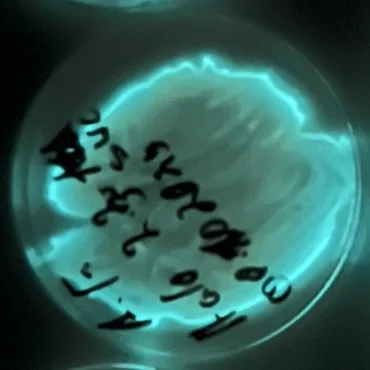
In the Hawaiian bobtail squid, light from Aliivibrio fischeri helps mask the animal’s silhouette when viewed from below.
Domain · Scientific classification
Follow the bacterial branches in the NCBI classification and learn why a species name can contain diverse strains.
 Framed for display
Explore broader group · Life ↗
NCBI Taxonomy (2026-11-05 reconciled backbone) · Taxon source ↗
Group guide
Bacteria are a domain of cellular organisms. Ribosomal RNA sequence comparisons helped establish their distinction from Archaea. Within Bacteria, genome comparisons can separate groups that are difficult to distinguish by shape alone.
Source for finding relationships among small cells ↗Comparing Escherichia coli genomes reveals large differences in gene content between particular strains. A trait demonstrated in a laboratory strain, or in one disease-causing lineage, should be attributed to that strain or lineage before it is used to describe a whole species.
Source for a species can contain very different strains ↗Bacteria · domain · Original classification source
The original identifier and source were retained when adopting the dated NCBI backbone. Different sources may use different names, ranks or group circumscriptions.
Within this taxon
Framed for display
Aliivibrio fischeri
In the Hawaiian bobtail squid, light from Aliivibrio fischeri helps mask the animal’s silhouette when viewed from below.
 Framed for display
Bacillus subtilis
Bacillus subtilis is a rod-shaped bacterium that can switch from active growth to a resistant endospore state. The transition is a survival …
 Framed for display
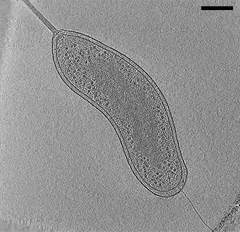
Bdellovibrio bacteriovorus
Bdellovibrio bacteriovorus is a bacterium that preys on other bacteria. Its feeding biology shows that microscopic food webs include bacterial predators as …
 Framed for display
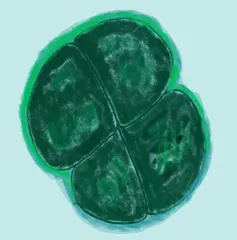
Deinococcus radiodurans
Deinococcus radiodurans is notable for surviving severe damage that would kill many other cells. Studies of strain R1 link this resilience to …
 Framed for display
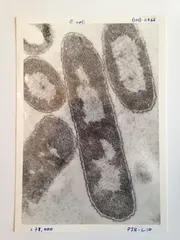
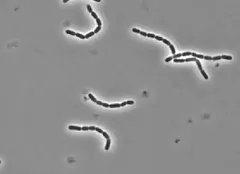
Escherichia coli
Escherichia coli is a bacterial species found in many environments, including the intestines of people and other animals. Most types are harmless, …
 Framed for display
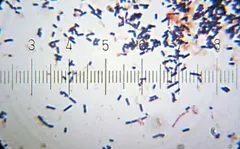
Lacticaseibacillus rhamnosus
This lactic acid bacterium was formerly named Lactobacillus rhamnosus. Its current genus reflects a taxonomic revision, while strain names such as GG …
 Framed for display
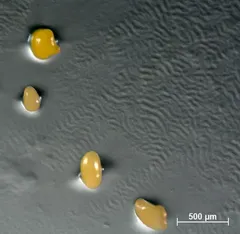
Lactobacillus acidophilus
Lactobacillus acidophilus is a lactic acid bacterium studied in food and intestinal contexts. Genome work on named strains links carbohydrate use, surface …
 Framed for display
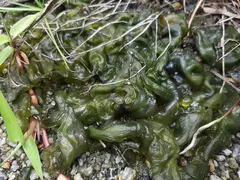
Myxococcus xanthus
Myxococcus xanthus is a social, surface-associated bacterium. Moving groups feed on other bacteria and can organize into fruiting bodies containing resistant spores.
 Framed for display
Nostoc commune
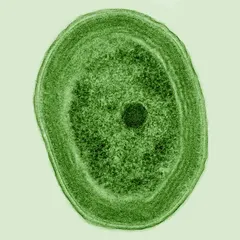
Nostoc commune is a terrestrial cyanobacterium that forms gelatinous colonies. Its striking ability to resume activity after drying makes it a useful …
 Framed for display
Prochlorococcus marinus
Prochlorococcus marinus represents extraordinarily small photosynthetic cyanobacteria in the ocean. Closely related ecotypes differ in their responses to light and resources, so …
Rhizobium leguminosarum
Rhizobium leguminosarum links life in soil with nitrogen-fixing symbiosis in legume root nodules. Reaching a root, competing with neighboring microbes and surviving …
 Framed for display
Streptomyces coelicolor
Streptomyces coelicolor is a filamentous soil bacterium and a model for studying microbial development and secondary metabolism. Its branching growth resembles a …
 Framed for display
Synechococcus elongatus
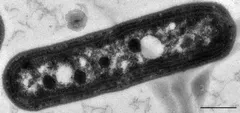
Synechococcus elongatus is a photosynthetic cyanobacterium widely used to study biological timing. Research on its clock shows how a single-celled organism can …