 Living Beings

 Framed for display
Species · Bacillus
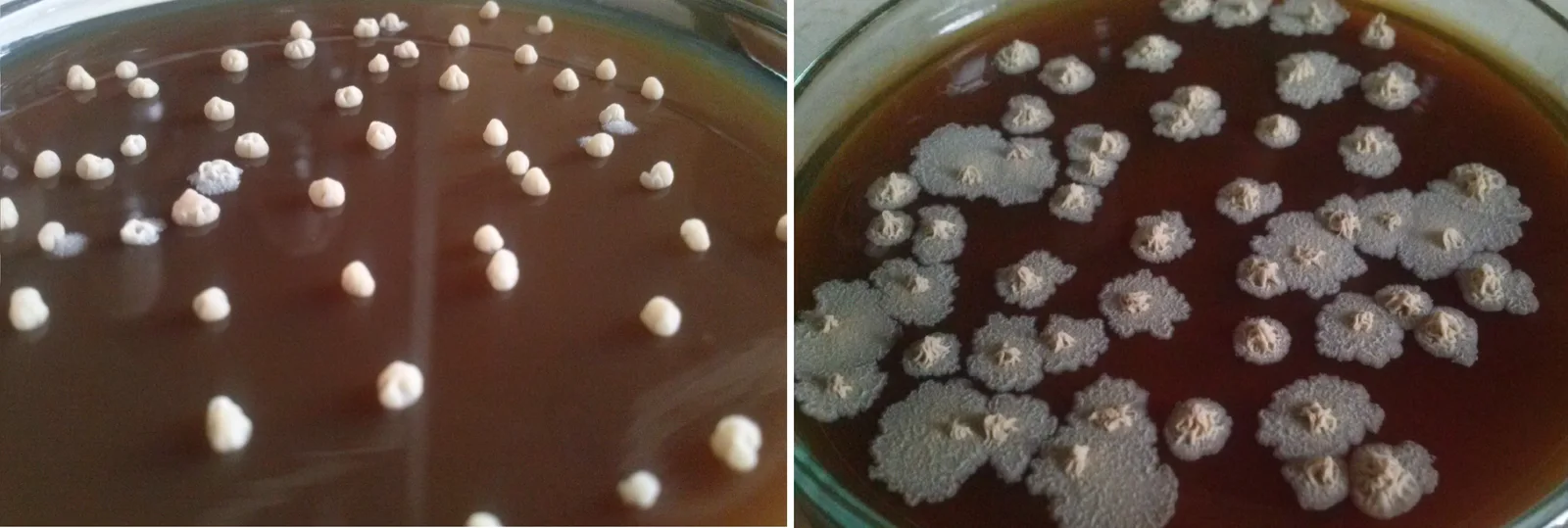
Bacillus subtilis
Bacillus subtilis
Bacillus subtilis is a rod-shaped bacterium that can switch from active growth to a resistant endospore state. The transition is a survival …
Kingdom · Scientific classification
Bacillati is a bacterial kingdom in the adopted classification, with members as different as Bacillus and marine cyanobacteria.
 Framed for display
Explore broader group · Bacteria ↗
NCBI Taxonomy (2026-11-05 reconciled backbone) · Taxon source ↗
Group guide
The name Bacillati was validly published at kingdom rank under the prokaryotic nomenclature code. It is broader than the phylum Bacillota and the genus Bacillus. Sequence-based databases can differ in how they represent the higher branches, so compare the named group and its contents before matching lists of organisms.
Source for a named branch within bacteria ↗Under stresses such as starvation, Bacillus subtilis can develop an endospore. Experiments on its coat show how different proteins assemble in layers around the developing spore. This is a particular survival strategy within the kingdom.
Source for a bacterium that can form endospores ↗Prochlorococcus is a photosynthetic cyanobacterium from the sunlit ocean. Compare its use of light with the endospore development studied in Bacillus. The two observations describe different parts of bacterial biology and illustrate how little the kingdom name alone tells you about where a species lives.
Source for a different way of living in the same branch ↗Within this taxon
Framed for display
Bacillus subtilis
Bacillus subtilis is a rod-shaped bacterium that can switch from active growth to a resistant endospore state. The transition is a survival …
 Framed for display
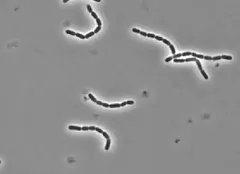
Lacticaseibacillus rhamnosus
This lactic acid bacterium was formerly named Lactobacillus rhamnosus. Its current genus reflects a taxonomic revision, while strain names such as GG …
 Framed for display
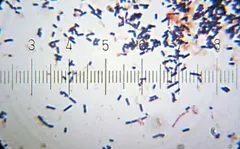
Lactobacillus acidophilus
Lactobacillus acidophilus is a lactic acid bacterium studied in food and intestinal contexts. Genome work on named strains links carbohydrate use, surface …
 Framed for display
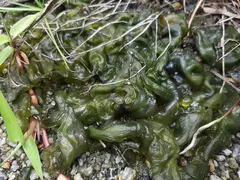
Nostoc commune
Nostoc commune is a terrestrial cyanobacterium that forms gelatinous colonies. Its striking ability to resume activity after drying makes it a useful …
 Framed for display
Prochlorococcus marinus
Prochlorococcus marinus represents extraordinarily small photosynthetic cyanobacteria in the ocean. Closely related ecotypes differ in their responses to light and resources, so …
 Framed for display
Streptomyces coelicolor
Streptomyces coelicolor is a filamentous soil bacterium and a model for studying microbial development and secondary metabolism. Its branching growth resembles a …
 Framed for display
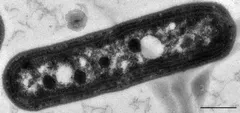
Synechococcus elongatus
Synechococcus elongatus is a photosynthetic cyanobacterium widely used to study biological timing. Research on its clock shows how a single-celled organism can …