 Living Beings
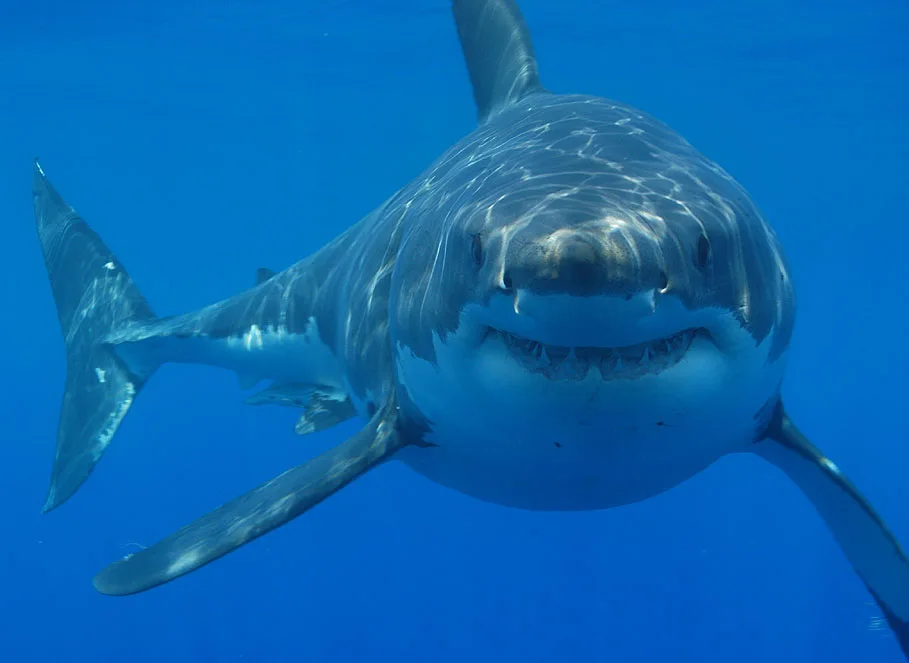
Great white shark south africa.jpg · Resized and converted to WebP for display. Documentary organism photograph. AI-generated illustration. Hermanus Backpackers · CC BY 2.0

Field guide · species
Great White Shark
Carcharodon carcharias (Linnaeus,1758)
The great white shark is a powerful, wide-ranging marine predator. Its streamlined body and serrated teeth support a diet that changes as it grows, and its movements connect coastal feeding areas with the open ocean.
Public research profile · final editorial review pending.
Tree of lifeScientific lineage
- LifeLife
- DomainEukaryota
- KingdomAnimalia
- PhylumChordata
- ClassChondrichthyes
- OrderLamniformes
- FamilyLamnidae
- GenusCarcharodon
- SpeciesCarcharodon carcharias
Advanced classification
Complete source lineage, including intermediate ranks. The standard view uses Life and the eight principal ranks.
- cellular organisms cellular root
- Eukaryota domain
- Opisthokonta clade
- Metazoa kingdom
- Eumetazoa clade
- Bilateria clade
- Deuterostomia clade
- Chordata phylum
- Craniata subphylum
- Vertebrata clade
- Gnathostomata clade
- Chondrichthyes class
- Elasmobranchii subclass
- Selachii infraclass
- Galeomorphii clade
- Galeoidea superorder
- Lamniformes order
- Lamnidae family
- Carcharodon genus
- Carcharodon carcharias species
Physical traits
A conical snout, broad triangular teeth and a dark upper surface over a pale underside characterize the species.
Habitat and range
Coastal feeding grounds and offshore waters both form part of its habitat. Some individuals undertake extensive migrations.
Diet and nutrition
Younger sharks take fish and other smaller marine prey. Larger individuals may take marine mammals and scavenge carcasses.
Behavior and activity
Sharks investigate their surroundings using several senses and may return to productive feeding areas.
Reproduction and life cycle
Embryos develop inside the mother and receive nutrition from eggs before live birth. Reproduction is slow relative to many exploited fish.
Geographic distribution
White sharks occur in several ocean basins, especially temperate coastal regions. Sightings do not imply equal abundance throughout that range.
Ecological role
White sharks are predators and scavengers within marine food webs.
Distinctive adaptations
Countershading and a streamlined body assist an approaching predator; sensory systems detect chemical and electrical cues.
Conservation
Bycatch and deliberate killing affect a species with limited reproductive output. Regional population trends require separate assessment.
Evidence
Sources
- Carcharodon carcharias · NCBI Taxonomy ↗NCBI
- Carcharodon carcharias — Animal Diversity Web, University of Michigan ↗Animal Diversity Web, University of Michigan
Connected life
Relationships
No reviewed ecological connections in the collection yet.
Explore network ↗