 Living Beings
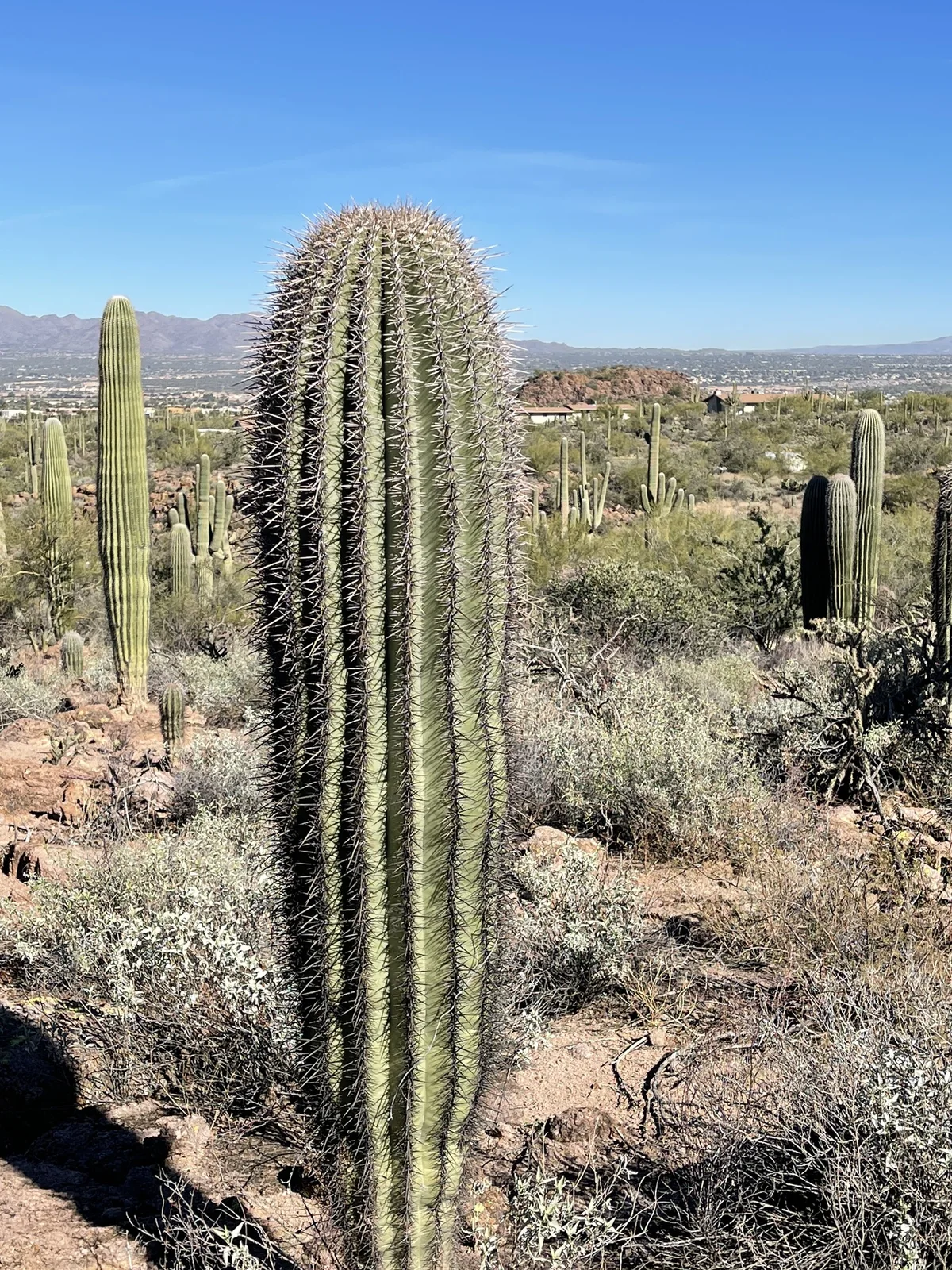

Field guide · species
Saguaro
Carnegiea gigantea (Engelm.) Britton & Rose, 1908
The saguaro is a giant, columnar cactus of the Sonoran Desert. Its water-storing stem, shallow spreading roots and seasonal flowers link a striking growth form with the unpredictable availability of desert rain.
Public research profile · final editorial review pending.
Tree of lifeScientific lineage
- LifeLife
- DomainEukaryota
- KingdomViridiplantae
- PhylumStreptophyta
- ClassMagnoliopsida
- OrderCaryophyllales
- FamilyCactaceae
- GenusCarnegiea
- SpeciesCarnegiea gigantea
Advanced classification
Complete source lineage, including intermediate ranks. The standard view uses Life and the eight principal ranks.
- cellular organisms cellular root
- Eukaryota domain
- Viridiplantae kingdom
- Streptophyta phylum
- Streptophytina subphylum
- Embryophyta clade
- Tracheophyta clade
- Euphyllophyta clade
- Spermatophyta clade
- Magnoliopsida class
- Mesangiospermae clade
- eudicotyledons clade
- Gunneridae clade
- Pentapetalae clade
- Caryophyllales order
- Cactineae suborder
- Cactaceae family
- Cactoideae subfamily
- Echinocereeae tribe
- Carnegiea genus
- Carnegiea gigantea species
Structure and identification
A pleated green trunk may develop large upward branches. Spines cover the surface, and flowers form near growing stem tips.
Habitat and range
Suitable Sonoran Desert sites provide the temperature and rainfall conditions needed for establishment and survival.
Nutrition and metabolism
The green stem performs photosynthesis, while widespread shallow roots rapidly take up water after rain.
Biological activity
Stem expansion accommodates stored water. Growth and the development of arms occur over a long period.
Reproduction and life cycle
Flowers are followed by fleshy fruits containing many seeds. Seedling establishment is much less frequent than seed production.
Geographic distribution
The native range is within the Sonoran Desert, but the cactus does not occupy every part of that desert.
Ecological role
Flowers and fruits feed wildlife, while large stems provide shelter and nesting opportunities.
Distinctive adaptations
Pleated water storage and a broad, shallow root system help exploit brief rainfall events.
Conservation
Habitat change, fire and unsuitable climate can affect recruitment and survival. Long-lived adults alone do not demonstrate successful regeneration.
Evidence
Sources
- Carnegiea gigantea · NCBI Taxonomy ↗NCBI
- Carnegiea gigantea · Biological reference ↗
- Carnegiea gigantea — US National Park Service ↗US National Park Service
- Carnegiea gigantea — USDA Forest Service, Fire Effects Information System ↗USDA Forest Service, Fire Effects Information System
Connected life
Relationships
No reviewed ecological connections in the collection yet.
Explore network ↗