 Living Beings
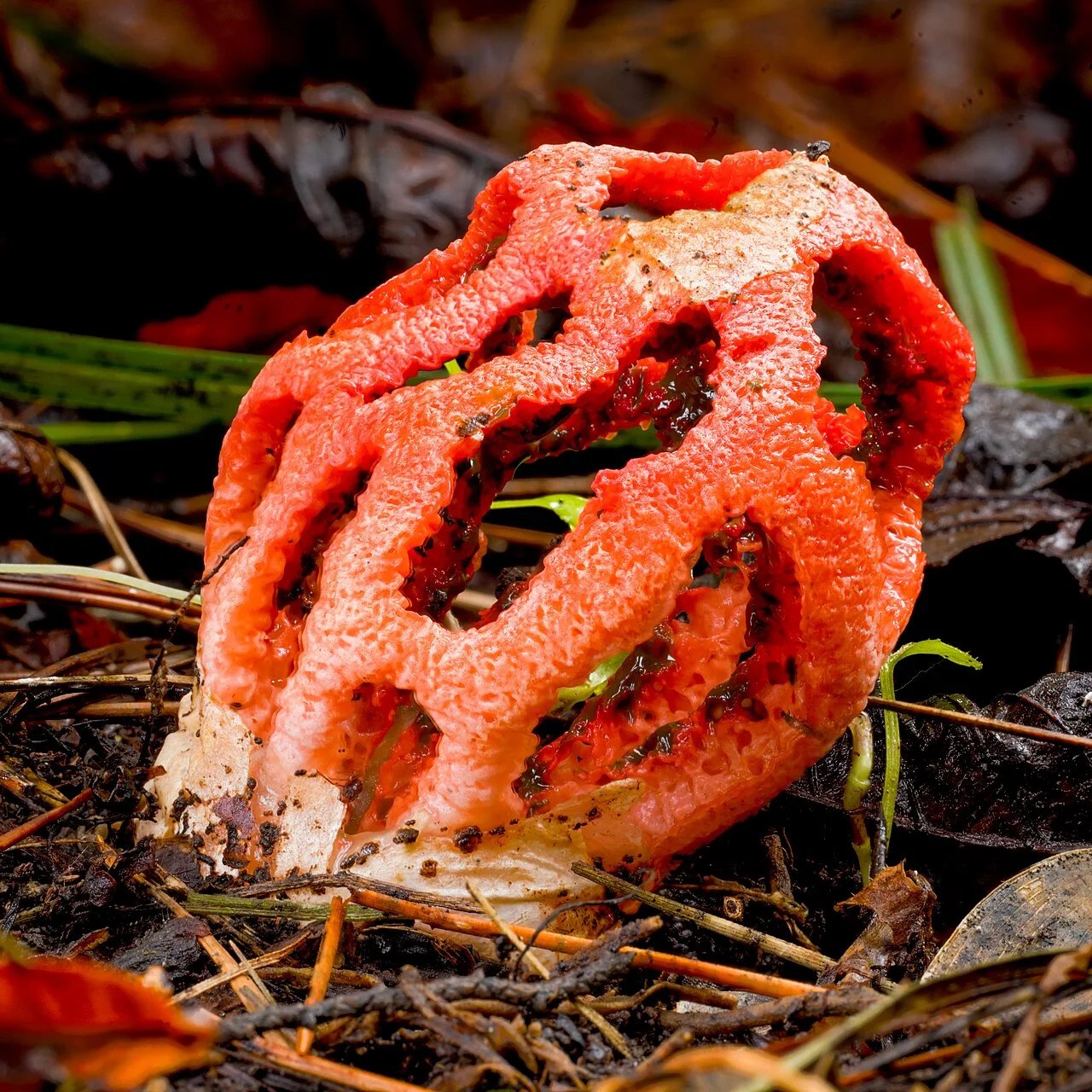
Clathrus ruber 444460222.jpg · Resized and converted to WebP for display. Documentary organism photograph; source identification retained. AI-generated illustration. Matej Frančeškin · CC BY 4.0

Field guide · species
Red Cage Fungus
Clathrus ruber P. Micheli ex Pers., 1801
The red cage fungus is a stinkhorn that produces a hollow, lattice-like fruiting body. Its unusual architecture helps present a spore-bearing, odorous coating to visiting insects.
Public research profile · final editorial review pending.
Tree of lifeScientific lineage
- LifeLife
- DomainEukaryota
- KingdomFungi
- PhylumBasidiomycota
- ClassAgaricomycetes
- OrderPhallales
- FamilyClathraceae
- GenusClathrus
- SpeciesClathrus ruber
Advanced classification
Complete source lineage, including intermediate ranks. The standard view uses Life and the eight principal ranks.
- cellular organisms cellular root
- Eukaryota domain
- Opisthokonta clade
- Fungi kingdom
- Dikarya subkingdom
- Basidiomycota phylum
- Agaricomycotina subphylum
- Agaricomycetes class
- Phallomycetidae subclass
- Phallales order
- Clathraceae family
- Clathrus genus
- Clathrus ruber species
Structure and identification
The expanded fruiting body is a reddish cage of interconnected branches. Dark, slimy gleba lies on portions of the inner structure.
Habitat and range
Decaying organic material, garden mulch and similar substrates support its feeding mycelium.
Nutrition and metabolism
The fungus obtains carbon by decomposing organic material. It is not a photosynthetic plant despite the vivid color of its fruiting body.
Biological activity
Odor attracts flies and other insects, which contact the gleba and can move spores away from the fruiting body.
Reproduction and life cycle
A closed, egg-like immature structure opens as the lattice expands. The mature fruiting body exposes the spore-bearing material.
Ecological role
Insect-assisted dispersal offers an alternative to relying only on spores dropping from ordinary mushroom gills.
Distinctive adaptations
The open lattice exposes a large amount of the reproductive surface. Related cage and basket stinkhorns can resemble it, so shape and source identification matter.
Evidence
Sources
- Clathrus ruber · NCBI Taxonomy ↗www.ncbi.nlm.nih.gov
- Clathrus ruber · Biological reference ↗www.mushroomexpert.com
Connected life
Relationships
No reviewed ecological connections in the collection yet.
Explore network ↗