 Living Beings
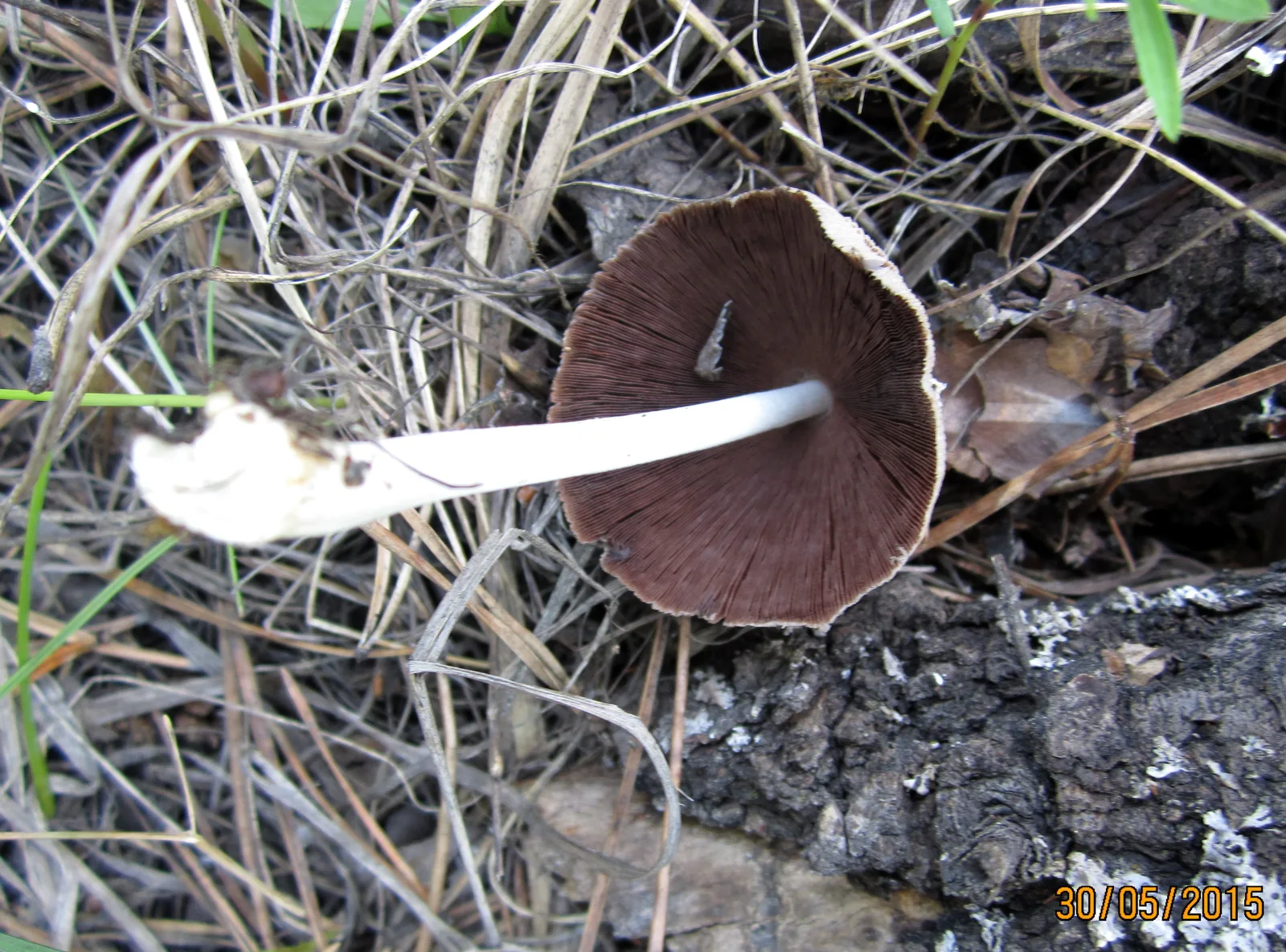
2015-05-30 Coprinopsis cinerea (Schaeff.- Fr.) Redhead, Vilgalys & Moncalvo 593470.jpg · Resized and converted to WebP for display. Mature, opened gilled fruiting body; source identification retained. AI-generated illustration. This image was created by user Igor (Igor_Yevdokimov) at Mushroom Observer , a source for mycological images. You can contact this user here . · CC BY-SA 3.0

Field guide · species
Gray Inkcap
Coprinopsis cinerea (Schaeff.) Redhead, Vilgalys & Moncalvo, 2001
The gray inkcap is a mushroom-forming fungus widely used to study development. The same organism can follow several growth pathways, from an expanding mycelium to spores or a mature fruiting body.
Public research profile · final editorial review pending.
Tree of lifeScientific lineage
- LifeLife
- DomainEukaryota
- KingdomFungi
- PhylumBasidiomycota
- ClassAgaricomycetes
- OrderAgaricales
- FamilyPsathyrellaceae
- GenusCoprinopsis
- SpeciesCoprinopsis cinerea
Advanced classification
Complete source lineage, including intermediate ranks. The standard view uses Life and the eight principal ranks.
- cellular organisms cellular root
- Eukaryota domain
- Opisthokonta clade
- Fungi kingdom
- Dikarya subkingdom
- Basidiomycota phylum
- Agaricomycotina subphylum
- Agaricomycetes class
- Agaricomycetidae subclass
- Agaricales order
- Agaricineae suborder
- Psathyrellaceae family
- Coprinopsis genus
- Coprinopsis cinerea species
Structure and identification
A slender stem supports a gilled cap. Appearance changes strongly as the fruiting body matures; the accompanying photograph shows an opened, mature cap rather than the earlier closed form.
Habitat and range
Dung and other nutrient-rich decomposing organic material provide substrates associated with this saprotrophic fungus.
Nutrition and metabolism
Hyphae secrete enzymes and absorb nutrients from their substrate. The mushroom itself serves primarily in reproduction.
Biological activity
Growth is organized through branching hyphae. Developmental switches change the structure and function of the fungal network and its reproductive tissues.
Reproduction and life cycle
Research follows spore germination, vegetative growth, production of asexual propagules and formation of sexual fruiting bodies. Environmental conditions influence which pathway develops.
Ecological role
As a decomposer it participates in the processing of organic material; laboratory strains provide a tractable window into these fungal growth programs.
Distinctive adaptations
Different developmental outcomes allow an organism to allocate growth and reproduction differently as conditions change. Laboratory findings should be distinguished from measurements of all wild populations.
Evidence
Sources
- Coprinopsis cinerea · NCBI Taxonomy ↗www.ncbi.nlm.nih.gov
- Coprinopsis cinerea · Biological reference ↗pubmed.ncbi.nlm.nih.gov
- Coprinopsis cinerea · Biological reference ↗pmc.ncbi.nlm.nih.gov
Connected life
Relationships
No reviewed ecological connections in the collection yet.
Explore network ↗