 Living Beings
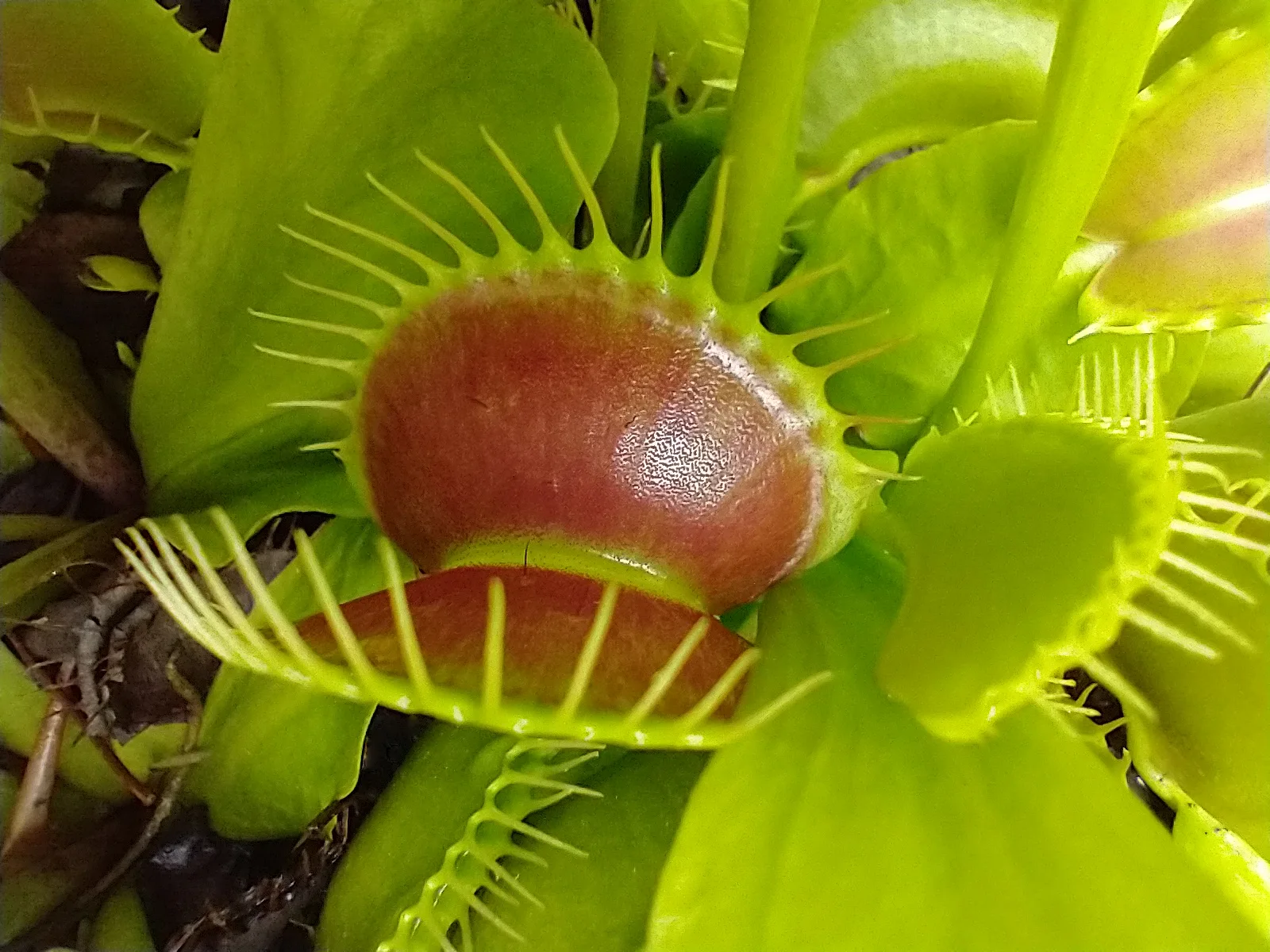
Dionaea muscipula PT 20240516 063394.jpg · Resized and converted to WebP for display. Source-identified documentary image; see the original file for method and context. AI-generated illustration. Philiptdotcom · CC BY-SA 4.0

Field guide · species
Venus Flytrap
Dionaea muscipula J.Ellis, 1768
The Venus flytrap is a photosynthetic plant whose hinged leaves also capture small animals. Carnivory supplies nutrients in a habitat where soil resources are limited; it does not replace the plant's dependence on light.
Public research profile · final editorial review pending.
Tree of lifeScientific lineage
- LifeLife
- DomainEukaryota
- KingdomViridiplantae
- PhylumStreptophyta
- ClassMagnoliopsida
- OrderCaryophyllales
- FamilyDroseraceae
- GenusDionaea
- SpeciesDionaea muscipula
Advanced classification
Complete source lineage, including intermediate ranks. The standard view uses Life and the eight principal ranks.
- cellular organisms cellular root
- Eukaryota domain
- Viridiplantae kingdom
- Streptophyta phylum
- Streptophytina subphylum
- Embryophyta clade
- Tracheophyta clade
- Euphyllophyta clade
- Spermatophyta clade
- Magnoliopsida class
- Mesangiospermae clade
- eudicotyledons clade
- Gunneridae clade
- Pentapetalae clade
- Caryophyllales order
- Droseraceae family
- Dionaea genus
- Dionaea muscipula species
Structure and identification
A low rosette carries leaves ending in paired trap lobes with marginal bristles and sensitive trigger hairs.
Habitat and range
Wet, acidic, nutrient-poor ground in open coastal-plain habitats supports wild plants.
Nutrition and metabolism
Leaves capture light for energy and carbon fixation. Digested prey supplies additional mineral nutrients.
Biological activity
Repeated stimulation of trigger hairs initiates trap closure. Further signals from captured prey promote digestion.
Reproduction and life cycle
White flowers are carried above the rosette, followed by seed capsules. Plants are perennial and can also be propagated by division.
Geographic distribution
Its native range is restricted to parts of North Carolina and South Carolina. Horticultural availability is much broader.
Ecological role
The species participates in a specialized wetland community and interacts with both prey and flower visitors.
Distinctive adaptations
Mechanically sensitive traps help obtain nutrients while reducing expenditure on unsuitable objects.
Conservation
Habitat degradation and collection threaten wild populations. Availability in cultivation does not remove the need to protect native habitat.
Evidence
Sources
- Dionaea muscipula · NCBI Taxonomy ↗NCBI
- Dionaea muscipula — Royal Botanic Gardens, Kew ↗Royal Botanic Gardens, Kew
- Dionaea muscipula — NC State Extension ↗NC State Extension
- Dionaea muscipula — US Fish and Wildlife Service ↗US Fish and Wildlife Service
Connected life
Relationships
No reviewed ecological connections in the collection yet.
Explore network ↗