 Living Beings
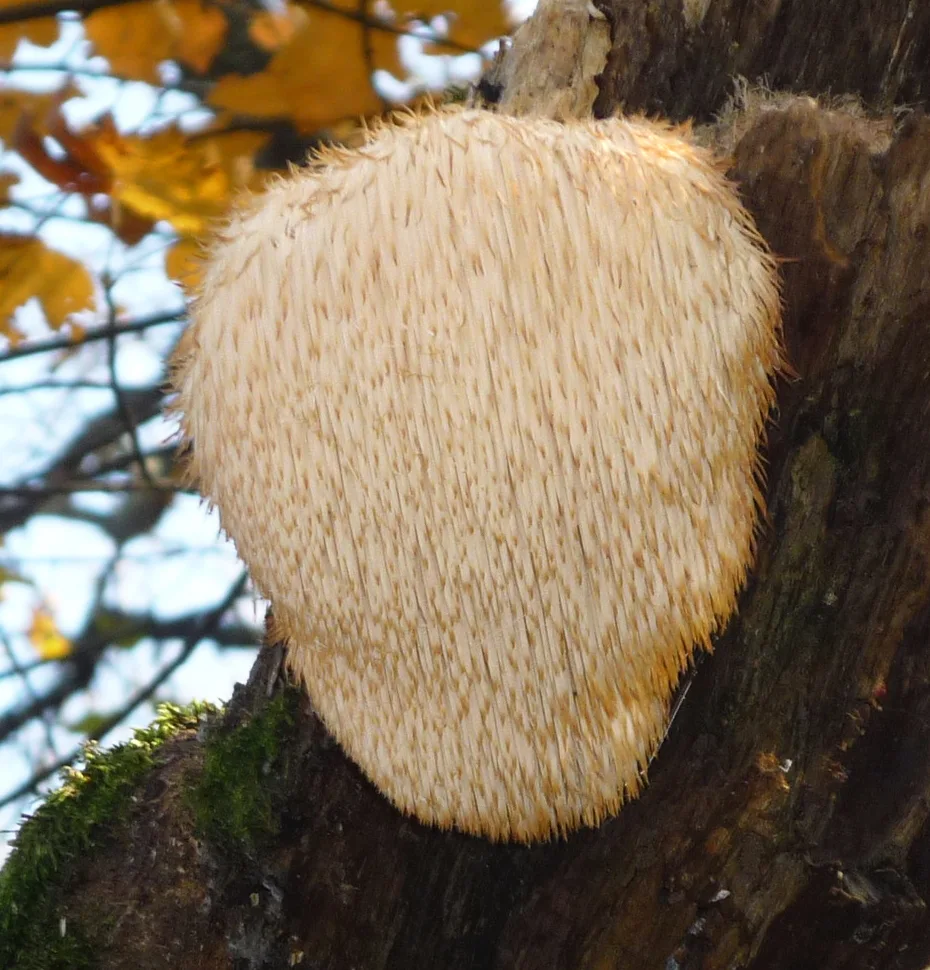
Hericium erinaceus 02.jpg · Resized and converted to WebP for display. Documentary organism photograph; source identification retained. AI-generated illustration. Властарь derivative work: Xth-Floor (brightness, contrast) · CC BY-SA 4.0

Field guide · species
Lion’s Mane Fungus
Hericium erinaceus
Lion’s mane forms a pale mass of dangling teeth on hardwood. These teeth carry the spore-producing surface, replacing the familiar gills of many cap-and-stem mushrooms.
Public research profile · final editorial review pending.
Tree of lifeScientific lineage
- LifeLife
- DomainEukaryota
- KingdomFungi
- PhylumBasidiomycota
- ClassAgaricomycetes
- OrderRussulales
- FamilyHericiaceae
- GenusHericium
- SpeciesHericium erinaceus
Advanced classification
Complete source lineage, including intermediate ranks. The standard view uses Life and the eight principal ranks.
- cellular organisms cellular root
- Eukaryota domain
- Opisthokonta clade
- Fungi kingdom
- Dikarya subkingdom
- Basidiomycota phylum
- Agaricomycotina subphylum
- Agaricomycetes class
- Agaricomycetes incertae sedis no rank
- Russulales order
- Hericiaceae family
- Hericium genus
- Hericium erinaceus species
Structure and identification
A mature fruiting body develops long, hanging spines from an essentially unbranched mass. Older tissue can become yellowish or brownish.
Habitat and range
Wounds in living hardwood trees and recently dead wood are characteristic sites. The fungal mycelium extends within the wood.
Nutrition and metabolism
It obtains nutrients from wood and can live in association with a living tree as well as decomposing dead material.
Reproduction and life cycle
The fruiting body releases spores from surfaces on its hanging teeth. The vegetative fungal network is a separate, longer-lasting part of the organism.
Geographic distribution
Records occur in Europe, Asia and the Americas. The currently used name may conceal geographically structured diversity, so a broad distribution does not prove all populations are identical.
Ecological role
Its activity contributes to the changing structure and decomposition of hardwood.
Distinctive adaptations
Immature branched Hericium species can resemble a young lion’s mane. Mature architecture is more informative than a white, fuzzy appearance alone.
Evidence
Sources
- Hericium erinaceus · NCBI Taxonomy ↗www.ncbi.nlm.nih.gov
- Hericium erinaceus · Biological reference ↗www.mushroomexpert.com
Connected life
Relationships
No reviewed ecological connections in the collection yet.
Explore network ↗