 Living Beings
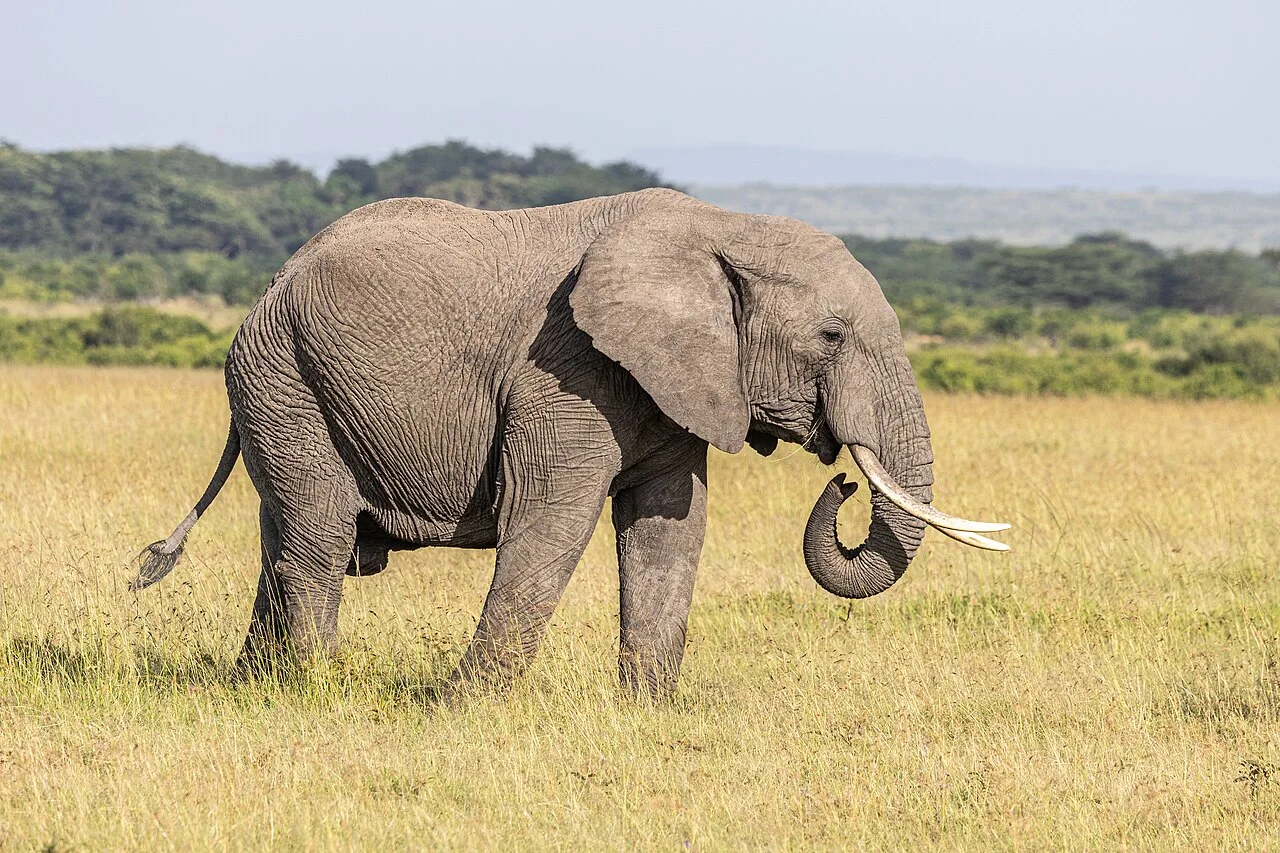
African bush elephant (Loxodonta africana), Masai Mara.jpg · Resized and converted to WebP for display. Documentary organism photograph; source identification retained. AI-generated illustration. Hobbyfotowiki · CC0

Field guide · species
African Savanna Elephant
Loxodonta africana
The African savanna elephant is a large, social herbivore whose trunk serves as a nose, a drinking tool and a remarkably precise grasping organ. It is distinct from the African forest elephant.
Public research profile · final editorial review pending.
Tree of lifeScientific lineage
- LifeLife
- DomainEukaryota
- KingdomAnimalia
- PhylumChordata
- ClassMammalia
- OrderProboscidea
- FamilyElephantidae
- GenusLoxodonta
- SpeciesLoxodonta africana
Advanced classification
Complete source lineage, including intermediate ranks. The standard view uses Life and the eight principal ranks.
- cellular organisms cellular root
- Eukaryota domain
- Opisthokonta clade
- Metazoa kingdom
- Eumetazoa clade
- Bilateria clade
- Deuterostomia clade
- Chordata phylum
- Craniata subphylum
- Vertebrata clade
- Gnathostomata clade
- Teleostomi clade
- Euteleostomi clade
- Sarcopterygii superclass
- Dipnotetrapodomorpha clade
- Tetrapoda clade
- Amniota clade
- Mammalia class
- Theria clade
- Eutheria clade
- Afrotheria superorder
- Proboscidea order
- Elephantidae family
- Loxodonta genus
- Loxodonta africana species
Physical traits
Broad ears, a long trunk and column-like legs give the animal its familiar outline. The trunk tip has two finger-like projections. Both sexes can develop tusks.
Habitat and range
Savannas and open woodland provide a shifting mixture of browse, grass, shade and drinking water. Seasonal water availability influences the places that herds use.
Diet and nutrition
Grasses, leaves, bark and other plant material make up its diet. The trunk gathers food and moves it to the mouth.
Behavior and activity
Female relatives and their young form long-lasting social groups. Older females hold knowledge of familiar routes and resources; adult males have a different pattern of association.
Reproduction and life cycle
Calves are born alive and depend on milk and extended social care. Learning from other elephants is an important part of growing up.
Geographic distribution
Native to sub-Saharan Africa. This account follows the savanna-elephant species concept rather than treating all African elephants as one species.
Ecological role
Feeding and movement alter vegetation, and dung transfers seeds and nutrients. Habitat fragmentation and killing for ivory threaten populations.
Evidence
Sources
- Loxodonta africana · NCBI Taxonomy ↗www.ncbi.nlm.nih.gov
- Loxodonta africana · Biological reference ↗animaldiversity.org
- Loxodonta africana · Biological reference ↗www.mammaldiversity.org
Connected life
Relationships
No reviewed ecological connections in the collection yet.
Explore network ↗