 Living Beings
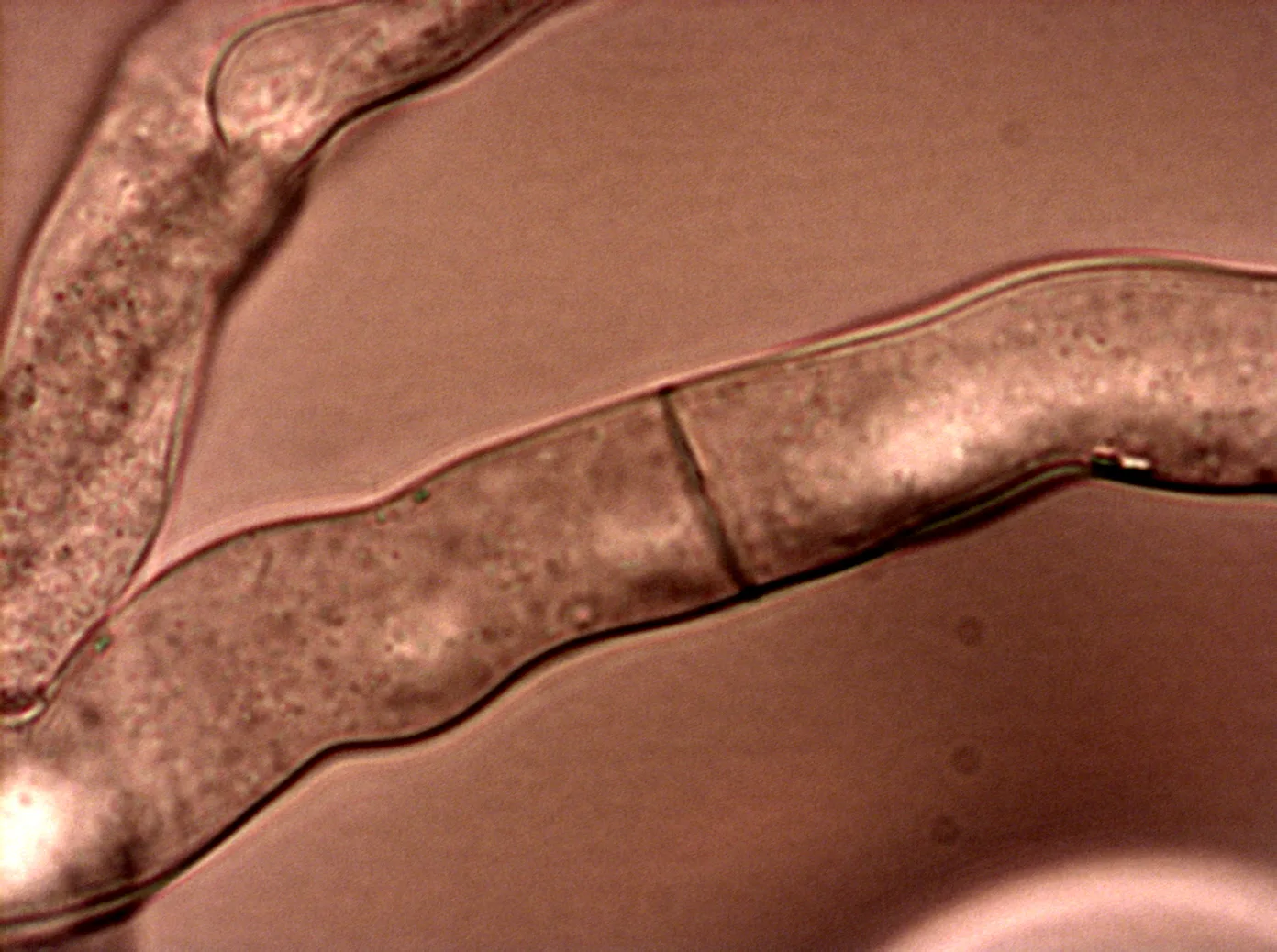
Neurospora crassahyphae.jpg · Resized and converted to WebP for display. Source-identified documentary image; see the original file for method and context. AI-generated illustration. Roland Gromes · CC BY-SA 3.0

Field guide · species
Neurospora crassa
Shear & B. O. Dodge 1927
Neurospora crassa is a filamentous fungus known for orange spore masses and its role in the history of genetics. A branching mycelium, rather than a single yeast cell, is its principal vegetative growth form.
Public research profile · final editorial review pending.
Tree of lifeScientific lineage
- LifeLife
- DomainEukaryota
- KingdomFungi
- PhylumAscomycota
- ClassSordariomycetes
- OrderSordariales
- FamilySordariaceae
- GenusNeurospora
- SpeciesNeurospora crassa
Advanced classification
Complete source lineage, including intermediate ranks. The standard view uses Life and the eight principal ranks.
- cellular organisms cellular root
- Eukaryota domain
- Opisthokonta clade
- Fungi kingdom
- Dikarya subkingdom
- Ascomycota phylum
- saccharomyceta clade
- Pezizomycotina subphylum
- leotiomyceta clade
- sordariomyceta clade
- Sordariomycetes class
- Sordariomycetidae subclass
- Sordariales order
- Sordariaceae family
- Neurospora genus
- Neurospora crassa species
Structure and identification
Hyphae form a spreading network and produce abundant orange-colored asexual spores under suitable conditions.
Habitat and range
Plant-derived organic substrates support growth. Laboratory media make it possible to follow the development of an individual fungal lineage.
Nutrition and metabolism
External enzymes and nutrient uptake allow the fungus to use organic carbon sources, including sugars.
Biological activity
Hyphal extension and branching spread the colony. Daily timing of development has made this species useful in circadian research.
Reproduction and life cycle
Asexual conidia disperse growth. Sexual reproduction between compatible mating types produces spores in sac-like asci inside fruiting structures.
Geographic distribution
Culture collections contain isolates from different localities. Their holdings do not by themselves establish the full current geographic range.
Ecological role
The fungus participates in the breakdown and recolonization of plant-derived material.
Distinctive adaptations
Genome-defense processes, including repeat-induced point mutation, distinguish its genetic biology from that of many other model fungi.
Evidence
Sources
- Neurospora crassa · NCBI Taxonomy ↗NCBI
- The genome-scale sugar metabolic model from Neurospora crassa reveals lower gene redundancy than that of Aspergillus niger ↗Current research in microbial sciences · 2026
- The genome sequence of the filamentous fungus Neurospora crassa ↗Nature · 2003
- Neurospora crassa — Fungal Genetics Stock Center ↗Fungal Genetics Stock Center
Connected life
Relationships
No reviewed ecological connections in the collection yet.
Explore network ↗