 Living Beings
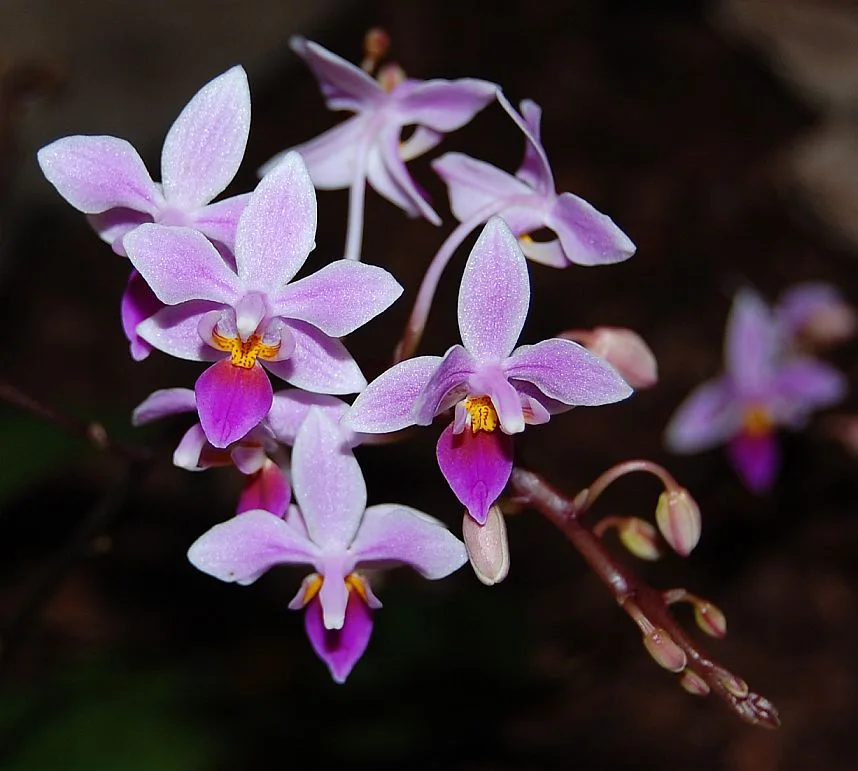
Phalaenopsis equestris.jpg · Resized and converted to WebP for display. Source-identified documentary image; see the original file for method and context. AI-generated illustration. AtonX · CC BY-SA 3.0

Field guide · species
Phalaenopsis equestris
(Schauer) Rchb.f., 1850
This tropical moth orchid is a natural species and an important parent of cultivated hybrids. It grows as an epiphyte and uses CAM photosynthesis, linking its leaf physiology with the intermittent water supply experienced above the ground.
Public research profile · final editorial review pending.
Tree of lifeScientific lineage
- LifeLife
- DomainEukaryota
- KingdomViridiplantae
- PhylumStreptophyta
- ClassMagnoliopsida
- OrderAsparagales
- FamilyOrchidaceae
- GenusPhalaenopsis
- SpeciesPhalaenopsis equestris
Advanced classification
Complete source lineage, including intermediate ranks. The standard view uses Life and the eight principal ranks.
- cellular organisms cellular root
- Eukaryota domain
- Viridiplantae kingdom
- Streptophyta phylum
- Streptophytina subphylum
- Embryophyta clade
- Tracheophyta clade
- Euphyllophyta clade
- Spermatophyta clade
- Magnoliopsida class
- Mesangiospermae clade
- Liliopsida clade
- Petrosaviidae subclass
- Asparagales order
- Orchidaceae family
- Epidendroideae subfamily
- Vandeae tribe
- Aeridinae subtribe
- Phalaenopsis genus
- Phalaenopsis equestris species
Structure and identification
Broad leaves and arching flowering stems carry small orchid flowers with a distinctive lip. Cultivated hybrids should not be identified as the species merely by resemblance.
Habitat and range
Epiphytic growth places roots on supporting vegetation rather than in ordinary ground soil. The supporting tree is not its food source.
Nutrition and metabolism
Leaves photosynthesize using CAM physiology. Exposed roots obtain water and dissolved nutrients from their surroundings.
Biological activity
Growth and flowering reflect available resources. The species has also been used extensively in orchid breeding.
Reproduction and life cycle
Flowers produce seeds after successful pollination and fertilization. Orchid seed establishment depends on appropriate biological and environmental conditions.
Geographic distribution
The native range includes the Philippines and Taiwan region. Cultivated plants are distributed much more widely.
Ecological role
An epiphytic life places the orchid within the canopy community without making it a parasite of its support.
Distinctive adaptations
CAM metabolism and specialized roots support life where access to water is intermittent.
Conservation
Wild populations and nursery-propagated plants must be considered separately; no current formal threat category is asserted here.
Evidence
Sources
- Phalaenopsis equestris · NCBI Taxonomy ↗NCBI
- The genome sequence of the orchid Phalaenopsis equestris ↗Nature genetics · 2015
- Phalaenopsis equestris — USDA Agricultural Research Service, GRIN-Global ↗USDA Agricultural Research Service, GRIN-Global
Connected life
Relationships
No reviewed ecological connections in the collection yet.
Explore network ↗