 Living Beings
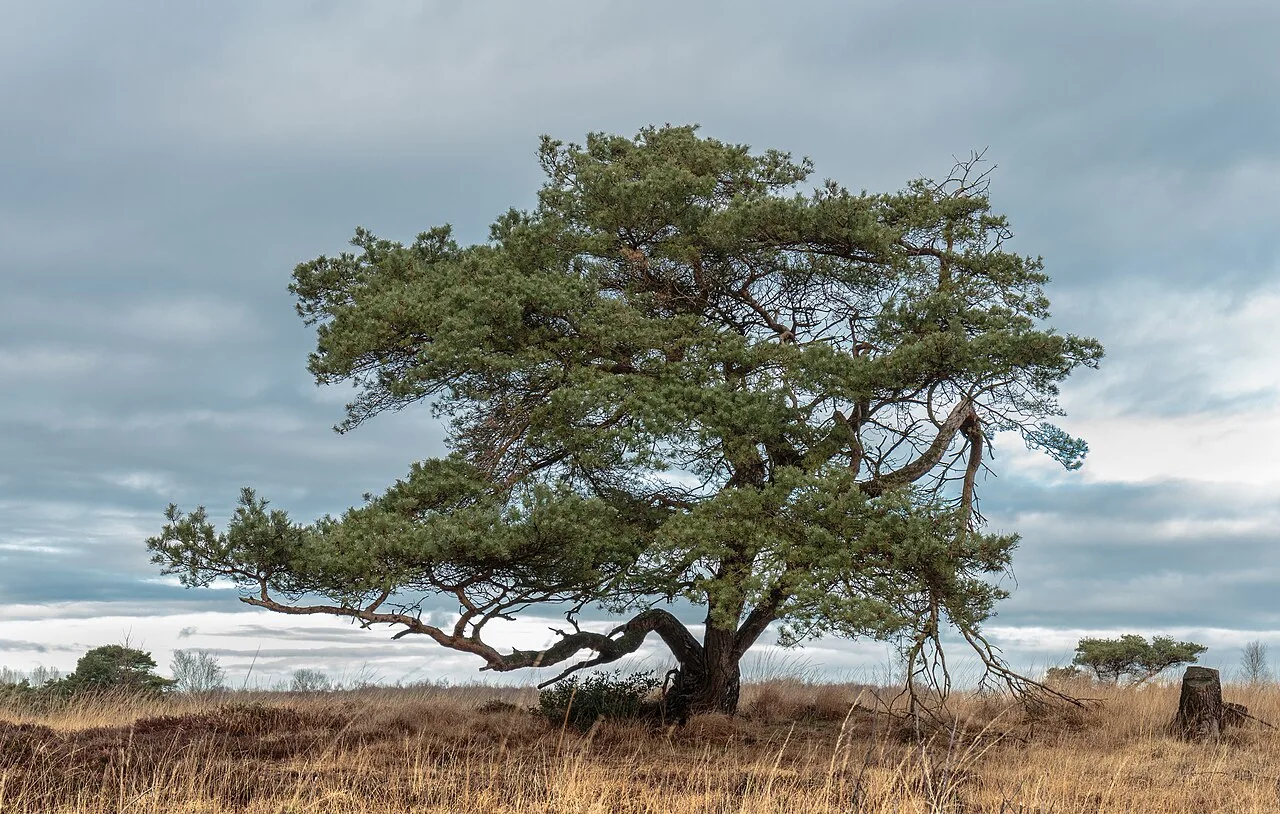
Delleboersterheide, natuurgebied van het It Fryske Gea. 25-12-2019. (actm.) 10.jpg · Resized and converted to WebP for display. Source-identified documentary image; see the original file for method and context. AI-generated illustration. Agnes Monkelbaan · CC BY-SA 4.0

Field guide · species
Scots Pine
Pinus sylvestris L., 1753
Scots pine is an evergreen conifer with paired needles and often orange-toned bark high on the trunk. Its broad Eurasian distribution includes forests shaped by cold, nutrient limitation and disturbance.
Public research profile · final editorial review pending.
Tree of lifeScientific lineage
- LifeLife
- DomainEukaryota
- KingdomViridiplantae
- PhylumStreptophyta
- ClassPinopsida
- OrderPinales
- FamilyPinaceae
- GenusPinus
- SpeciesPinus sylvestris
Advanced classification
Complete source lineage, including intermediate ranks. The standard view uses Life and the eight principal ranks.
- cellular organisms cellular root
- Eukaryota domain
- Viridiplantae kingdom
- Streptophyta phylum
- Streptophytina subphylum
- Embryophyta clade
- Tracheophyta clade
- Euphyllophyta clade
- Spermatophyta clade
- Acrogymnospermae clade
- Pinopsida class
- Pinidae subclass
- Conifers I clade
- Pinales order
- Pinaceae family
- Pinus genus
- Pinus subgen. Pinus subgenus
- Pinus sylvestris species
Structure and identification
Needles grow in pairs. Mature trees can develop a high, open crown and contrasting reddish upper bark.
Habitat and range
The species grows in varied soils but requires adequate light for successful regeneration. Prolonged shade strongly limits young trees.
Nutrition and metabolism
Evergreen needles supply photosynthetic sugars. Root-associated fungi contribute to nutrient acquisition in forest soils.
Biological activity
Seedling establishment often follows canopy openings or disturbance. Weather and available moisture influence recruitment.
Reproduction and life cycle
Wind carries pollen between reproductive structures; seeds develop in cones. Juvenile growth precedes regular cone production.
Geographic distribution
Scots pine is native across a broad Eurasian range and has been planted beyond it.
Ecological role
Pine stands supply structural habitat and organic material, while regeneration interacts with local fire and succession regimes.
Distinctive adaptations
Persistent needles and tolerance of nutrient-poor sites support growth where more demanding trees may struggle.
Conservation
The condition of native populations and planted stands varies. Local climate stress and genetic provenance require attention.
Evidence
Sources
- Pinus sylvestris · NCBI Taxonomy ↗NCBI
- Pinus sylvestris · Biological reference ↗
- Pinus sylvestris · Scientific account ↗
- Pinus sylvestris — USDA Forest Service, Fire Effects Information System ↗USDA Forest Service, Fire Effects Information System
Connected life
Relationships
No reviewed ecological connections in the collection yet.
Explore network ↗