 Living Beings
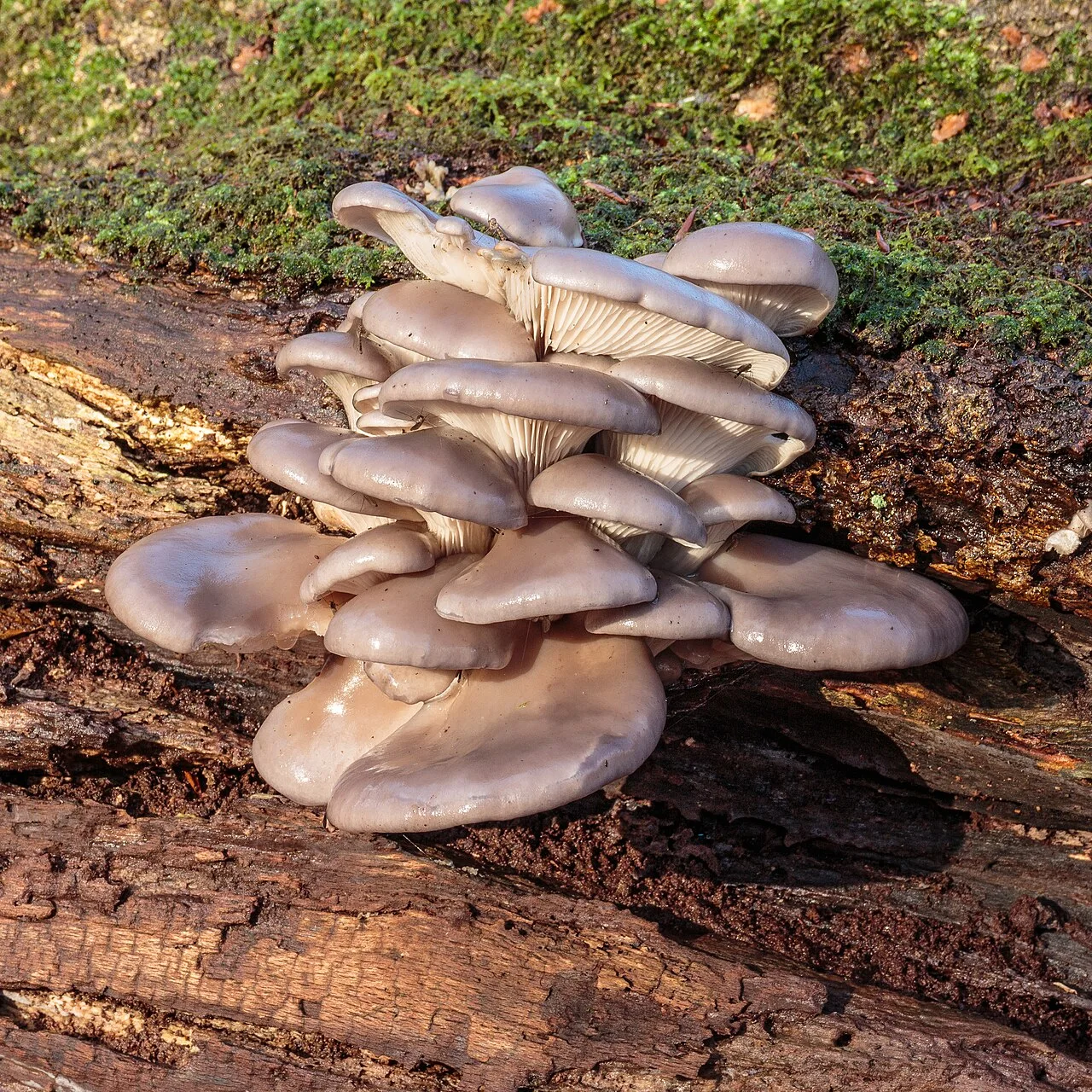
Gewone oesterzwam (Pleurotus ostreatus) 25-12-2020 (d.j.b.) 01.jpg · Resized and converted to WebP for display. Documentary organism photograph; source identification retained. AI-generated illustration. Dominicus Johannes Bergsma · CC BY-SA 4.0

Field guide · species
Oyster Mushroom
Pleurotus ostreatus (Jacq.) P. Kumm., 1871
The oyster mushroom forms overlapping shelves on wood. It is both a wild decomposer and an extensively cultivated fungus, with fruiting-body development closely tied to environmental conditions.
Public research profile · final editorial review pending.
Tree of lifeScientific lineage
- LifeLife
- DomainEukaryota
- KingdomFungi
- PhylumBasidiomycota
- ClassAgaricomycetes
- OrderAgaricales
- FamilyPleurotaceae
- GenusPleurotus
- SpeciesPleurotus ostreatus
Advanced classification
Complete source lineage, including intermediate ranks. The standard view uses Life and the eight principal ranks.
- cellular organisms cellular root
- Eukaryota domain
- Opisthokonta clade
- Fungi kingdom
- Dikarya subkingdom
- Basidiomycota phylum
- Agaricomycotina subphylum
- Agaricomycetes class
- Agaricomycetidae subclass
- Agaricales order
- Pleurotineae suborder
- Pleurotaceae family
- Pleurotus genus
- Pleurotus ostreatus species
Structure and identification
A broad cap carries pale gills that run down a short or nearly absent stem. Caps can overlap in shelf-like groups; coloration alone does not reliably separate every oyster-mushroom species.
Habitat and range
Dead or declining hardwood provides a substrate for the feeding mycelium. The mushroom emerges from this colonized wood.
Nutrition and metabolism
Extracellular enzymes break down components of wood so that the fungus can absorb released nutrients.
Reproduction and life cycle
Vegetative hyphae grow through their substrate before reproductive fruiting bodies form. Spores released from the gills can disperse to new suitable material.
Geographic distribution
Widely documented and cultivated. Regional records should be checked against closely related Pleurotus species rather than assigning every oyster-shaped mushroom to P. ostreatus.
Ecological role
Wood decomposition returns material to nutrient cycles. Cultivation research also investigates how heat stress alters growth and fruiting.
Distinctive adaptations
A lateral attachment and descending gills suit a fruiting body projecting from the side of a woody substrate.
Evidence
Sources
- Pleurotus ostreatus · NCBI Taxonomy ↗www.ncbi.nlm.nih.gov
- Pleurotus ostreatus · Biological reference ↗www.mushroomexpert.com
- Pleurotus ostreatus · Biological reference ↗pubmed.ncbi.nlm.nih.gov
Connected life
Relationships
No reviewed ecological connections in the collection yet.
Explore network ↗