 Living Beings
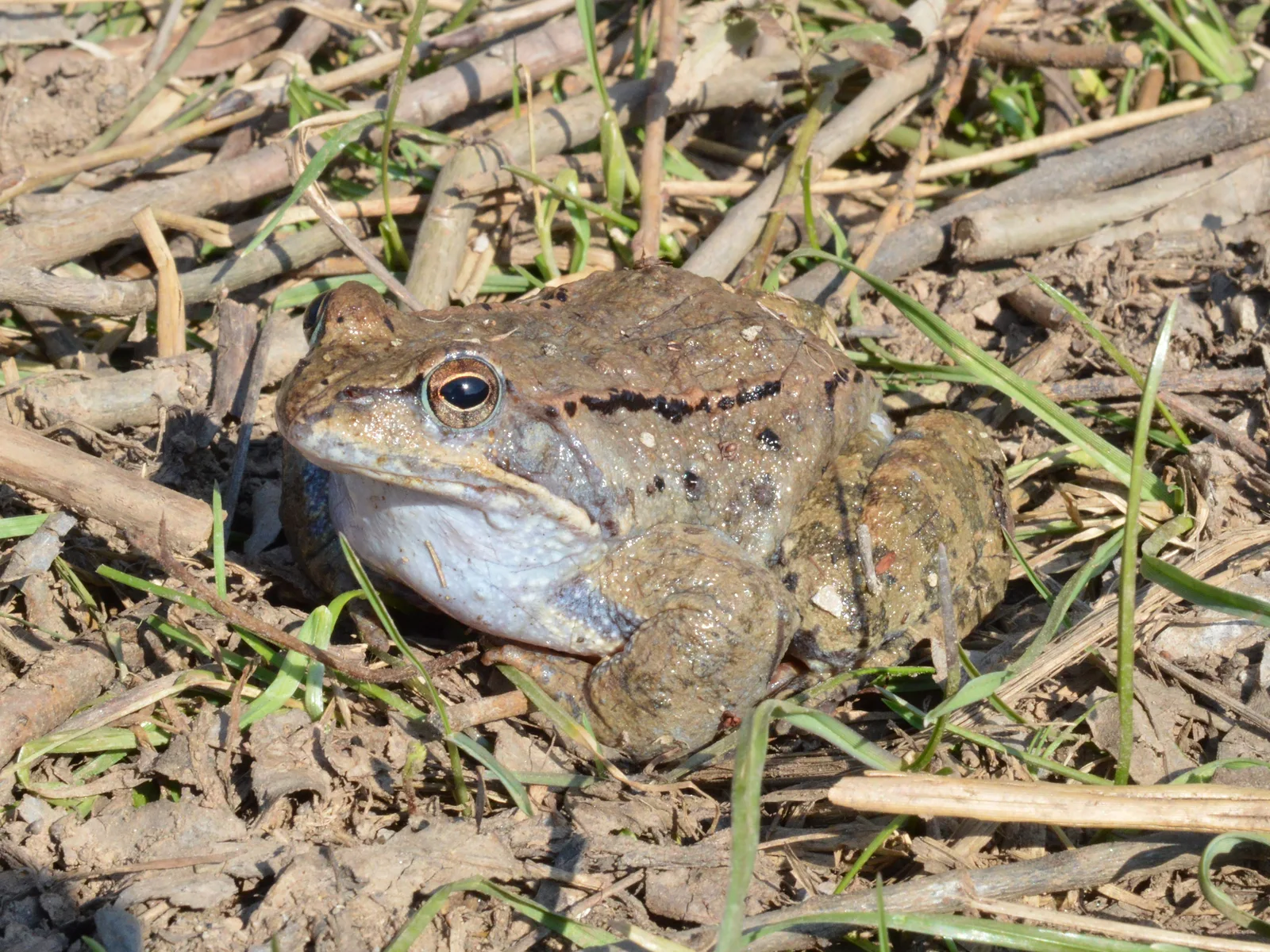
Rana temporaria at Muhalnitsa, Botevgrad (01.03.2019) 01.jpg · Resized and converted to WebP for display. Documentary organism photograph. AI-generated illustration. Dimitǎr Boevski · CC BY-SA 4.0

Field guide · species
Common Frog
Rana temporaria Linnaeus, 1758
The common frog moves between terrestrial feeding habitat and freshwater breeding sites. Its life cycle includes a swimming tadpole that differs markedly in body form and feeding from the adult frog.
Public research profile · final editorial review pending.
Tree of lifeScientific lineage
- LifeLife
- DomainEukaryota
- KingdomAnimalia
- PhylumChordata
- ClassAmphibia
- OrderAnura
- FamilyRanidae
- GenusRana
- SpeciesRana temporaria
Advanced classification
Complete source lineage, including intermediate ranks. The standard view uses Life and the eight principal ranks.
- cellular organisms cellular root
- Eukaryota domain
- Opisthokonta clade
- Metazoa kingdom
- Eumetazoa clade
- Bilateria clade
- Deuterostomia clade
- Chordata phylum
- Craniata subphylum
- Vertebrata clade
- Gnathostomata clade
- Teleostomi clade
- Euteleostomi clade
- Sarcopterygii superclass
- Dipnotetrapodomorpha clade
- Tetrapoda clade
- Amphibia class
- Batrachia superorder
- Anura order
- Neobatrachia suborder
- Ranoidea superfamily
- Ranidae family
- Rana genus
- Rana subgenus
- Rana temporaria species
Physical traits
Adults have a smooth, variable brownish coat, a dark patch behind the eye and long hind limbs.
Habitat and range
Moist woodland, grassland and gardens provide terrestrial shelter. Standing freshwater is used for breeding.
Diet and nutrition
Adults eat invertebrates. Tadpoles use different aquatic food resources during development.
Behavior and activity
Seasonal movements bring adults to breeding water. Activity and overwintering respond to temperature and moisture.
Reproduction and life cycle
Egg masses develop into tadpoles, which grow limbs and undergo metamorphosis before taking up a more terrestrial life.
Geographic distribution
The species occurs across much of Europe and into parts of temperate Asia, with local limits set by climate and habitat.
Ecological role
Frogs connect freshwater and terrestrial food webs as both consumers and prey.
Distinctive adaptations
Powerful hind limbs aid swimming and jumping; permeable skin makes access to moisture important.
Conservation
Loss of ponds and surrounding terrestrial habitat can affect local populations. Healthy breeding water alone is not the whole habitat requirement.
Evidence
Sources
- Rana temporaria · NCBI Taxonomy ↗NCBI
- Rana temporaria — Animal Diversity Web, University of Michigan ↗Animal Diversity Web, University of Michigan
Connected life
Relationships
No reviewed ecological connections in the collection yet.
Explore network ↗