 Living Beings
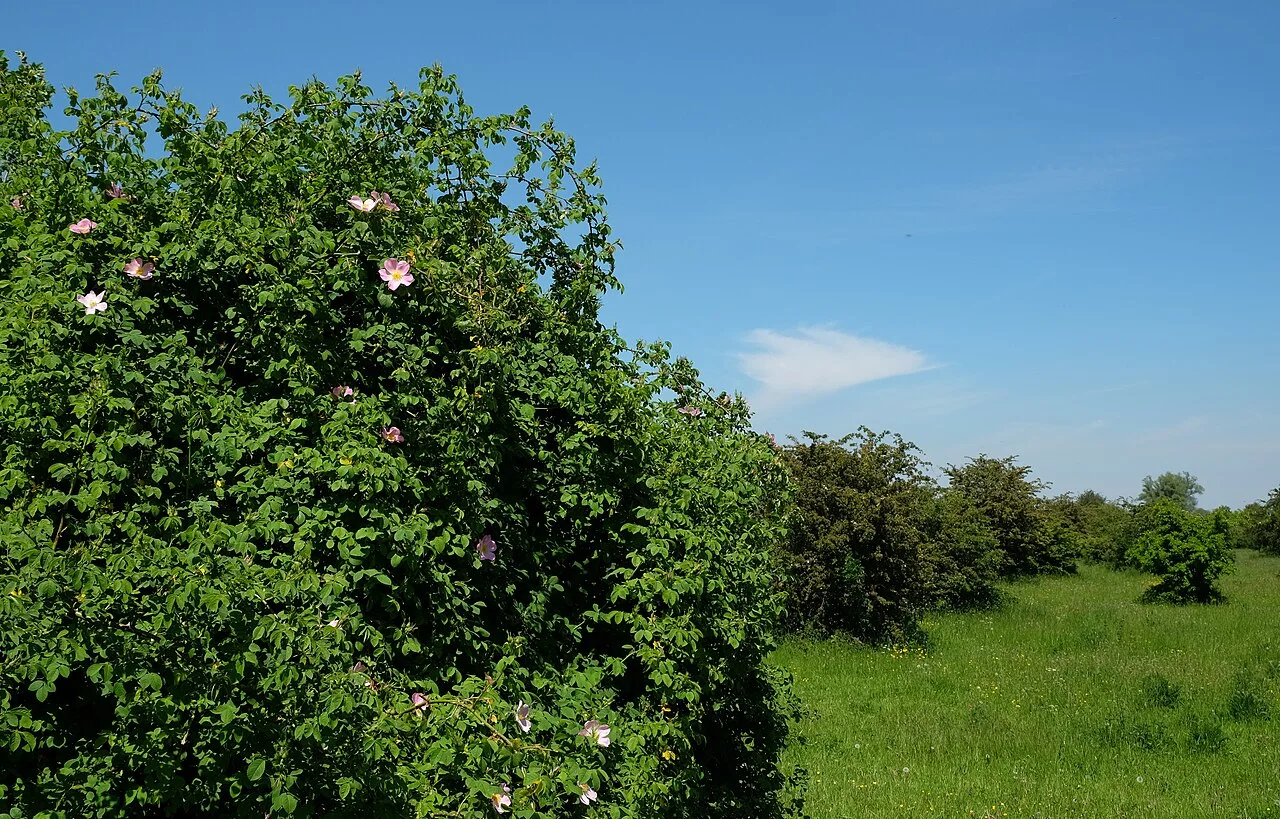
Hondsroos (Rosa canina) in een struweel van de associatie van sleedoorn en eenstijlige meidoorn (Pruno-Crataegetum).jpg · Resized and converted to WebP for display. Documentary organism photograph; source identification retained. AI-generated illustration. Cultureel Gelderland · CC0

Field guide · species
Dog Rose
Rosa canina L., 1753
The dog rose is a scrambling wild rose whose arching stems carry simple-looking flowers followed by orange-red hips. It is a familiar component of British woodland edges and grassland margins.
Public research profile · final editorial review pending.
Tree of lifeScientific lineage
- LifeLife
- DomainEukaryota
- KingdomViridiplantae
- PhylumStreptophyta
- ClassMagnoliopsida
- OrderRosales
- FamilyRosaceae
- GenusRosa
- SpeciesRosa canina
Advanced classification
Complete source lineage, including intermediate ranks. The standard view uses Life and the eight principal ranks.
- cellular organisms cellular root
- Eukaryota domain
- Viridiplantae kingdom
- Streptophyta phylum
- Streptophytina subphylum
- Embryophyta clade
- Tracheophyta clade
- Euphyllophyta clade
- Spermatophyta clade
- Magnoliopsida class
- Mesangiospermae clade
- eudicotyledons clade
- Gunneridae clade
- Pentapetalae clade
- rosids clade
- fabids clade
- Rosales order
- Rosaceae family
- Rosoideae subfamily
- Rosoideae incertae sedis no rank
- Rosa genus
- Rosa canina species
Structure and identification
Long, arching stems can lean through neighboring vegetation. Flowers have an open form, and the later hips are oval rather than resembling a fleshy orchard rose bloom.
Habitat and range
Woodland margins, hedges and grassland provide neighboring plants through which the stems can scramble.
Nutrition and metabolism
Green foliage fixes carbon through photosynthesis. The woody plant obtains water and minerals through its roots.
Reproduction and life cycle
Flowers are followed by seed-bearing hips that can remain conspicuous after the flowering season. The visible hip surrounds the small fruits within.
Geographic distribution
Native in Britain and present across a wider Eurasian range. Garden planting and natural occurrence should be distinguished when interpreting a local record.
Ecological role
Seasonal flowers and persistent hips make the plant part of a changing hedgerow habitat. Similar rose species can require closer botanical examination for identification.
Distinctive adaptations
A scrambling growth habit lets stems reach light without forming a massive, self-supporting trunk.
Evidence
Sources
- Rosa canina · NCBI Taxonomy ↗www.ncbi.nlm.nih.gov
- Rosa canina · Biological reference ↗www.botanic.cam.ac.uk
- Rosa canina · Biological reference ↗www.rhs.org.uk
Connected life
Relationships
No reviewed ecological connections in the collection yet.
Explore network ↗