 Living Beings
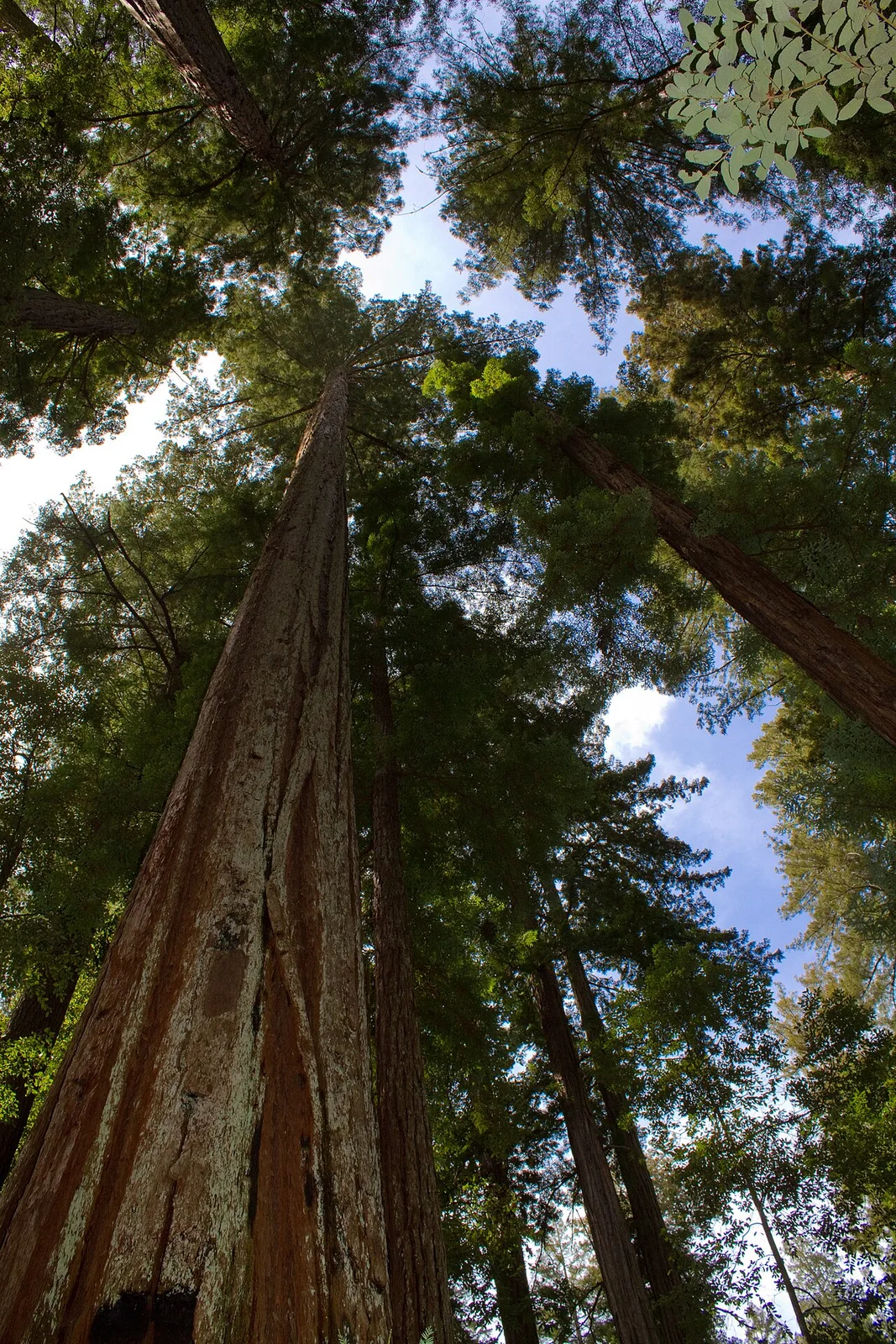
Sequoia sempervirens Big Basin Redwoods State Park 1.jpg · Resized and converted to WebP for display. Documentary organism photograph; source identification retained. AI-generated illustration. Brian Gratwicke from DC, USA · CC BY 2.0

Field guide · species
Coast Redwood
Sequoia sempervirens (D.Don) Endl., 1847
The coast redwood is an evergreen conifer of the Pacific coast of North America. Its forests develop in a moist coastal climate where winter rain and summer fog help limit water stress.
Public research profile · final editorial review pending.
Tree of lifeScientific lineage
- LifeLife
- DomainEukaryota
- KingdomViridiplantae
- PhylumStreptophyta
- ClassPinopsida
- OrderCupressales
- FamilyCupressaceae
- GenusSequoia
- SpeciesSequoia sempervirens
Advanced classification
Complete source lineage, including intermediate ranks. The standard view uses Life and the eight principal ranks.
- cellular organisms cellular root
- Eukaryota domain
- Viridiplantae kingdom
- Streptophyta phylum
- Streptophytina subphylum
- Embryophyta clade
- Tracheophyta clade
- Euphyllophyta clade
- Spermatophyta clade
- Acrogymnospermae clade
- Pinopsida class
- Pinidae subclass
- Conifers II clade
- Cupressales order
- Cupressaceae family
- Sequoia genus
- Sequoia sempervirens species
Structure and identification
A tall trunk bears fibrous reddish bark and a crown of needle-like foliage. Small woody cones distinguish it as a seed-bearing conifer rather than a flowering tree.
Habitat and range
Sheltered valleys, stream corridors and moist coastal slopes support redwood forest. Site moisture strongly influences growth.
Nutrition and metabolism
Foliage captures light for photosynthesis. Roots draw water and dissolved nutrients from the soil.
Reproduction and life cycle
Seeds released from cones can establish seedlings. New shoots can also arise from the root crown or dormant buds, so regeneration is not limited to seeds.
Geographic distribution
Its natural range follows coastal northern and central California into southwestern Oregon. Planted redwoods occur well outside that range.
Ecological role
Large living trees and fallen wood create persistent forest structure and varied habitats.
Distinctive adaptations
Thick bark and the ability to sprout can aid survival or recovery after disturbance. These traits do not make redwoods immune to severe fire.
Evidence
Sources
- Sequoia sempervirens · NCBI Taxonomy ↗www.ncbi.nlm.nih.gov
- Sequoia sempervirens · Biological reference ↗www.srs.fs.usda.gov
- Sequoia sempervirens · Biological reference ↗research.fs.usda.gov
Connected life
Relationships
No reviewed ecological connections in the collection yet.
Explore network ↗