 Living Beings
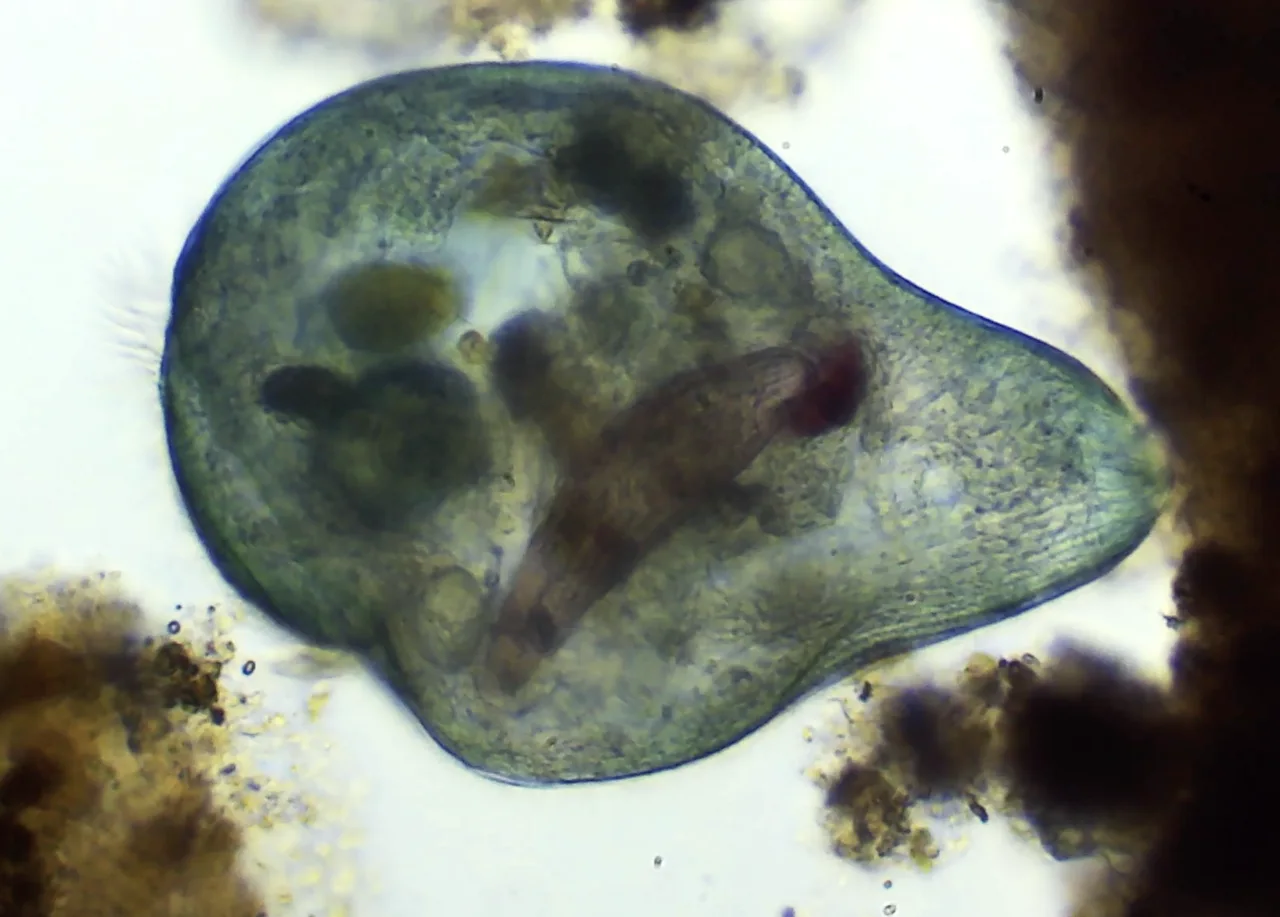
Stentor coeruleus.png · Resized and converted to WebP for display. Contracted cell containing ingested material; source identification retained. AI-generated illustration. Algae17 · CC BY-SA 4.0

Field guide · species
Stentor coeruleus
(Pallas, 1766) Ehrenberg, 1831
Stentor coeruleus is a large single-celled ciliate famous for reorganizing and regenerating damaged cell structures. Its elaborate body plan is built within one cell rather than from animal tissues.
Public research profile · final editorial review pending.
Tree of lifeScientific lineage
- LifeLife
- DomainEukaryota
- PhylumCiliophora
- ClassHeterotrichea
- OrderHeterotrichida
- FamilyStentoridae
- GenusStentor
- SpeciesStentor coeruleus
Advanced classification
Complete source lineage, including intermediate ranks. The standard view uses Life and the eight principal ranks.
- cellular organisms cellular root
- Eukaryota domain
- Sar clade
- Alveolata clade
- Ciliophora phylum
- Postciliodesmatophora subphylum
- Heterotrichea class
- Heterotrichida order
- Stentoridae family
- Stentor genus
- Stentor coeruleus species
Structure and identification
An extended cell has a pronounced front-to-back organization and a broad oral region. A contracted cell looks very different; the photograph shows a contracted individual with ingested material.
Habitat and range
The cited studies concern cultured ciliates and controlled experiments. They do not establish a complete geographic distribution or natural lifespan.
Nutrition and metabolism
Food is taken into the cell rather than produced by green-plant photosynthesis. Its feeding apparatus is a specialized region of the same single cell.
Biological activity
Experiments document contraction in response to touch, light avoidance and food selection. These responses do not require a multicellular nervous system.
Reproduction and life cycle
Growth and cell division maintain the population. Regeneration after experimental injury is repair and reorganization, not an extra animal-like life stage.
Ecological role
Its interactions with microbial food illustrate the complexity of unicellular life.
Distinctive adaptations
After suitable experimental damage, remaining cell material can restore a proportioned form. This ability has made it valuable for studying how cells know where to build structures.
Evidence
Sources
- Stentor coeruleus · NCBI Taxonomy ↗www.ncbi.nlm.nih.gov
- Stentor coeruleus · Biological reference ↗pubmed.ncbi.nlm.nih.gov
- Stentor coeruleus · Biological reference ↗pubmed.ncbi.nlm.nih.gov
Connected life
Relationships
No reviewed ecological connections in the collection yet.
Explore network ↗