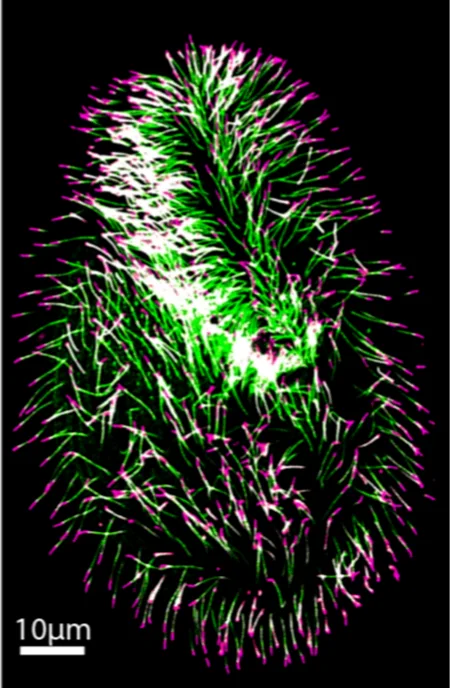
Paramecium tetraurelia
Paramecium tetraurelia is a ciliated single-celled eukaryote within the Paramecium aurelia species complex. Its nuclear organization and history of genome duplication make …
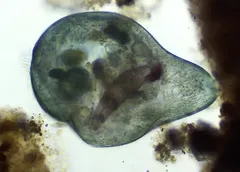
Phylum · Scientific classification
Ciliates are single-celled eukaryotes that use rows of cilia and often maintain two kinds of nucleus.
Explore broader group · Eukaryota ↗
NCBI Taxonomy (2026-11-05 reconciled backbone) · Taxon source ↗
Group guide
Paramecium and Tetrahymena have numerous short cilia. Coordinated beating can move the cell, while cilia at the oral region guide food toward the mouthlike opening. The placement of those cilia makes the same type of cellular structure useful for two different tasks.
Source for rows of moving cilia ↗In Paramecium tetraurelia, the micronuclei carry the inherited genome, while the macronucleus supplies most gene expression in the growing cell. When a new macronucleus develops, its genome is processed and amplified. This separation helps explain why researchers specify which kind of nucleus they sequenced.
Source for two nuclear roles in one cell ↗Within this taxon
Paramecium tetraurelia
Paramecium tetraurelia is a ciliated single-celled eukaryote within the Paramecium aurelia species complex. Its nuclear organization and history of genome duplication make …
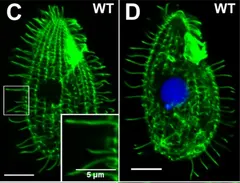
Stentor coeruleus
Stentor coeruleus is a large single-celled ciliate famous for reorganizing and regenerating damaged cell structures. Its elaborate body plan is built within …
Tetrahymena thermophila
Tetrahymena thermophila is a free-living ciliate whose single cell supports movement, feeding and two distinct nuclear roles. Its tractable genetics makes it …