 Living Beings
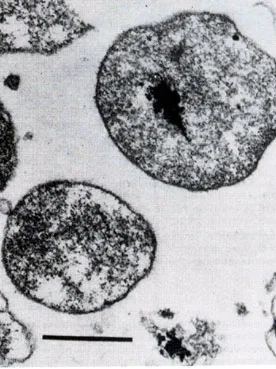
Thermoplasma.acidophilum.jpg · Resized and converted to WebP for display. Electron-microscopy image; source attribution retained as recorded by Commons. AI-generated illustration. Victor Wong (according to recision history) · CC BY 3.0

Field guide · species
Thermoplasma acidophilum
Darland et al. 1970
Thermoplasma acidophilum is an archaeon adapted to hot, acidic conditions. Unlike many microorganisms, it lacks a rigid cell wall and is bounded by a specialized plasma membrane.
Public research profile · final editorial review pending.
Tree of lifeScientific lineage
- LifeLife
- DomainArchaea
- KingdomMethanobacteriati
- PhylumThermoplasmatota
- ClassThermoplasmata
- OrderThermoplasmatales
- FamilyThermoplasmataceae
- GenusThermoplasma
- SpeciesThermoplasma acidophilum
Advanced classification
Complete source lineage, including intermediate ranks. The standard view uses Life and the eight principal ranks.
- cellular organisms cellular root
- Archaea domain
- Methanobacteriati kingdom
- Thermoplasmatota phylum
- Thermoplasmata class
- Thermoplasmatales order
- Thermoplasmataceae family
- Thermoplasma genus
- Thermoplasma acidophilum species
Structure and identification
Microscopic cells have a flexible outline rather than a shape enforced by a rigid wall. The accompanying image is an electron-microscopy view.
Habitat and range
Reported isolates come from self-heating coal refuse and sulfurous geothermal settings, environments that combine acidity with elevated temperature.
Nutrition and metabolism
It is a heterotrophic scavenger, using organic material rather than relying on light-driven carbon fixation.
Biological activity
Protein folding, protein degradation and membrane composition are important subjects of research in this organism.
Reproduction and life cycle
Cells reproduce as microorganisms rather than forming the reproductive fruiting bodies of fungi. The cited work concerns cultured cells and their molecular machinery, not a measured lifespan in nature.
Ecological role
Genome analysis reveals relationships to proteins in other archaea and evidence of gene exchange with organisms sharing similar environments.
Distinctive adaptations
Membrane glycolipids contain specialized tetraether lipid cores. Such chemistry differs from the familiar lipid organization of many bacterial and animal membranes.
Evidence
Sources
- Thermoplasma acidophilum · NCBI Taxonomy ↗www.ncbi.nlm.nih.gov
- Thermoplasma acidophilum · Biological reference ↗pubmed.ncbi.nlm.nih.gov
- Thermoplasma acidophilum · Biological reference ↗pubmed.ncbi.nlm.nih.gov
Connected life
Relationships
No reviewed ecological connections in the collection yet.
Explore network ↗