Domain · Scientific classification

Archaea

Archaea are a domain of cellular organisms distinct from Bacteria. Their members include salt-loving, methane-producing and marine lineages.

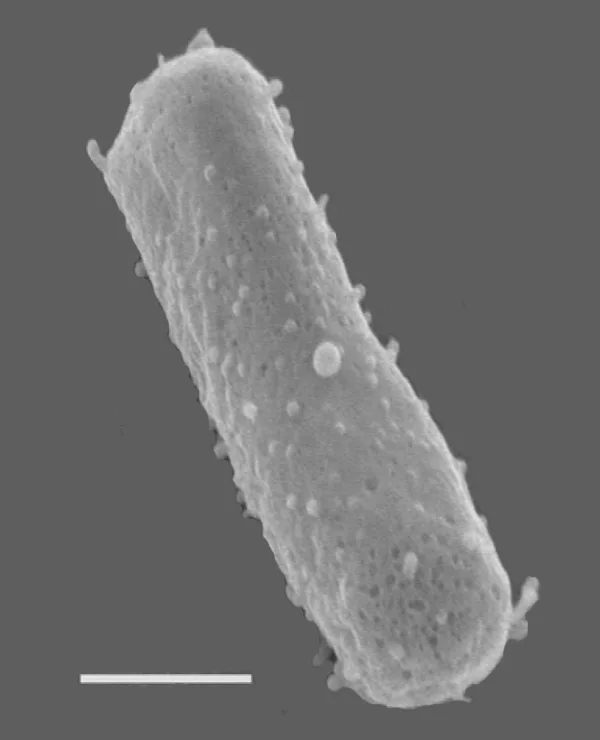
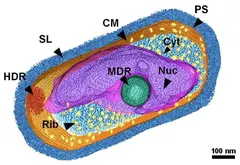
Source-identified Halobacterium salinarum; Source-identified documentary image; see the original file for method and context. Framed for display
Halobacterium salinarum · Helga Stan-Lotter and Sergiu Fendrihan. Photograph taken by Chris Frethem, University of Minnesota. · CC BY-SA 4.0

Principal classification

  1. LifeLife
  2. DomainArchaea

Explore broader group · Life ↗

NCBI Taxonomy (2026-11-05 reconciled backbone) · Taxon source ↗

NCBI domain rank ↗

Group guide

Understanding Archaea

A domain with many habitats

Archaea are a distinct domain of cellular life. The salt-loving Halobacterium in this collection illustrates one way of life. Environmental surveys also detect ammonia-oxidizing archaea in ocean water and sediments, where their metabolism contributes to the nitrogen cycle.

Source for a domain with many habitats ↗

Why molecular evidence matters

Comparisons of ribosomal RNA helped distinguish Archaea from Bacteria. Similar-looking cells can have very different evolutionary histories and biochemistry, so a photograph or habitat description alone cannot identify an archaeal lineage.

Source for why molecular evidence matters ↗

Differences in the cell envelope

A typical archaeal membrane contains a different set of lipid structures from a typical bacterial membrane. Archaeal cell envelopes also differ from bacterial cell walls in their composition. Similar shape under a microscope is insufficient to assign a domain.

Source for differences in the cell envelope ↗

Previous source record

Archaea · kingdom · Original classification source

The original identifier and source were retained when adopting the dated NCBI backbone. Different sources may use different names, ranks or group circumscriptions.

Within this taxon

Published profiles

Source-identified Halobacterium salinarum; Source-identified documentary image; see the original file for method and context. Framed for display
Species · Halobacterium

Halobacterium salinarum

Halobacterium salinarum

Despite its historical genus name, Halobacterium salinarum is an archaeon. High-salt growth and light-sensitive membrane proteins make it a classic example of …

Source-identified Haloferax volcanii; Source-identified documentary image; see the original file for method and context. Framed for display
Species · Haloferax

Haloferax volcanii

Haloferax volcanii

Haloferax volcanii is a salt-loving archaeon used extensively in genetics and cell biology. Its tractable culture system and complete genome make it …

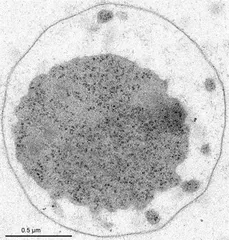
Source-identified Ignicoccus hospitalis; Electron micrograph of a section through a cell. Framed for display
Species · Ignicoccus

Ignicoccus hospitalis

Ignicoccus hospitalis

Ignicoccus hospitalis is a heat-loving archaeon with an unusual cell envelope. It is especially well known as a host for the much …

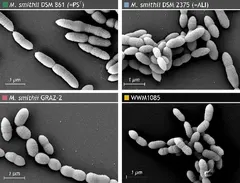
Source-identified Methanobrevibacter smithii; Source-identified documentary image; see the original file for method and context. Framed for display
Species · Methanobrevibacter

Methanobrevibacter smithii

Methanobrevibacter smithii

Methanobrevibacter smithii is a methane-producing archaeon associated with the human intestinal community. It consumes products generated by other microbes, placing its metabolism …

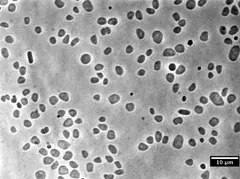
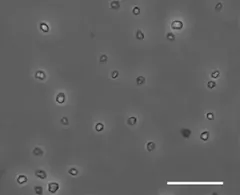
Source-identified Methanocaldococcus jannaschii; Light micrograph of cultured cells; source scale bar retained. Framed for display
Species · Methanocaldococcus

Methanocaldococcus jannaschii

Methanocaldococcus jannaschii

Methanocaldococcus jannaschii is a heat-adapted, methane-producing archaeon first isolated from a submarine hydrothermal vent. It belongs to Archaea, a domain distinct from …

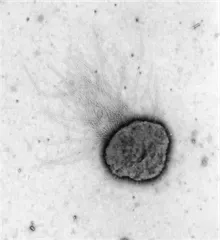
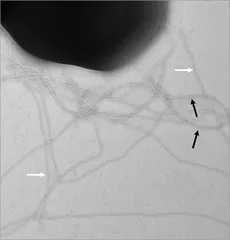
Source-identified Methanococcus maripaludis; Electron micrograph showing a cell and appendages. Framed for display
Species · Methanococcus

Methanococcus maripaludis

Methanococcus maripaludis

Methanococcus maripaludis is a methane-producing archaeon associated with marine sediment. It has become an important laboratory organism for understanding and modifying archaeal …

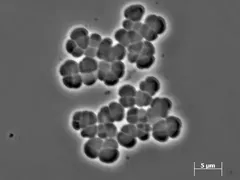
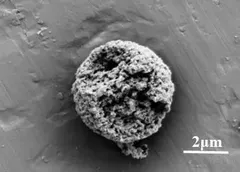
Source-identified Methanosarcina barkeri; Source-identified documentary image; see the original file for method and context. Framed for display
Species · Methanosarcina

Methanosarcina barkeri

Methanosarcina barkeri

Methanosarcina barkeri is an anaerobic archaeon with several routes to methane production. Its cells can form conspicuous aggregates, and its metabolic flexibility …

Source-identified Nitrosopumilus maritimus; Cryo-electron tomographic reconstruction with segmented colors. Framed for display
Species · Nitrosopumilus

Nitrosopumilus maritimus

Nitrosopumilus maritimus

Nitrosopumilus maritimus helped overturn the idea that cultivated Archaea were confined to extreme habitats. This marine archaeon obtains energy by oxidizing ammonia …

Species · Pyrococcus

Pyrococcus furiosus

Pyrococcus furiosus

Pyrococcus furiosus is a marine archaeon whose cells grow without oxygen at temperatures close to the boiling point of water. Its type …

Source-identified Saccharolobus solfataricus; Source-identified documentary image; see the original file for method and context. Framed for display
Species · Saccharolobus

Saccharolobus solfataricus

Saccharolobus solfataricus

Saccharolobus solfataricus is a heat- and acid-adapted archaeon formerly classified as Sulfolobus solfataricus. Genome research on strain P2 and later taxonomic work …

Source-identified Sulfolobus acidocaldarius; Source-identified documentary image; see the original file for method and context. Framed for display
Species · Sulfolobus

Sulfolobus acidocaldarius

Sulfolobus acidocaldarius

Sulfolobus acidocaldarius is an aerobic archaeon of hot, acidic terrestrial environments. The genome study of strain DSM639 reports optimal growth around 80 …

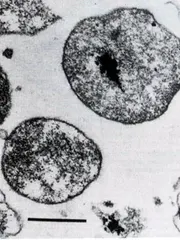
Source-identified Thermoplasma acidophilum; Electron-microscopy image; source attribution retained as recorded by Commons. Framed for display
Species · Thermoplasma

Thermoplasma acidophilum

Thermoplasma acidophilum

Thermoplasma acidophilum is an archaeon adapted to hot, acidic conditions. Unlike many microorganisms, it lacks a rigid cell wall and is bounded …