Methanobacteriati is a kingdom name published for a large branch within Archaea. Older literature frequently uses Euryarchaeota, and the treatment of those lineages varies between classification schemes. In the NCBI tree used here, Methanobacteriota has phylum rank. Check both the source and the rank when comparing records.
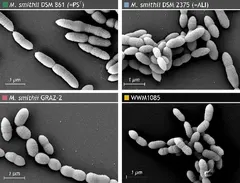
Researchers grew a human-derived Methanobrevibacter smithii isolate on hydrogen and carbon dioxide and sequenced its genome. The organism uses hydrogen to reduce carbon dioxide during methane production. A gut-associated isolate illustrates that a member of this kingdom can live in a host-associated habitat.
In Halobacterium salinarum, bacteriorhodopsin is a light-driven proton pump found in the purple membrane. Compare how this organism can use light with how Methanobrevibacter obtains energy. Those examples show why the metabolism of an isolate needs evidence at the organism or strain level.
The original identifier and source were retained when adopting the dated NCBI backbone. Different sources may use different names, ranks or group circumscriptions.
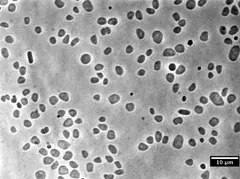
Despite its historical genus name, Halobacterium salinarum is an archaeon. High-salt growth and light-sensitive membrane proteins make it a classic example of …
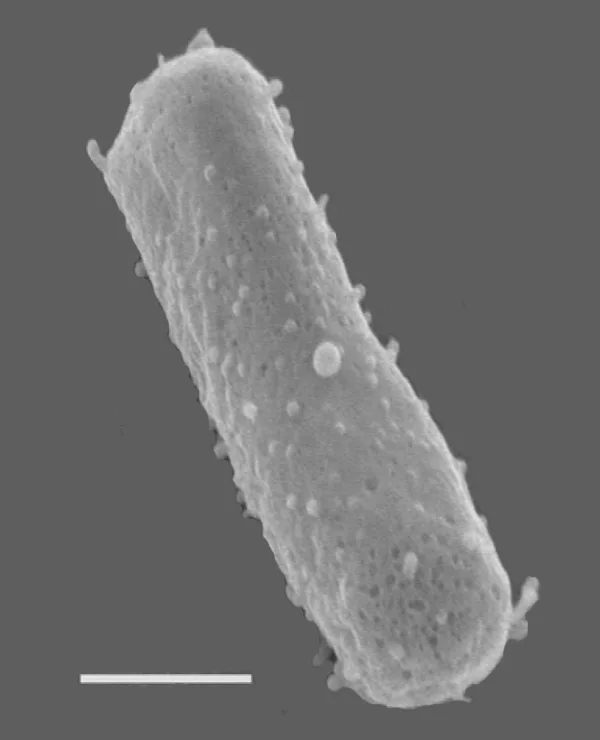
Methanobrevibacter smithii is a methane-producing archaeon associated with the human intestinal community. It consumes products generated by other microbes, placing its metabolism …
Methanocaldococcus jannaschii is a heat-adapted, methane-producing archaeon first isolated from a submarine hydrothermal vent. It belongs to Archaea, a domain distinct from …
Methanococcus maripaludis is a methane-producing archaeon associated with marine sediment. It has become an important laboratory organism for understanding and modifying archaeal …
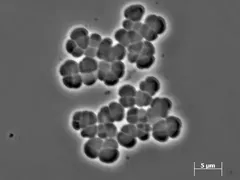
Methanosarcina barkeri is an anaerobic archaeon with several routes to methane production. Its cells can form conspicuous aggregates, and its metabolic flexibility …
 Living Beings
 Framed for display