 Living Beings
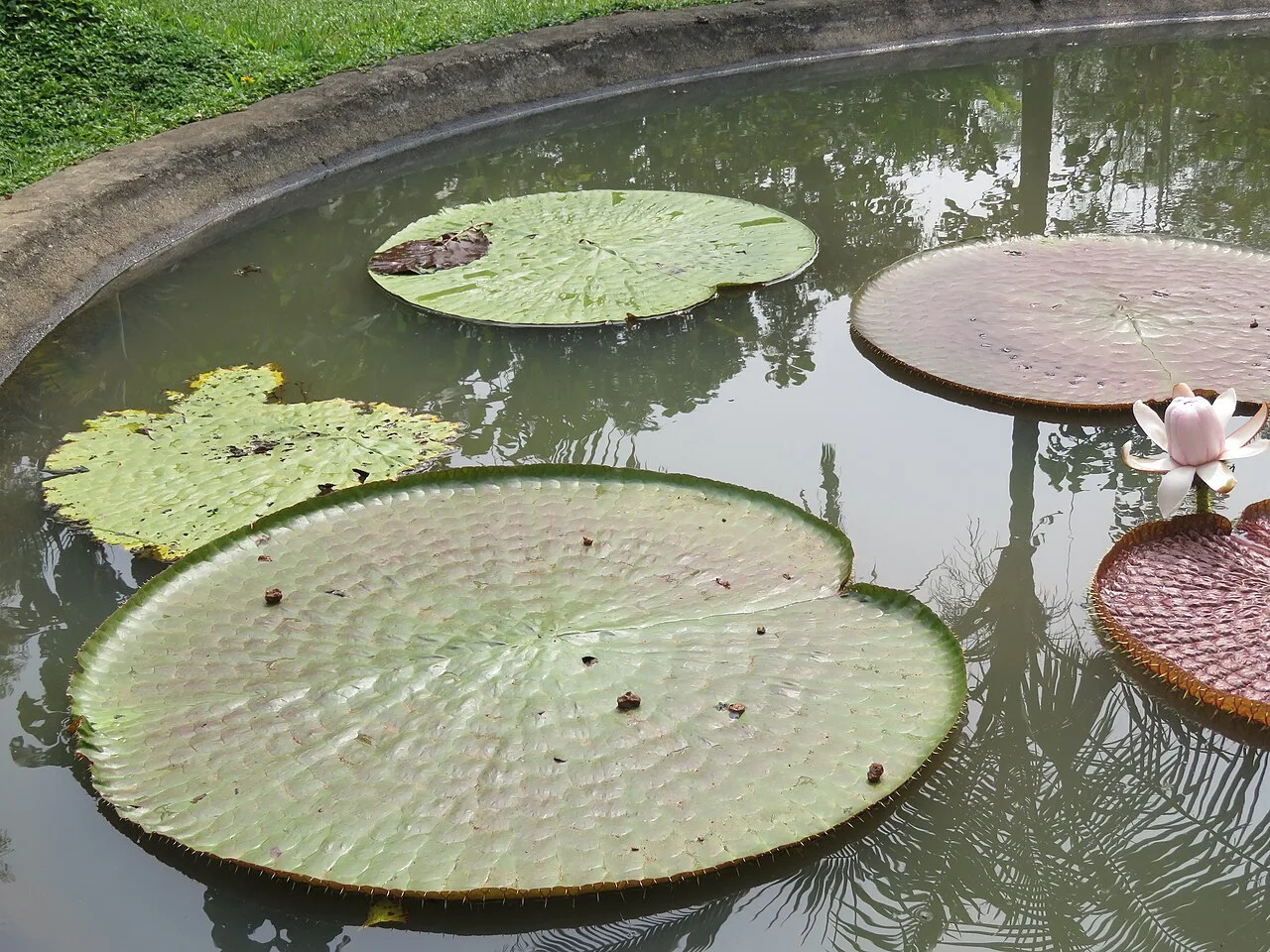
Victoria amazonica - Giant Water Lily at Nilambur (6).jpg · Resized and converted to WebP for display. Cultivated giant waterlily photographed at Nilambur, India. AI-generated illustration. Vinayaraj · CC BY-SA 4.0

Field guide · species
Giant Waterlily
Victoria amazonica (Poepp.) Klotzsch, 1847
Victoria amazonica is an aquatic flowering plant with large floating leaves and remarkable night-opening flowers. It belongs to a genus of giant waterlilies whose species require careful identification.
Public research profile · final editorial review pending.
Tree of lifeScientific lineage
- LifeLife
- DomainEukaryota
- KingdomViridiplantae
- PhylumStreptophyta
- ClassMagnoliopsida
- OrderNymphaeales
- FamilyNymphaeaceae
- GenusVictoria
- SpeciesVictoria amazonica
Advanced classification
Complete source lineage, including intermediate ranks. The standard view uses Life and the eight principal ranks.
- cellular organisms cellular root
- Eukaryota domain
- Viridiplantae kingdom
- Streptophyta phylum
- Streptophytina subphylum
- Embryophyta clade
- Tracheophyta clade
- Euphyllophyta clade
- Spermatophyta clade
- Magnoliopsida class
- Nymphaeales order
- Nymphaeaceae family
- Victoria genus
- Victoria amazonica species
Structure and identification
Rounded leaf blades float at the surface, supported by a strongly ribbed underside. The raised leaf margin makes a distinctive shallow tray.
Habitat and range
Warm, relatively calm freshwater allows broad floating leaves to spread while their stalks remain connected to the submerged plant.
Nutrition and metabolism
Sunlit leaves produce organic carbon through photosynthesis. Roots and submerged tissues obtain water and nutrients from the aquatic environment.
Reproduction and life cycle
Flowers open through a female phase and a later male phase, changing from white toward pink. Beetles visit the warm, scented flowers and can transfer pollen between them.
Geographic distribution
Native to tropical South America, particularly the Amazon basin. The photograph illustrates a cultivated plant in India, not a native Indian population.
Ecological role
Flowering connects this aquatic plant with insect pollinators. Details from other Victoria species should not automatically be applied to V. amazonica.
Distinctive adaptations
Large floating blades place the photosynthetic surface in the light, while the ribbed underside supports the leaf.
Evidence
Sources
- Victoria amazonica · NCBI Taxonomy ↗www.ncbi.nlm.nih.gov
- Victoria amazonica · Biological reference ↗www.kew.org
- Victoria amazonica · Biological reference ↗powo.science.kew.org
Connected life
Relationships
No reviewed ecological connections in the collection yet.
Explore network ↗