 Living Beings
 Framed for display
Compare species
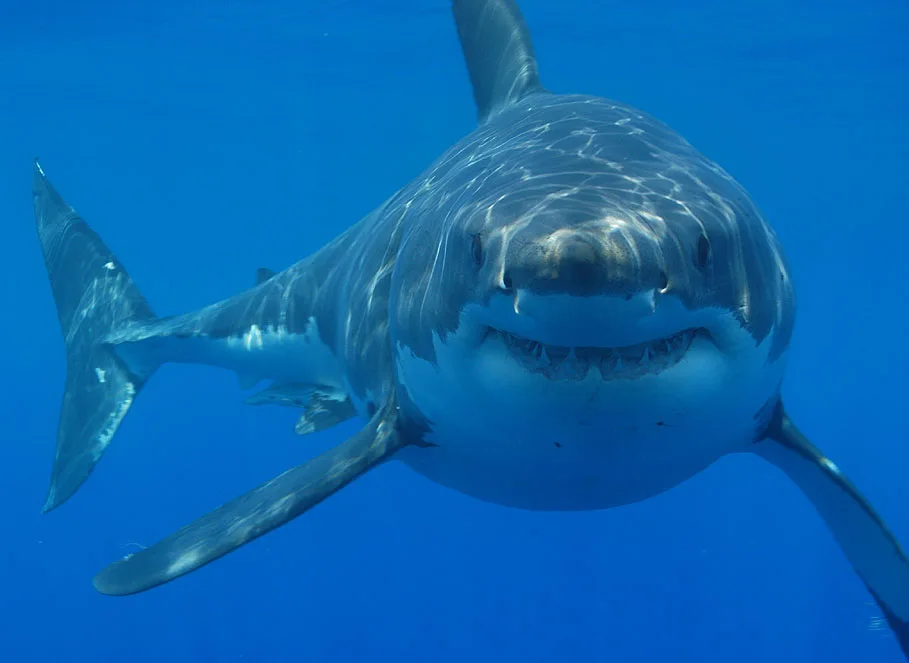
Great White Shark
Carcharodon carcharias
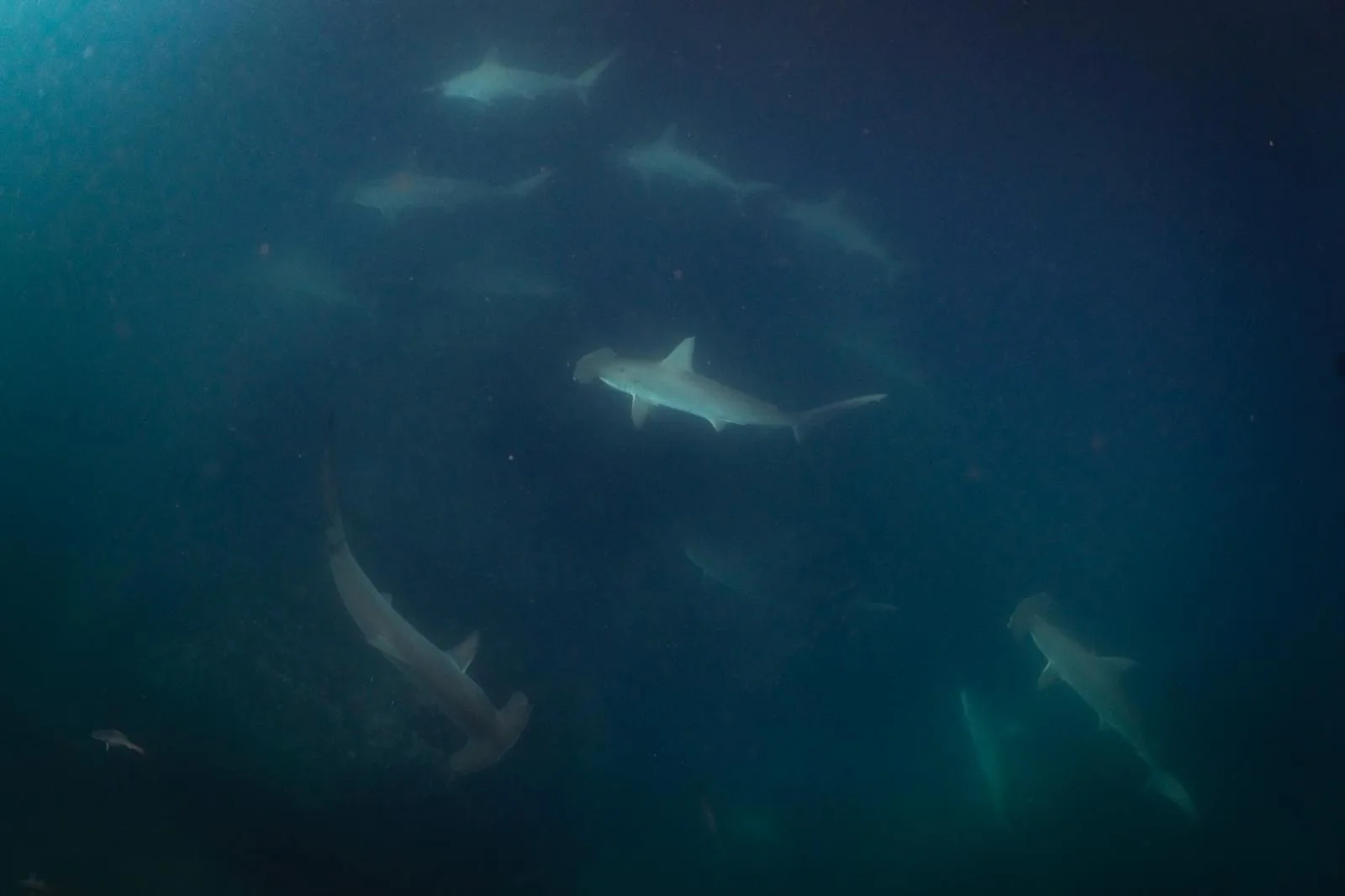
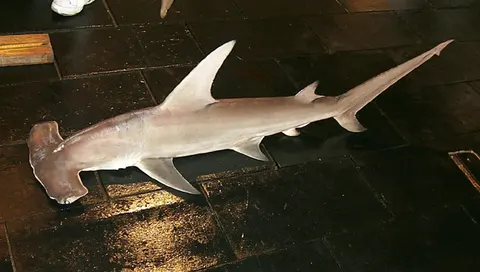
Scalloped Hammerhead
Sphyrna lewini
Try a comparison
How to compare two organisms
Choose two species and trace their closest shared group. Then compare a trait with the same definition on each side. Check the units, life stage and context before interpreting a measurement or range.
Missing data means that the collection lacks a sourced value. Where a characteristic does not apply to a lineage, the comparison labels it separately. Open the two profiles for context and follow their sources before drawing a conclusion.
Biological comparison
Means, ranges and reported maxima describe different things. Check the source and population before comparing values.
Classification
Shared ancestry
Closest shared evolutionary group · Galeoidea.
Separate lineages
| Characteristic | Great White Shark | Scalloped Hammerhead |
|---|---|---|
Scientific measurements | Scientific measurements | |
| Total length |
Recorded scopes or statistics differ.
6.4 m
Reported maximum · Context-specific record Source and measurement contextApproximate upper size in the NOAA identification guide. · ≈ 21 ft Total length to the tip of the tail, as reported by the fisheries source.
|
Recorded scopes or statistics differ.
4.2 m
Reported maximum · Context-specific record Source and measurement contextUpper end of the published maximum total-length range. · ≈ 14 ft Total length to the tip of the tail, as reported by the fisheries source.
|
| Total length at maturity | No measurement recorded |
1.50 m
Approximate value · Male · At sexual maturity · Northern Australia · Fishery samples · Context-specific record Source and measurement contextUsual total length at maturity reported from northern Australian fishery samples. · ≈ 4.92 ft Total length associated with sexual maturity in the source population.
2.00 m
Approximate value · Female · At sexual maturity · Northern Australia · Fishery samples · Context-specific record Source and measurement contextUsual total length at maturity reported from northern Australian fishery samples. · ≈ 6.56 ft Total length associated with sexual maturity in the source population.
|
Natural history | Natural history | |
| Nutrition and energy acquisition |
Younger sharks take fish and other smaller marine prey. Larger individuals may take marine mammals and scavenge carcasses. Source 1 ↗ |
Fish and cephalopods are important prey. Feeding changes as sharks move from coastal juvenile habitat to deeper waters. Source 1 ↗ |
| Habitat |
Coastal feeding grounds and offshore waters both form part of its habitat. Some individuals undertake extensive migrations. Source 1 ↗ |
Coastal shelves, island slopes and offshore waters are used at different ages and times. Source 1 ↗ |
| Geographic distribution |
White sharks occur in several ocean basins, especially temperate coastal regions. Sightings do not imply equal abundance throughout that range. Source 1 ↗ |
The species occurs in warm seas around the world. Its presence is uneven, and local populations can be strongly depleted. Source 1 ↗ |
| Morphology |
A conical snout, broad triangular teeth and a dark upper surface over a pale underside characterize the species. Source 1 ↗ |
The head is broad and flattened, with a curved, indented front margin. The body has a tall first dorsal fin and a pale underside. Source 1 ↗ |
| Reproduction and life cycle |
Embryos develop inside the mother and receive nutrition from eggs before live birth. Reproduction is slow relative to many exploited fish. Source 1 ↗ |
Females give birth to live young. Shallow coastal habitats provide nursery areas for juveniles. Source 1 ↗ |
| Ecological role |
White sharks are predators and scavengers within marine food webs. Source 1 ↗ |
These sharks are large marine predators and also host parasites and visiting cleaner fish. Source 1 ↗ |
| Behavior and activity |
Sharks investigate their surroundings using several senses and may return to productive feeding areas. Source 1 ↗ |
Schooling and movements between daytime gathering sites and feeding areas are characteristic in some populations. Source 1 ↗ |
| Environmental adaptations |
Countershading and a streamlined body assist an approaching predator; sensory systems detect chemical and electrical cues. Source 1 ↗ |
The expanded head spreads sensory organs across a broad surface, supporting prey detection. Source 1 ↗ |
| Conservation |
Bycatch and deliberate killing affect a species with limited reproductive output. Regional population trends require separate assessment. Source 1 ↗ |
Targeted fishing, bycatch and loss of nursery habitat are major pressures. Protection needs to consider more than adult aggregation sites. Source 1 ↗ |
Sources from both profiles
More comparisons
Framed for display
