 Living Beings

 Framed for display
Species · Sphyrna
Great hammerhead shark
Sphyrna mokarran
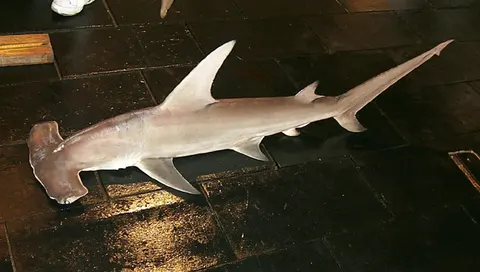
The great hammerhead is the largest hammerhead species. The front margin of its broad head is nearly straight, with a notch in …
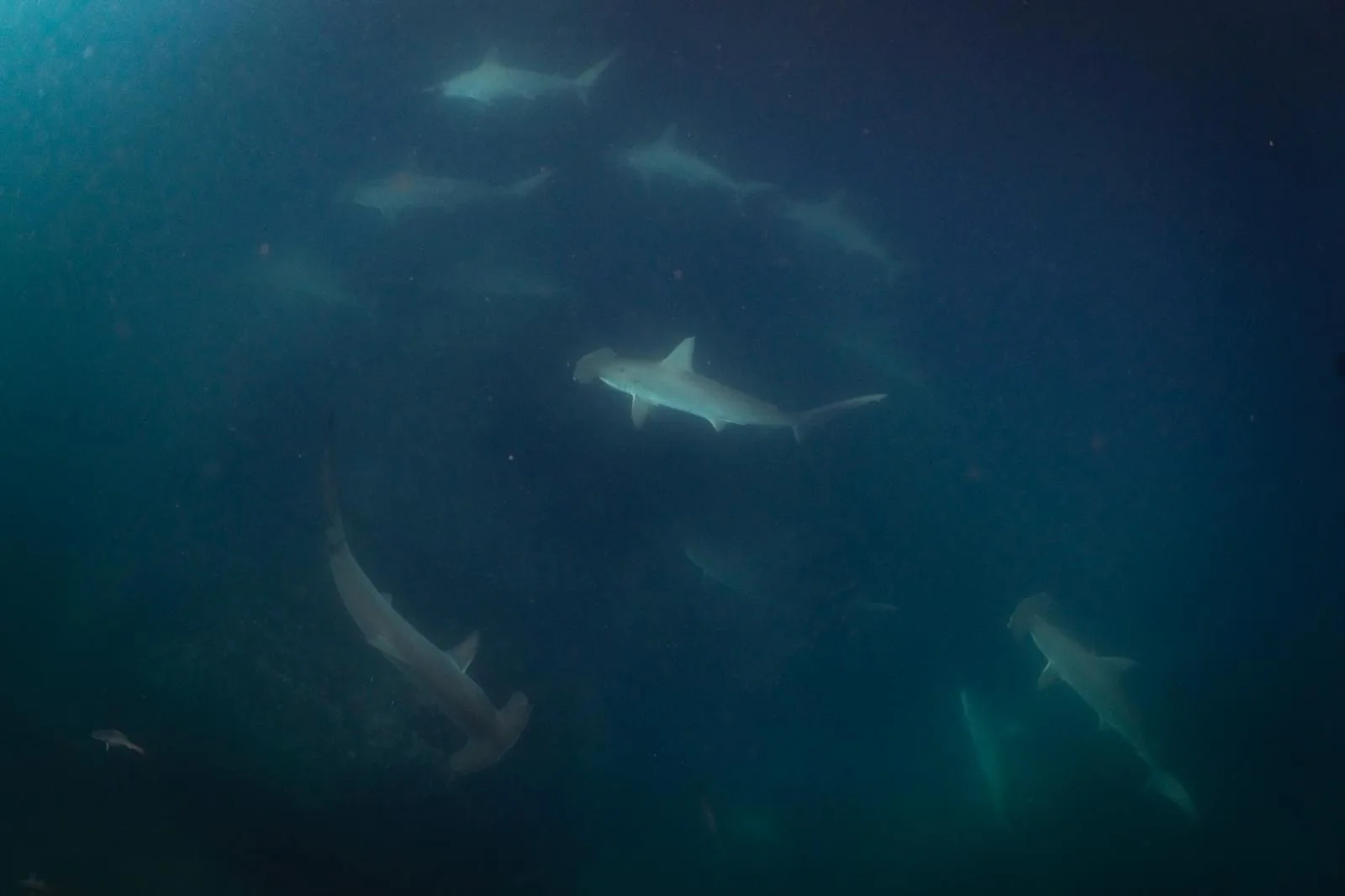
Bogenstirn-Hammerhaie Sphyrna lewini Schule in Galapagos.jpg · Resized and converted to WebP for display. Documentary organism photograph. AI-generated illustration. kdaniel20816 · CC0
Field guide · species
Sphyrna lewini (Griffith & Smith, 1834)
A scalloped leading edge gives this hammerhead its common name. Adults can gather in large schools around oceanic features, while young sharks often use shallow coastal nursery habitats.
Public research profile · final editorial review pending.
Complete source lineage, including intermediate ranks. The standard view uses Life and the eight principal ranks.
The head is broad and flattened, with a curved, indented front margin. The body has a tall first dorsal fin and a pale underside.
Coastal shelves, island slopes and offshore waters are used at different ages and times.
Fish and cephalopods are important prey. Feeding changes as sharks move from coastal juvenile habitat to deeper waters.
Schooling and movements between daytime gathering sites and feeding areas are characteristic in some populations.
Females give birth to live young. Shallow coastal habitats provide nursery areas for juveniles.
The species occurs in warm seas around the world. Its presence is uneven, and local populations can be strongly depleted.
These sharks are large marine predators and also host parasites and visiting cleaner fish.
The expanded head spreads sensory organs across a broad surface, supporting prey detection.
Targeted fishing, bycatch and loss of nursery habitat are major pressures. Protection needs to consider more than adult aggregation sites.
Shared classification
Framed for display
Sphyrna mokarran
The great hammerhead is the largest hammerhead species. The front margin of its broad head is nearly straight, with a notch in …
Evidence
Connected life
No reviewed ecological connections in the collection yet.
Explore network ↗