 Living Beings
 Framed for display
Compare species
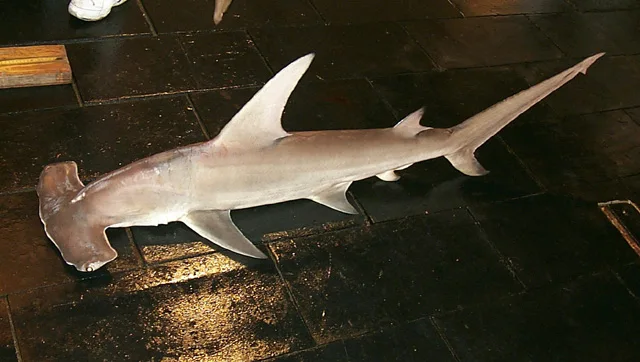
Great hammerhead shark
Sphyrna mokarran
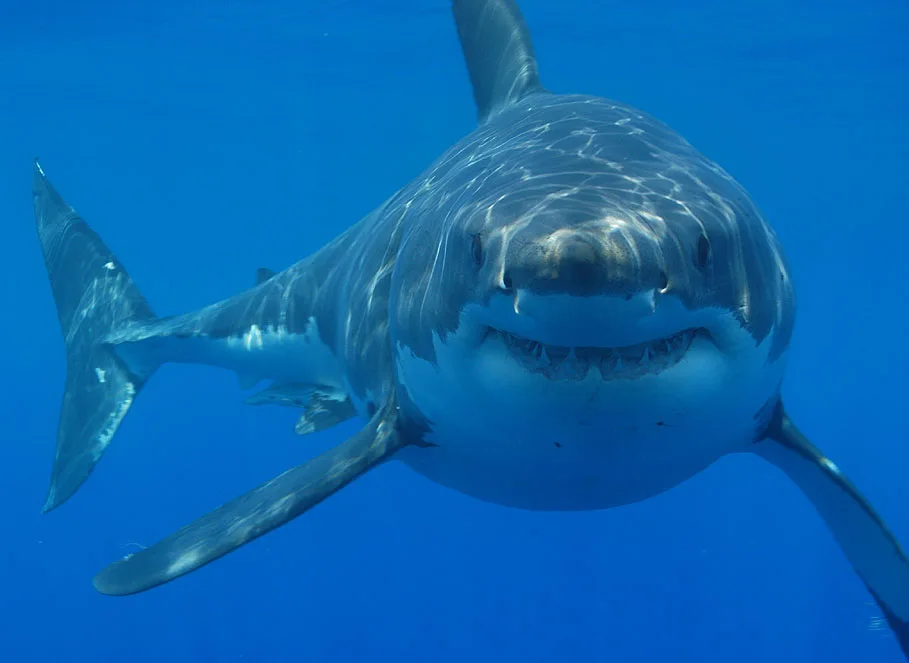
Great White Shark
Carcharodon carcharias
Try a comparison
How to compare two organisms
Choose two species and trace their closest shared group. Then compare a trait with the same definition on each side. Check the units, life stage and context before interpreting a measurement or range.
Missing data means that the collection lacks a sourced value. Where a characteristic does not apply to a lineage, the comparison labels it separately. Open the two profiles for context and follow their sources before drawing a conclusion.
Biological comparison
Means, ranges and reported maxima describe different things. Check the source and population before comparing values.
Classification
Shared ancestry
Closest shared evolutionary group · Galeoidea.
Separate lineages
| Characteristic | Great hammerhead shark | Great White Shark |
|---|---|---|
Scientific measurements | Scientific measurements | |
| Total length |
Recorded scopes or statistics differ.
6.1 m
Reported maximum · Context-specific record Source and measurement contextUpper end of published maximum total-length estimates. This is not typical adult size. · ≈ 20 ft Total length to the tip of the tail, as reported by the fisheries source.
|
Recorded scopes or statistics differ.
6.4 m
Reported maximum · Context-specific record Source and measurement contextApproximate upper size in the NOAA identification guide. · ≈ 21 ft Total length to the tip of the tail, as reported by the fisheries source.
|
| Total length at maturity |
2.25 m
Approximate value · Male · At sexual maturity · Northern Australia · Fishery samples · Context-specific record Source and measurement contextUsual total length at maturity reported from northern Australian fishery samples. · ≈ 7.38 ft Total length associated with sexual maturity in the source population.
2.10 m
Approximate value · Female · At sexual maturity · Northern Australia · Fishery samples · Context-specific record Source and measurement contextUsual total length at maturity reported from northern Australian fishery samples. · ≈ 6.89 ft Total length associated with sexual maturity in the source population.
| No measurement recorded |
Natural history | Natural history | |
| Nutrition and energy acquisition |
Nutrition
Carnivorous Source ↗
The great hammerhead eats fish and invertebrates. Rays are a documented part of its diet. Observations document use of the …The great hammerhead eats fish and invertebrates. Rays are a documented part of its diet. Observations document use of the broad head to pin a stingray against the bottom during an attack. That behavior describes one way it handles prey within a much broader diet. |
Nutrition
No comparable measurement recorded
Younger sharks take fish and other smaller marine prey. Larger individuals may take marine mammals and scavenge carcasses. Source 1 ↗ |
| Habitat |
It occurs in warm coastal and offshore waters. Records span shallow inshore sites and waters beyond the continental shelf. Reef …It occurs in warm coastal and offshore waters. Records span shallow inshore sites and waters beyond the continental shelf. Reef margins and nearby sandy areas provide examples of places where divers may encounter the species. |
Coastal feeding grounds and offshore waters both form part of its habitat. Some individuals undertake extensive migrations. Source 1 ↗ |
| Geographic distribution |
Telemetry of tagged great hammerheads in the southeastern United States records seasonal movements and periods of repeated use of particular …Telemetry of tagged great hammerheads in the southeastern United States records seasonal movements and periods of repeated use of particular areas. A capture location documents where a shark was encountered. Tracking observations give a richer view of how the animal uses its range over time. |
White sharks occur in several ocean basins, especially temperate coastal regions. Sightings do not imply equal abundance throughout that range. Source 1 ↗ |
| Morphology |
The flattened head is called a cephalofoil. A tall first dorsal fin is another useful identification feature. The first dorsal …The flattened head is called a cephalofoil. A tall first dorsal fin is another useful identification feature. The first dorsal fin is high and curved backwards. Compare that fin and the nearly straight front of the broad head together. Other hammerheads have a different pattern of curves or notches along the front margin, so head width alone is a poor field identification character. |
A conical snout, broad triangular teeth and a dark upper surface over a pale underside characterize the species. Source 1 ↗ |
| Reproduction and life cycle |
Great hammerheads bear live young. The developing embryos are nourished through a yolk-sac placenta before birth. This reproductive strategy differs from the egg cases laid by some other sharks. Source 1 ↗ |
Embryos develop inside the mother and receive nutrition from eggs before live birth. Reproduction is slow relative to many exploited fish. Source 1 ↗ |
| Ecological role |
|
White sharks are predators and scavengers within marine food webs. Source 1 ↗ |
| Behavior and activity |
No separate account recorded |
Sharks investigate their surroundings using several senses and may return to productive feeding areas. Source 1 ↗ |
| Environmental adaptations |
No separate account recorded |
Countershading and a streamlined body assist an approaching predator; sensory systems detect chemical and electrical cues. Source 1 ↗ |
| Conservation |
No separate account recorded |
Bycatch and deliberate killing affect a species with limited reproductive output. Regional population trends require separate assessment. Source 1 ↗ |
Sources from both profiles
More comparisons
Framed for display
