 Living Beings
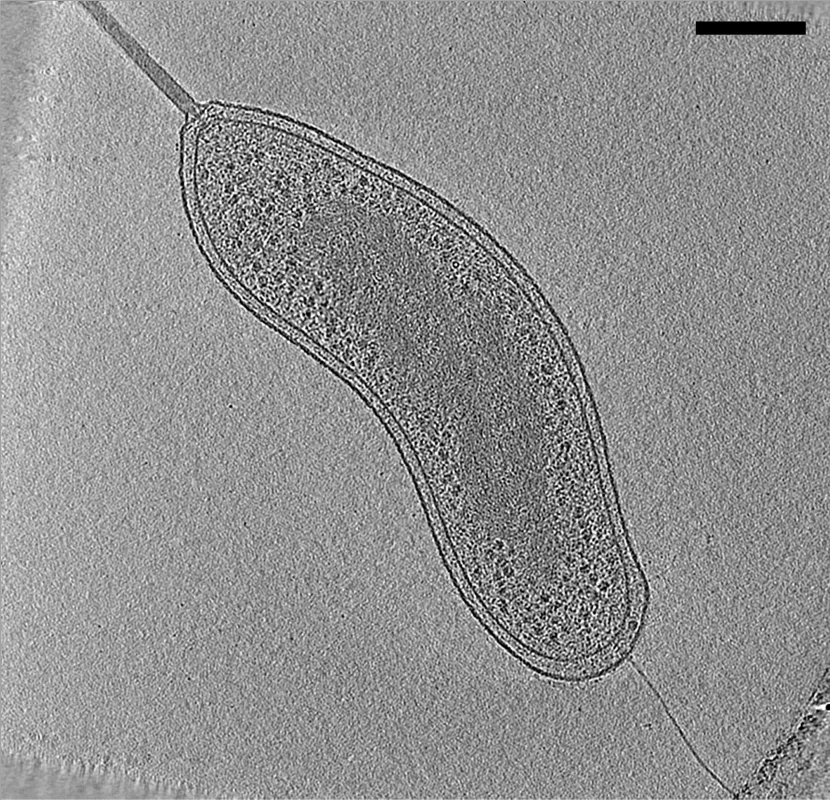
Slice from electron cryotomogram of Bdellovibrio bacteriovorus cell.jpg · Resized and converted to WebP for display. Slice through an electron cryotomogram of a cell. AI-generated illustration. Eikosi · CC BY-SA 4.0

Field guide · species
Bdellovibrio bacteriovorus
Stolp and Starr 1963
Bdellovibrio bacteriovorus is a bacterium that preys on other bacteria. Its feeding biology shows that microscopic food webs include bacterial predators as well as grazers such as protists.
Public research profile · final editorial review pending.
Tree of lifeScientific lineage
- LifeLife
- DomainBacteria
- KingdomPseudomonadati
- PhylumBdellovibrionota
- ClassBdellovibrionia
- OrderBdellovibrionales
- FamilyPseudobdellovibrionaceae
- GenusBdellovibrio
- SpeciesBdellovibrio bacteriovorus
Advanced classification
Complete source lineage, including intermediate ranks. The standard view uses Life and the eight principal ranks.
- cellular organisms cellular root
- Bacteria domain
- Pseudomonadati kingdom
- Bdellovibrionota phylum
- Bdellovibrionia class
- Bdellovibrionales order
- Pseudobdellovibrionaceae family
- Bdellovibrio genus
- Bdellovibrio bacteriovorus species
Structure and identification
The accompanying electron-tomography slice shows a microscopic bacterial cell. This is a scientific imaging view, not its appearance to the unaided eye.
Habitat and range
Documented isolates include freshwater fish-pond water and activated sludge. Different isolates need not have identical growth preferences.
Nutrition and metabolism
Susceptible Gram-negative bacteria provide resources for growth. Experimental prey panels demonstrate that susceptibility varies among bacterial species.
Biological activity
Predation can occur against free-living cells and cells in biofilms. A mixed-species community does not necessarily protect susceptible prey.
Reproduction and life cycle
Growth is linked to access to suitable prey. An increase in predator abundance therefore depends on both prey identity and availability.
Ecological role
Its activity can influence the structure and function of natural and engineered microbial communities.
Distinctive adaptations
Predatory specialization has encouraged aquaculture and wastewater research, but experimental promise is not evidence that every application is established or safe in every setting.
Evidence
Sources
- Bdellovibrio bacteriovorus · NCBI Taxonomy ↗www.ncbi.nlm.nih.gov
- Bdellovibrio bacteriovorus · Biological reference ↗pubmed.ncbi.nlm.nih.gov
- Bdellovibrio bacteriovorus · Biological reference ↗pubmed.ncbi.nlm.nih.gov
Connected life
Relationships
No reviewed ecological connections in the collection yet.
Explore network ↗