 Living Beings

 Framed for display
Species · Aliivibrio
Aliivibrio fischeri
Aliivibrio fischeri
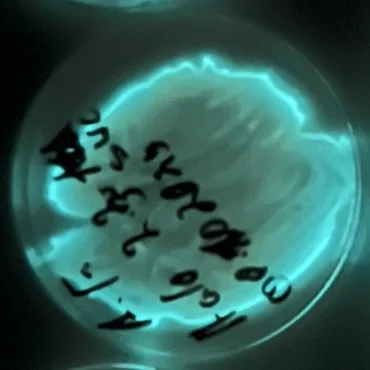
In the Hawaiian bobtail squid, light from Aliivibrio fischeri helps mask the animal’s silhouette when viewed from below.
Kingdom · Scientific classification
Pseudomonadati groups diverse bacterial lineages, including the branches that contain Escherichia and Rhizobium.
 Framed for display
Explore broader group · Bacteria ↗
NCBI Taxonomy (2026-11-05 reconciled backbone) · Taxon source ↗
Group guide
The published name Pseudomonadati applies to a kingdom within Bacteria. On this tree, Pseudomonadota is one of its phyla. Notice the different endings when reading the classification.
Source for kingdom and phylum are different ranks ↗Older descriptions can use Proteobacteria for the phylum Pseudomonadota. Search for both names when looking up this group, then check the organisms included in the source. The change of name by itself does not describe a change in how a bacterium lives.
Source for find the phylum in older research ↗A study of the bacterium Rhizobium leguminosarum strain 3841 followed stages of its association with pea. Genetic screens found different requirements during life near the root and during nodule formation. That evidence is about a particular bacterium and host, and it helps explain how an interaction can depend on the stage at which it is observed.
Source for from the soil around a root into a nodule ↗Pseudomonadati · kingdom · Original classification source
The original identifier and source were retained when adopting the dated NCBI backbone. Different sources may use different names, ranks or group circumscriptions.
Within this taxon
Framed for display
Aliivibrio fischeri
In the Hawaiian bobtail squid, light from Aliivibrio fischeri helps mask the animal’s silhouette when viewed from below.
 Framed for display
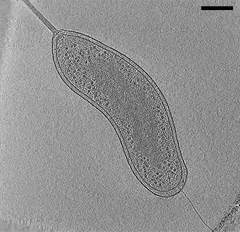
Bdellovibrio bacteriovorus
Bdellovibrio bacteriovorus is a bacterium that preys on other bacteria. Its feeding biology shows that microscopic food webs include bacterial predators as …
 Framed for display
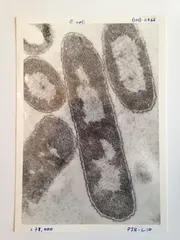
Escherichia coli
Escherichia coli is a bacterial species found in many environments, including the intestines of people and other animals. Most types are harmless, …
 Framed for display
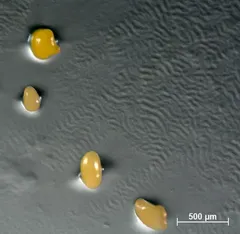
Myxococcus xanthus
Myxococcus xanthus is a social, surface-associated bacterium. Moving groups feed on other bacteria and can organize into fruiting bodies containing resistant spores.
Rhizobium leguminosarum
Rhizobium leguminosarum links life in soil with nitrogen-fixing symbiosis in legume root nodules. Reaching a root, competing with neighboring microbes and surviving …