 Living Beings
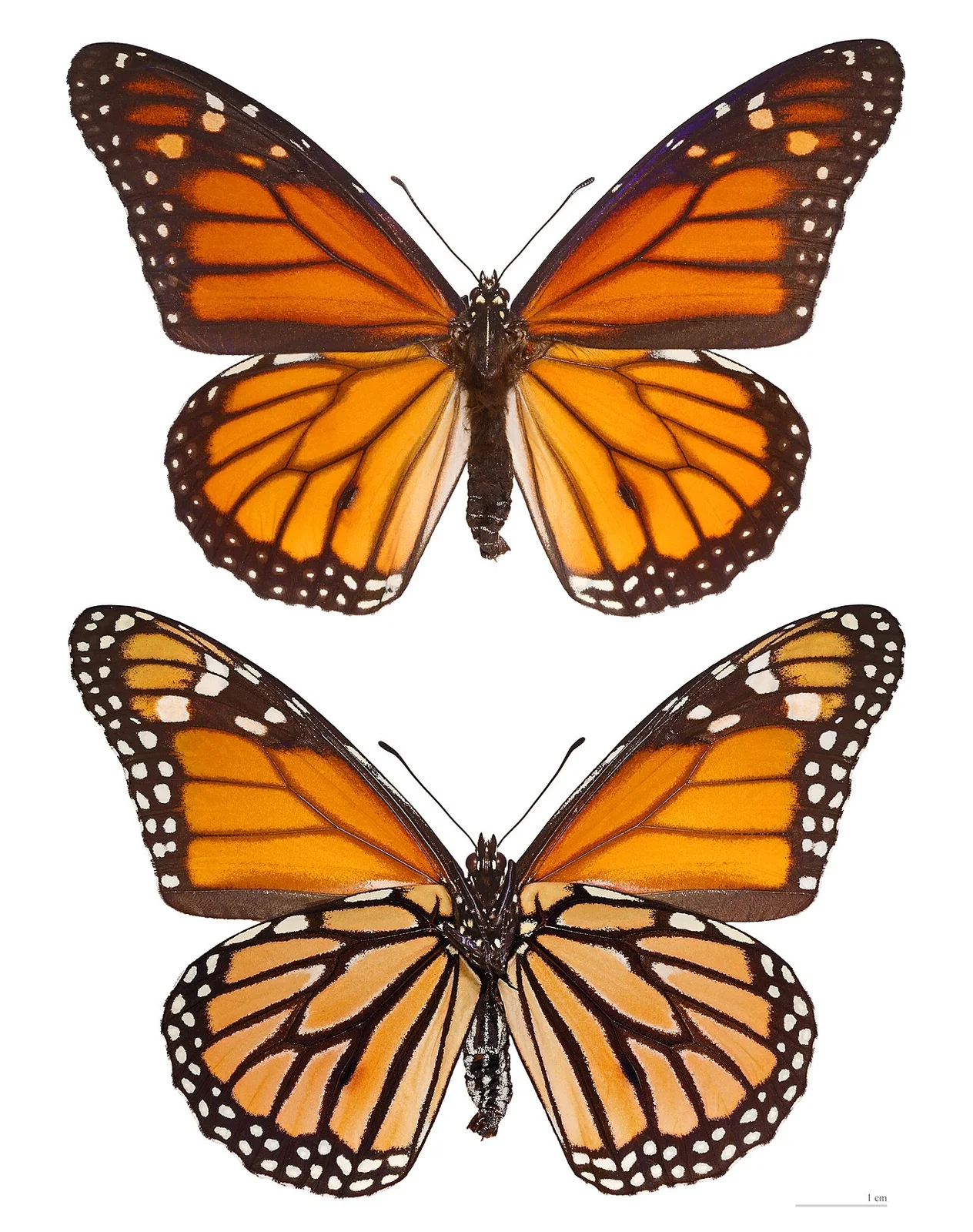
Danaus plexippus MHNT.jpg · Resized and converted to WebP for display. Documentary organism photograph. AI-generated illustration. Didier Descouens · CC BY-SA 4.0

Field guide · species
Monarch Butterfly
Danaus plexippus (Linnaeus, 1758)
Orange wings crossed by dark veins make the monarch familiar, but its life is closely tied to milkweed. Caterpillars feed on these plants, while adult butterflies visit flowers for nectar.
Public research profile · final editorial review pending.
Tree of lifeScientific lineage
- LifeLife
- DomainEukaryota
- KingdomAnimalia
- PhylumArthropoda
- ClassInsecta
- OrderLepidoptera
- FamilyNymphalidae
- GenusDanaus
- SpeciesDanaus plexippus
Advanced classification
Complete source lineage, including intermediate ranks. The standard view uses Life and the eight principal ranks.
- cellular organisms cellular root
- Eukaryota domain
- Opisthokonta clade
- Metazoa kingdom
- Eumetazoa clade
- Bilateria clade
- Protostomia clade
- Ecdysozoa clade
- Panarthropoda clade
- Arthropoda phylum
- Mandibulata clade
- Pancrustacea clade
- Altocrustacea clade
- Allotriocarida clade
- Hexapoda subphylum
- Insecta class
- Dicondylia clade
- Pterygota subclass
- Neoptera infraclass
- Eumetabola clade
- Endopterygota cohort
- Aparaglossata clade
- Panorpida clade
- Amphiesmenoptera superorder
- Lepidoptera order
- Glossata suborder
- Neolepidoptera infraorder
- Heteroneura parvorder
- Ditrysia clade
- Obtectomera clade
- Papilionoidea superfamily
- Nymphalidae family
- Danainae subfamily
- Danaini tribe
- Danaina subtribe
- Danaus genus
- Danaus subgenus
- Danaus plexippus species
Physical traits
Adults have orange-and-black wings with pale marginal spots. Caterpillars have contrasting light and dark bands.
Habitat and range
Breeding habitat needs milkweed and adult nectar resources. Migratory populations also require suitable overwintering sites.
Diet and nutrition
Larvae eat milkweed foliage; adults take nectar. These are different feeding roles within one life cycle.
Behavior and activity
Some populations make seasonal migrations involving several generations. Other populations are more resident.
Reproduction and life cycle
An egg hatches into a caterpillar, followed by a chrysalis and then the winged adult. Migratory generations differ in seasonal behavior.
Geographic distribution
The species occurs in the Americas and established populations occur elsewhere. The famous North American migration does not describe every population.
Ecological role
Milkweed chemistry links caterpillars, plants and predators; adults participate in flower-visiting communities.
Distinctive adaptations
Warning coloration and chemicals obtained from larval food can reduce predation.
Conservation
Loss of breeding and overwintering habitat and changing climatic conditions are concerns. Species-wide and migratory-population assessments should not be conflated.
Evidence
Sources
- Danaus plexippus · NCBI Taxonomy ↗NCBI
- Danaus plexippus — Animal Diversity Web, University of Michigan ↗Animal Diversity Web, University of Michigan
Connected life
Relationships
No reviewed ecological connections in the collection yet.
Explore network ↗