 Living Beings
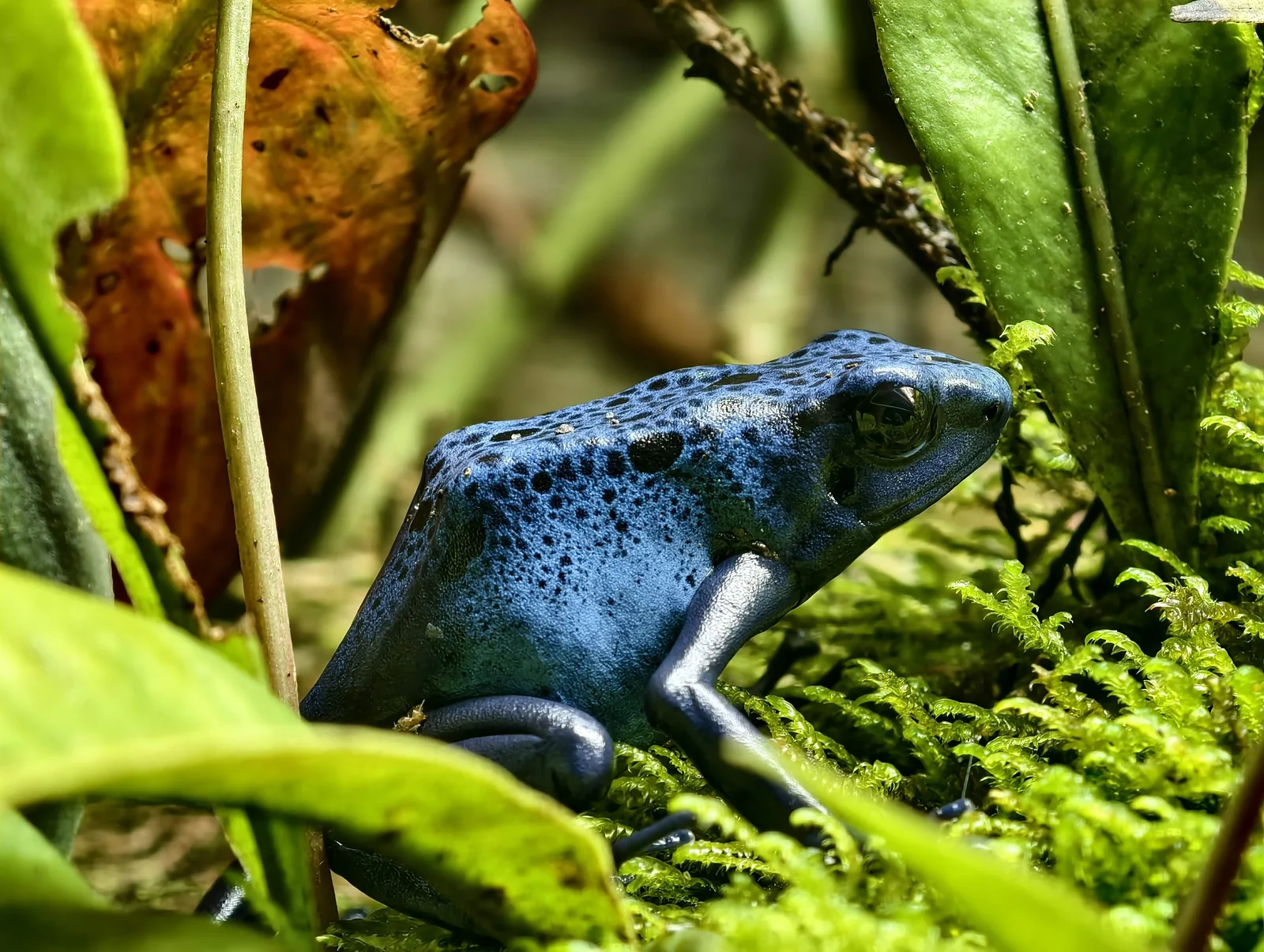
Dendrobates tinctorius - Blue poison dart frog.jpg · Resized and converted to WebP for display. Blue color form photographed in a zoo; coloration varies among populations. AI-generated illustration. Krigore · CC BY-SA 4.0

Field guide · species
Dyeing Poison Frog
Dendrobates tinctorius (Cuvier, 1797)
The dyeing poison frog is a day-active tropical frog with strikingly variable colors. Its parental care connects the forest floor with small pools held in plants and other natural containers.
Public research profile · final editorial review pending.
Tree of lifeScientific lineage
- LifeLife
- DomainEukaryota
- KingdomAnimalia
- PhylumChordata
- ClassAmphibia
- OrderAnura
- FamilyDendrobatidae
- GenusDendrobates
- SpeciesDendrobates tinctorius
Advanced classification
Complete source lineage, including intermediate ranks. The standard view uses Life and the eight principal ranks.
- cellular organisms cellular root
- Eukaryota domain
- Opisthokonta clade
- Metazoa kingdom
- Eumetazoa clade
- Bilateria clade
- Deuterostomia clade
- Chordata phylum
- Craniata subphylum
- Vertebrata clade
- Gnathostomata clade
- Teleostomi clade
- Euteleostomi clade
- Sarcopterygii superclass
- Dipnotetrapodomorpha clade
- Tetrapoda clade
- Amphibia class
- Batrachia superorder
- Anura order
- Neobatrachia suborder
- Hyloidea superfamily
- Dendrobatidae family
- Dendrobatinae subfamily
- Dendrobates genus
- Dendrobates tinctorius species
Physical traits
Different populations have different combinations of blue, yellow and black. The blue animal illustrated here represents one color form, rather than the appearance of every member of the species.
Habitat and range
Humid forest provides leaf litter, fallen wood and water-filled cavities. Canopy gaps can create valuable breeding opportunities.
Behavior and activity
Adults move and forage during daylight. Courtship and competition occur within a small-scale landscape of shelters and suitable pools.
Reproduction and life cycle
Eggs develop outside open water. Males carry hatched tadpoles to small aquatic nurseries; choosing a pool matters because tadpoles can cannibalize one another.
Geographic distribution
Native to the Guiana Shield region of northern South America. The cited field studies document populations in French Guiana.
Ecological role
Use of plant-held water links terrestrial adults to aquatic larval habitats. Pool availability and the presence of other tadpoles influence reproductive decisions.
Distinctive adaptations
Parental transport allows larvae to reach isolated water bodies that they could not reach from the egg site themselves.
Evidence
Sources
- Dendrobates tinctorius · NCBI Taxonomy ↗www.ncbi.nlm.nih.gov
- Dendrobates tinctorius · Biological reference ↗pubmed.ncbi.nlm.nih.gov
- Dendrobates tinctorius · Biological reference ↗pmc.ncbi.nlm.nih.gov
Connected life
Relationships
No reviewed ecological connections in the collection yet.
Explore network ↗