 Living Beings
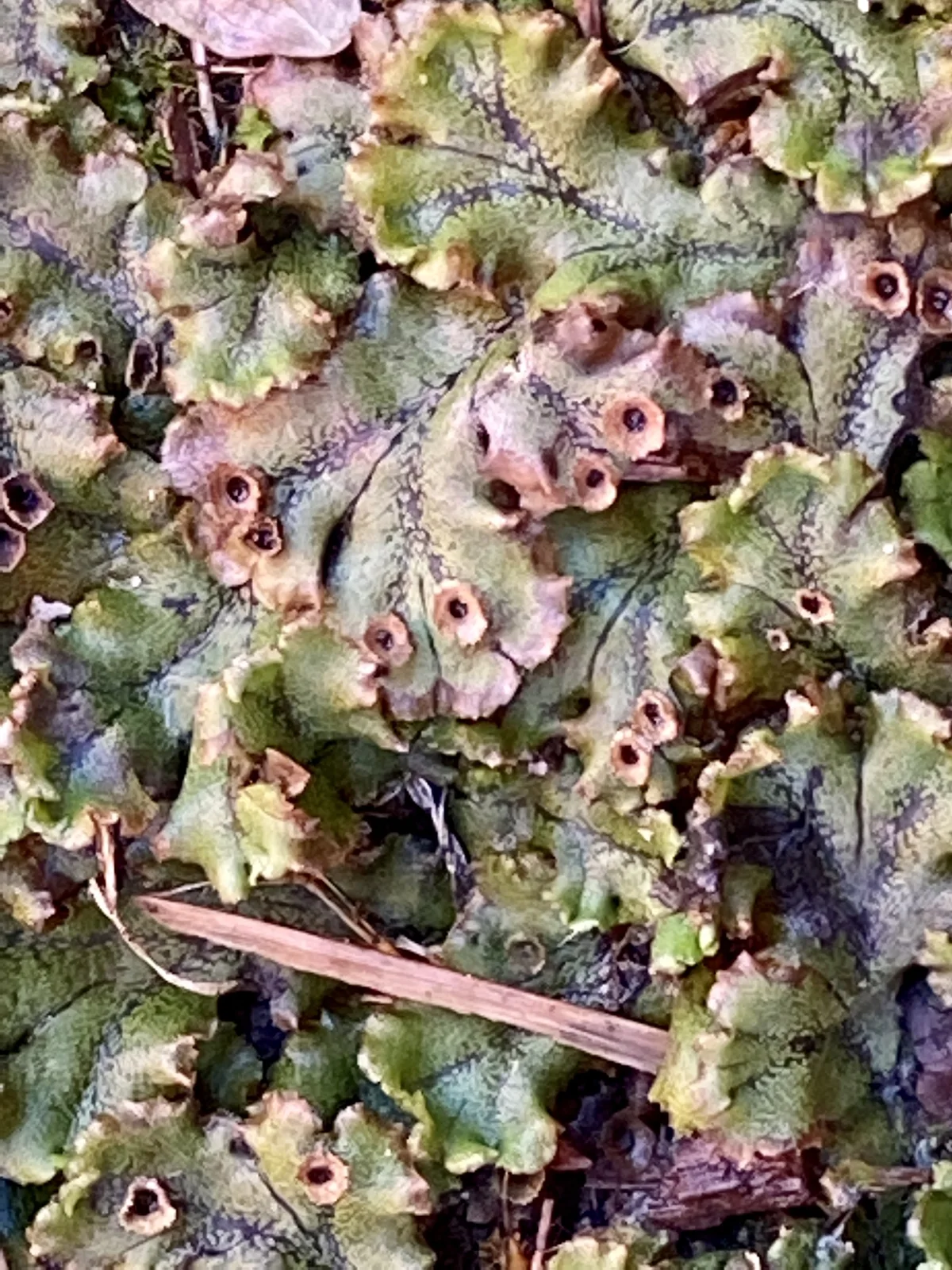
Marchantia polymorpha 179886473.jpg · Resized and converted to WebP for display. Source-identified documentary image; see the original file for method and context. AI-generated illustration. Sandy Wolkenberg · CC BY 4.0

Field guide · species
Common Liverwort
Marchantia polymorpha L., 1753
Common liverwort spreads as a flattened green thallus rather than a stem with true leaves. Cup-shaped structures on its surface contain tiny propagules, making vegetative reproduction easy to observe.
Public research profile · final editorial review pending.
Tree of lifeScientific lineage
- LifeLife
- DomainEukaryota
- KingdomViridiplantae
- PhylumStreptophyta
- ClassMarchantiopsida
- OrderMarchantiales
- FamilyMarchantiaceae
- GenusMarchantia
- SpeciesMarchantia polymorpha
Advanced classification
Complete source lineage, including intermediate ranks. The standard view uses Life and the eight principal ranks.
- cellular organisms cellular root
- Eukaryota domain
- Viridiplantae kingdom
- Streptophyta phylum
- Streptophytina subphylum
- Embryophyta clade
- Marchantiophyta clade
- Marchantiopsida class
- Marchantiidae subclass
- Marchantiales order
- Marchantiaceae family
- Marchantia genus
- Marchantia polymorpha species
Structure and identification
The thallus branches across the substrate. Gemma cups and stalked reproductive structures help distinguish it from many other small green plants.
Habitat and range
Damp, disturbed or recently exposed ground supports growth, including suitable burned sites and horticultural substrates.
Nutrition and metabolism
Photosynthetic tissue supplies carbon compounds. Rhizoids anchor the thallus and assist interaction with the moist substrate.
Biological activity
Rain splash disperses gemmae from their cups, allowing new thalli to form nearby.
Reproduction and life cycle
Separate gamete-producing structures take part in sexual reproduction. A dependent sporophyte forms spores; gemmae provide an additional asexual route.
Geographic distribution
The species is widely recorded, but subspecies and local habitat differences matter when interpreting records.
Ecological role
Early colonization of exposed surfaces helps shape small-scale plant succession.
Distinctive adaptations
A spreading thallus and two reproductive routes allow rapid occupation of suitable damp patches.
Conservation
Local occurrence depends strongly on substrate and moisture. This profile does not infer a global category from its frequent appearance in disturbed ground.
Evidence
Sources
- Marchantia polymorpha · NCBI Taxonomy ↗NCBI
- Marchantia polymorpha — USDA Forest Service, Fire Effects Information System ↗USDA Forest Service, Fire Effects Information System
Connected life
Relationships
No reviewed ecological connections in the collection yet.
Explore network ↗