 Living Beings

 Framed for display
Species · Marchantia
Common Liverwort
Marchantia polymorpha
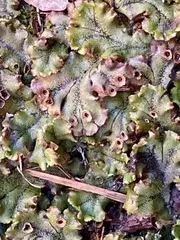
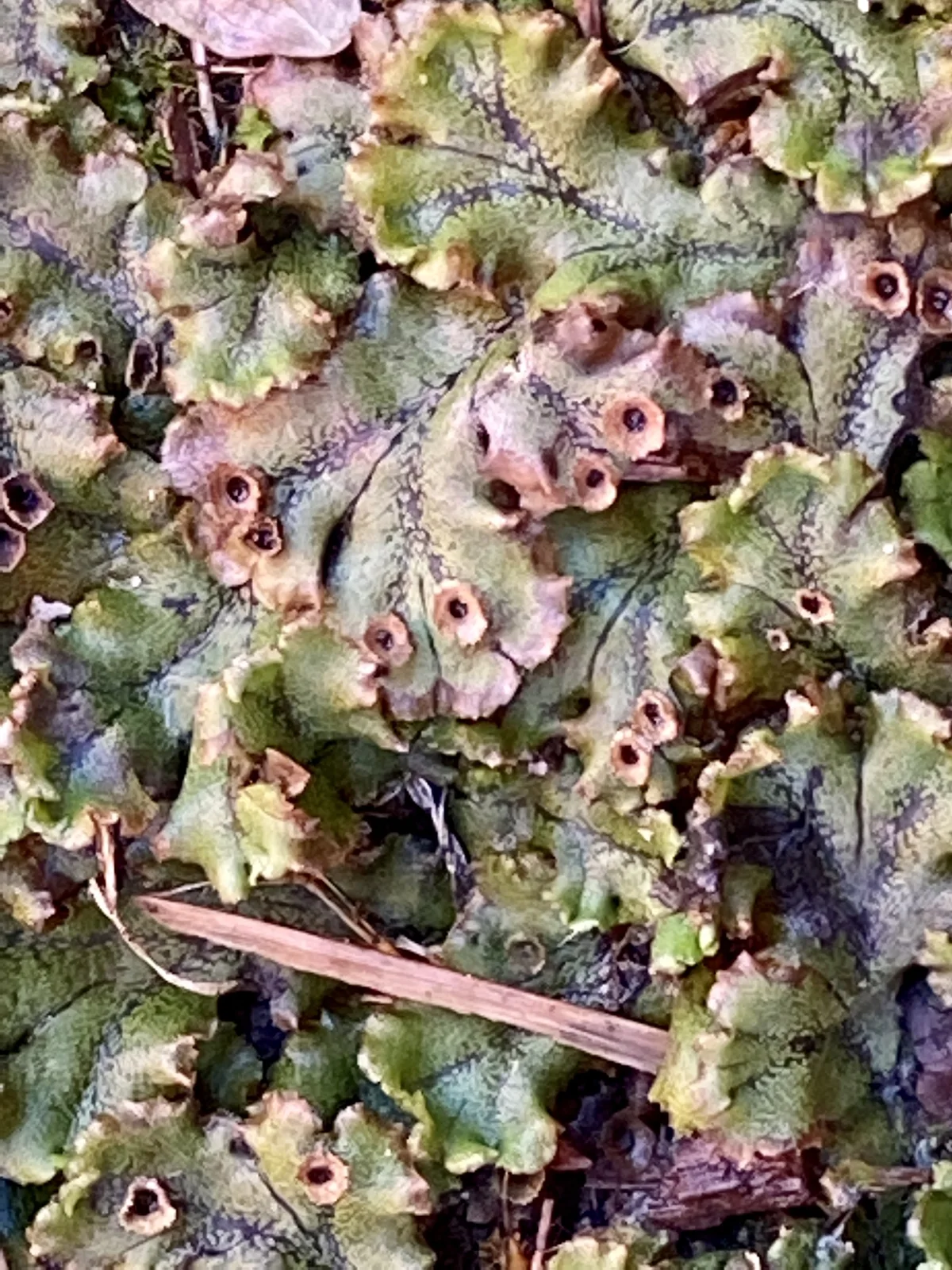
Common liverwort spreads as a flattened green thallus rather than a stem with true leaves. Cup-shaped structures on its surface contain tiny …
Family · Scientific classification
Marchantiaceae includes Marchantia, whose flattened thallus carries small air pores and conspicuous structures for reproduction.
 Framed for display
Explore broader group · Marchantiales ↗
NCBI Taxonomy (2026-11-05 reconciled backbone) · Taxon source ↗
Group guide
In the California treatment, the compound pores of Marchantia are useful in separating it from Lunularia of a different family, whose pores have a simpler structure. A thallus cross section reveals air chambers beneath the pores and photosynthetic filaments inside the chambers.
Source for looking through the surface ↗The common liverwort produces small clonal propagules called gemmae in cups on the thallus. Raised male and female structures participate in sexual reproduction, which leads to spores. The two routes use different structures on the plant.
Source for more than one route to a new plant ↗Within this taxon
Framed for display
Marchantia polymorpha
Common liverwort spreads as a flattened green thallus rather than a stem with true leaves. Cup-shaped structures on its surface contain tiny …