 Living Beings
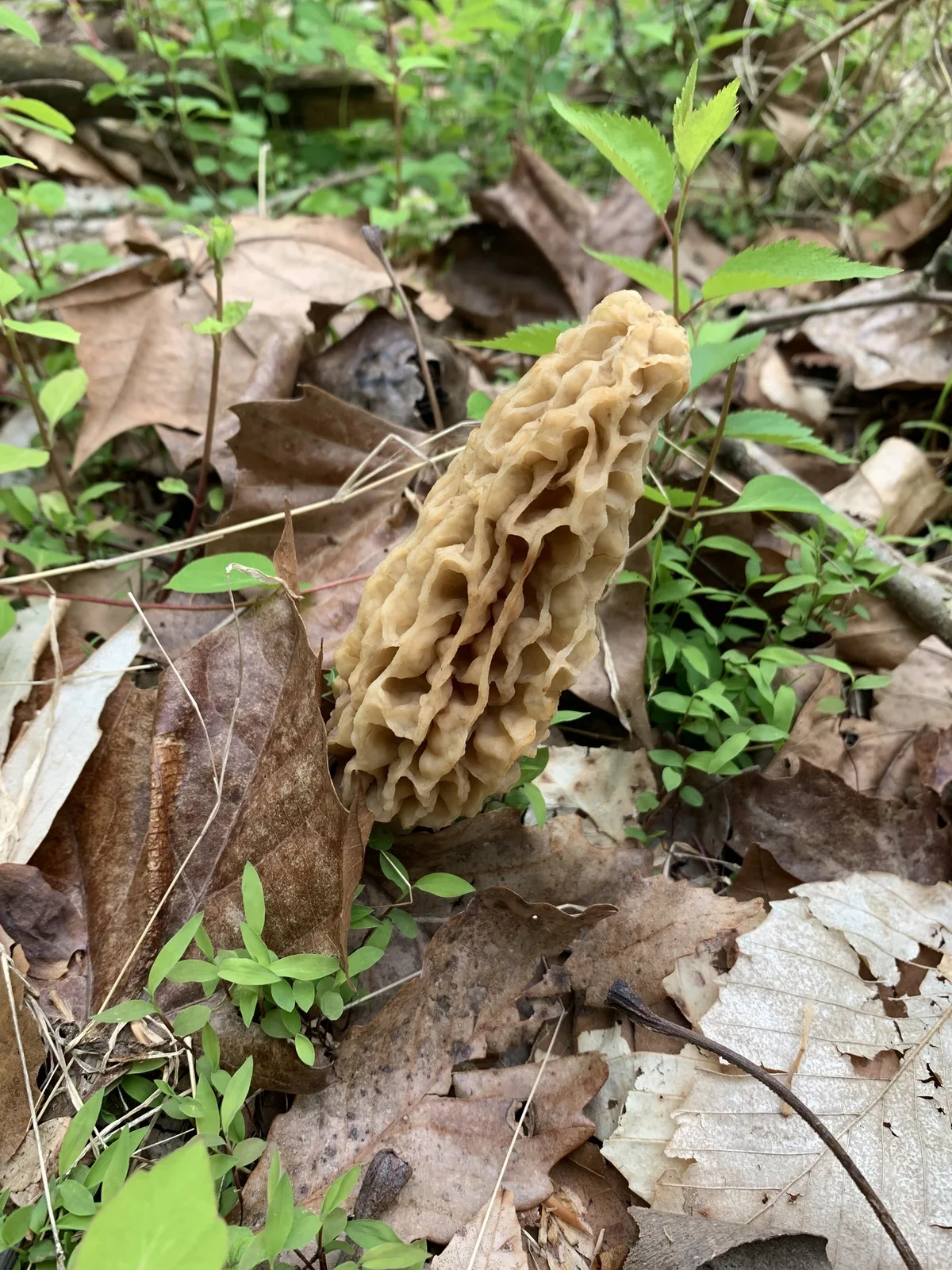
Morchella esculenta 69015040.jpg · Resized and converted to WebP for display. Source-identified documentary image; see the original file for method and context. AI-generated illustration. Jacob Malcom · CC BY-SA 4.0

Field guide · species
Morchella esculenta
(L.) Pers., 1797
Morchella esculenta is a yellow morel with a conspicuously pitted fruiting body. This profile uses the modern, narrower species concept linked to the molecular lineage called Mes-8, rather than treating every yellow morel historically given the name as the same species. Genetic work has made that distinction important for interpreting both its distribution and its ecology.
Public research profile · final editorial review pending.
Tree of lifeScientific lineage
- LifeLife
- DomainEukaryota
- KingdomFungi
- PhylumAscomycota
- ClassPezizomycetes
- OrderPezizales
- FamilyMorchellaceae
- GenusMorchella
- SpeciesMorchella esculenta
Advanced classification
Complete source lineage, including intermediate ranks. The standard view uses Life and the eight principal ranks.
- cellular organisms cellular root
- Eukaryota domain
- Opisthokonta clade
- Fungi kingdom
- Dikarya subkingdom
- Ascomycota phylum
- saccharomyceta clade
- Pezizomycotina subphylum
- Pezizomycetes class
- Pezizales order
- Morchellaceae family
- Morchella genus
- Morchella sect. Morchella section
- Morchella esculenta species
Structure and identification
The cap has a network of ridges and pits that gives the familiar honeycomb appearance. Several other morels produce similar fruiting bodies, and their shapes and colors vary. The photographed form can illustrate a morel's structure, but secure identification of a scientific collection requires appropriate morphological evidence and, where necessary, sequence comparison.
Habitat and range
Molecularly identified Polish collections included deciduous stands dominated by hornbeam or mixed with ash and sycamore. The larger Czech study also found the species in floodplain forest, shrub habitats, orchards and some disturbed sites. Nearby trees are recorded habitat features; their presence alone does not establish a nutritional partnership.
Nutrition and metabolism
The mycelium absorbs nutrients rather than photosynthesizing. The Polish field study discusses saprotrophic and plant-associated possibilities in morels but did not test the trophic mode of its collections. An obligate host or a single nutritional strategy is therefore not assigned to Morchella esculenta here.
Biological activity
Czech collections were mainly made from mid-April to early May. Fruiting is seasonal reproductive growth; these local dates do not define a universal season or the lifetime of the underlying mycelium.
Reproduction and life cycle
Morels are ascomycete fungi whose sexual spores develop inside sac-like asci on the fertile fruiting surface. A field record concerns the temporary reproductive structure of a less conspicuous mycelium. The species concept must be established before cultivation or life-cycle observations under old names can be combined.
Geographic distribution
The 2019 revision documents the Mes-8 species in the Czech Republic and summarizes records elsewhere in Europe and China. Older reports under the broad name need reassessment before being combined, especially where modern research recognizes a different regional species.
Ecological role
The Polish study established the occurrence of correctly identified morels after a long gap in confirmed local records, while leaving their trophic relationships untested. This separates a documented ecological observation from an experimental claim about how the fungus obtains carbon.
Distinctive adaptations
A folded fertile surface and a temporary fruiting body are conspicuous features of true morels. The nomenclatural revision separates yellow-morel species that look similar. This account does not infer a fire-dependent lifestyle from the behavior of unrelated black morels.
Evidence
Sources
- Morchella esculenta · NCBI Taxonomy ↗NCBI
- Phylogeny and historical biogeography of true morels (Morchella) reveals an early Cretaceous origin and high continental endemism and provincialism in the Holarctic ↗Fungal genetics and biology : FG & B · 2011
- True morels (Morchella, Pezizales) of Europe and North America: evolutionary relationships inferred from multilocus data and a unified taxonomy ↗Mycologia · 2015
- How useful is the current species recognition concept for the determination of true morels? Insights from the Czech Republic ↗MycoKeys · 2019
- Two species of true morels (the genus Morchella, Ascomycota) recorded in the Ojców National Park (south Poland) ↗Acta Mycologica · 2017
Connected life
Relationships
No reviewed ecological connections in the collection yet.
Explore network ↗