 Living Beings
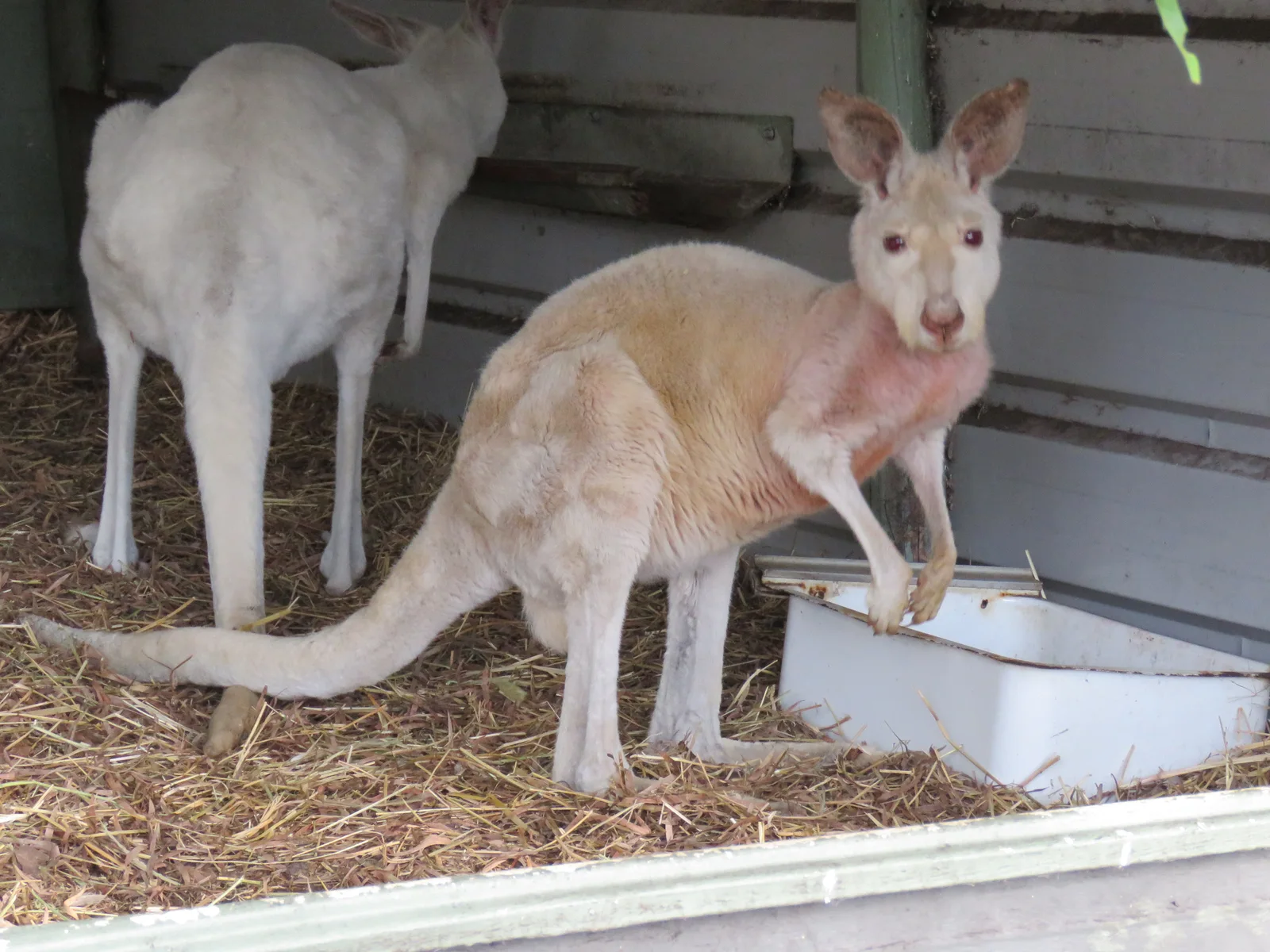
Red kangaroo (Macropus rufus) in Australian Wildlife Park, Albany, April 2022 10.jpg · Resized and converted to WebP for display. Documentary organism photograph. AI-generated illustration. Calistemon · CC BY-SA 4.0

Field guide · species
Red Kangaroo
Osphranter rufus
The red kangaroo is a large Australian marsupial adapted to open, dry country. Powerful hind limbs and a muscular tail shape its movement, while pouch development allows very small newborn young to continue growing after birth.
Public research profile · final editorial review pending.
Tree of lifeScientific lineage
- LifeLife
- DomainEukaryota
- KingdomAnimalia
- PhylumChordata
- ClassMammalia
- OrderDiprotodontia
- FamilyMacropodidae
- GenusOsphranter
- SpeciesOsphranter rufus
Advanced classification
Complete source lineage, including intermediate ranks. The standard view uses Life and the eight principal ranks.
- cellular organisms cellular root
- Eukaryota domain
- Opisthokonta clade
- Metazoa kingdom
- Eumetazoa clade
- Bilateria clade
- Deuterostomia clade
- Chordata phylum
- Craniata subphylum
- Vertebrata clade
- Gnathostomata clade
- Teleostomi clade
- Euteleostomi clade
- Sarcopterygii superclass
- Dipnotetrapodomorpha clade
- Tetrapoda clade
- Amniota clade
- Mammalia class
- Theria clade
- Metatheria clade
- Diprotodontia order
- Macropodidae family
- Osphranter genus
- Osphranter rufus species
Physical traits
Large hindquarters, short forelimbs and a long tail distinguish the body plan. Sexes can differ strongly in size and coat color.
Habitat and range
Open grassland and shrubland provide feeding areas, with shade or cover useful during hot periods.
Diet and nutrition
Grasses and other low vegetation supply most food. Forage availability changes following rainfall.
Behavior and activity
Kangaroos rest during hot conditions and often feed when it is cooler. Groups can gather where resources are suitable.
Reproduction and life cycle
A newborn travels to the pouch and attaches to a teat. Development continues there before the young gradually becomes independent.
Geographic distribution
The species occupies much of Australia's arid and semi-arid interior. The biological source uses the former genus name Macropus.
Ecological role
Grazing influences plant communities and connects dryland vegetation with animal food webs.
Distinctive adaptations
Hopping, tail support and adjustments to breeding conditions help life in variable dry environments.
Conservation
Local abundance depends on rainfall, land use and management. A broad range does not imply uniform conditions everywhere.
Evidence
Sources
- Osphranter rufus · NCBI Taxonomy ↗NCBI
- Osphranter rufus — Animal Diversity Web, University of Michigan ↗Animal Diversity Web, University of Michigan
Connected life
Relationships
No reviewed ecological connections in the collection yet.
Explore network ↗