 Living Beings
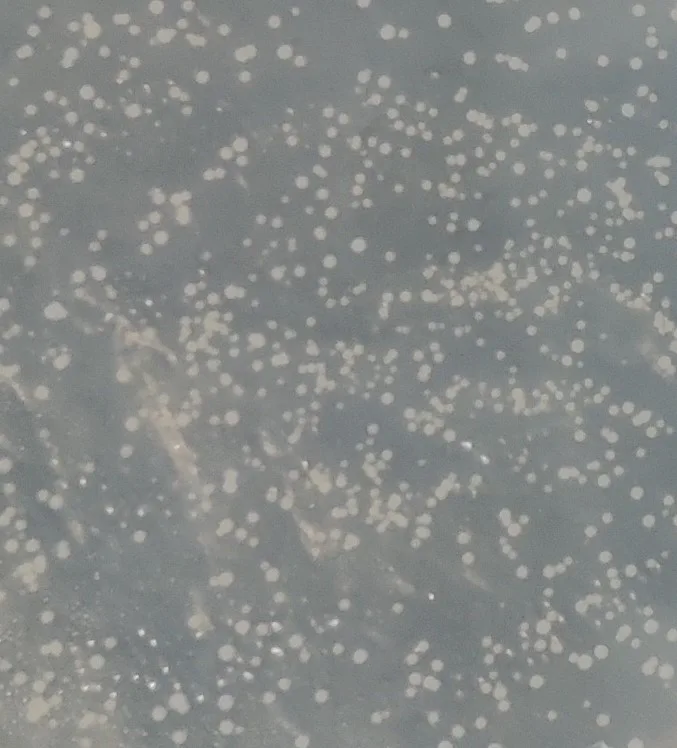
Saccharomyces cerevisiae 01.jpg · Resized and converted to WebP for display. Source-identified documentary image; see the original file for method and context. AI-generated illustration. Ganesh Mohan T · CC BY-SA 4.0

Field guide · species
Brewer's Yeast
Saccharomyces cerevisiae
Saccharomyces cerevisiae is a budding yeast associated with both natural substrates and human fermentation. Its single-celled growth form makes it a fungus without making it a mushroom, and its genetics has become central to cell biology.
Public research profile · final editorial review pending.
Tree of lifeScientific lineage
- LifeLife
- DomainEukaryota
- KingdomFungi
- PhylumAscomycota
- ClassSaccharomycetes
- OrderSaccharomycetales
- FamilySaccharomycetaceae
- GenusSaccharomyces
- SpeciesSaccharomyces cerevisiae
Advanced classification
Complete source lineage, including intermediate ranks. The standard view uses Life and the eight principal ranks.
- cellular organisms cellular root
- Eukaryota domain
- Opisthokonta clade
- Fungi kingdom
- Dikarya subkingdom
- Ascomycota phylum
- saccharomyceta clade
- Saccharomycotina subphylum
- Saccharomycetes class
- Saccharomycetales order
- Saccharomycetaceae family
- Saccharomyces genus
- Saccharomyces cerevisiae species
Structure and identification
Vegetative cells are usually rounded to oval. Small buds grow from mother cells and remain attached until division is completed.
Habitat and range
Sugar-containing substrates and fermentation environments support suitable strains. Culture media reproduce only selected parts of these conditions.
Nutrition and metabolism
Sugars provide carbon and energy. Depending on conditions, metabolism includes respiration and fermentation that produces ethanol and carbon dioxide.
Biological activity
Growth responds to available nutrients and stress. Cells can alter their physiology as resources become depleted.
Reproduction and life cycle
Budding increases cell number. Compatible haploid cells can mate; diploid cells can undergo meiosis and form spores under appropriate conditions.
Geographic distribution
The yeast is maintained and transported worldwide. Fermentation strains do not describe the distribution of all wild populations.
Ecological role
The yeast participates in communities on organic substrates and in managed fermentations.
Distinctive adaptations
Flexible carbon metabolism and stress responses support life in changing sugar-rich environments.
Evidence
Sources
- Saccharomyces cerevisiae · NCBI Taxonomy ↗NCBI
- Synchronization of yeast cell populations ↗Methods in cell science : an official journal of the Society for In Vitro Biology · 1999
- Saccharomyces cerevisiae — Saccharomyces Genome Database ↗Saccharomyces Genome Database
Connected life
Relationships
No reviewed ecological connections in the collection yet.
Explore network ↗